THG Ingenuity Puts Its AI Stylist Virtual Try-On on Google Cloud Marketplace: How to Read the 6x Conversion Number
THG Ingenuity launched its AI Stylist virtual try-on, built with Google Cloud on the Gemini Enterprise Agent Platform, on Google Cloud Marketplace. We break down the limits of the near-6x conversion figure from Myprotein and what ecommerce operators should settle before adopting try-on.

Key Takeaways
- THG Ingenuity has launched AI Stylist, a photo-upload virtual try-on tool built with Google Cloud on the Gemini Enterprise Agent Platform, on Google Cloud Marketplace.
- At its own brand Myprotein, UK shoppers who generated at least one image converted at nearly 6x the site average, but that comparison is self-selected and no specific returns-reduction figure has been disclosed.
- Virtual try-on targets the structural barrier of not knowing size and appearance, so ecommerce operators need to settle photo data handling and product-image pipeline costs before they buy.
AI Stylist Lands on Google Cloud Marketplace
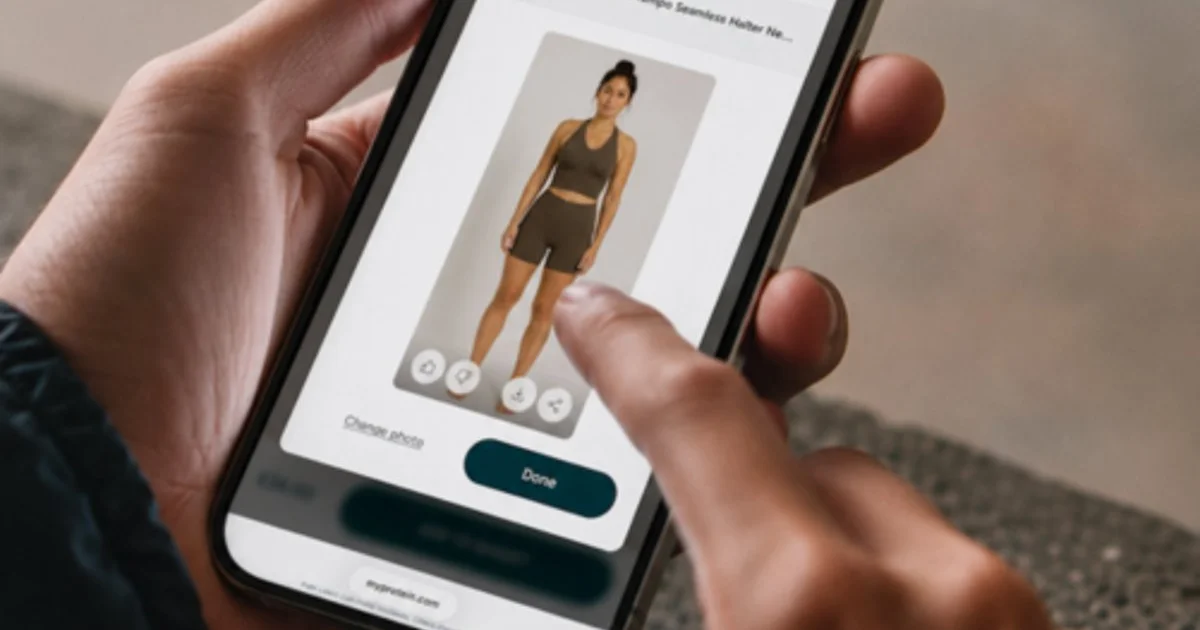
THG Ingenuity has announced the availability of its AI Stylist virtual try-on product on Google Cloud Marketplace.
ww.fashionnetwork.comOn July 29, 2026, UK ecommerce platform provider THG Ingenuity announced that its virtual try-on tool, AI Stylist, is now available on Google Cloud Marketplace. FashionNetwork reporter Sandra Halliday covered the news the same day, and THG Ingenuity's own release carries the same date.
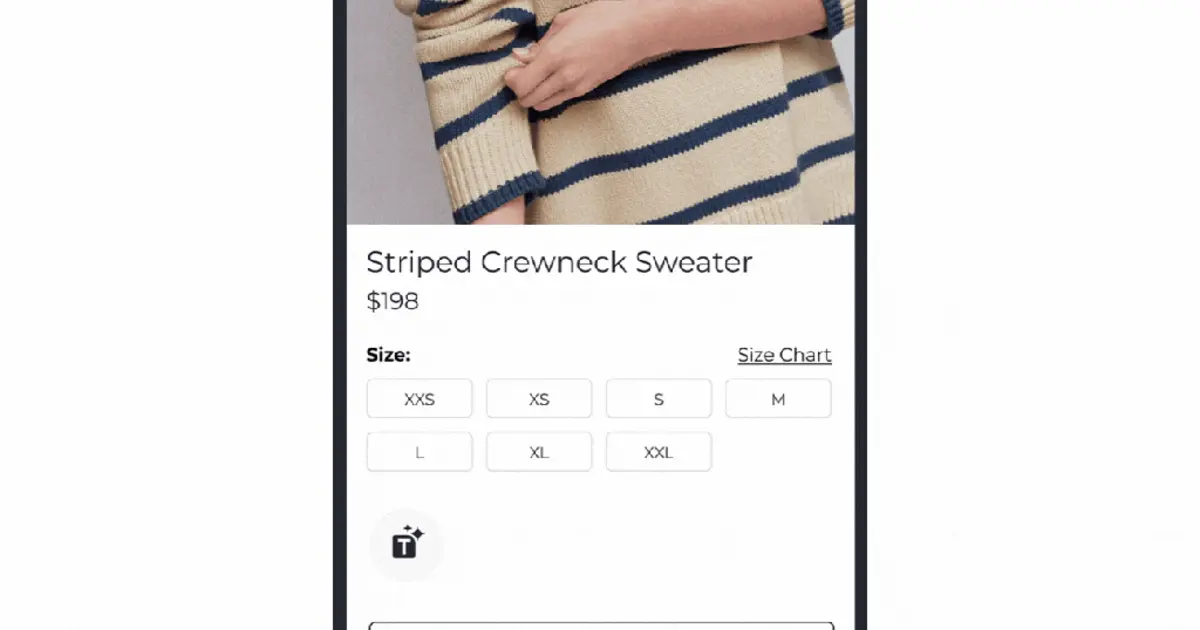
The mechanic barely needs explaining. A shopper uploads a personal photo, and the system generates an image of that shopper wearing the garment shown on the product page, before any purchase. THG Ingenuity says it built the product in collaboration with Google Cloud, on the Gemini Enterprise Agent Platform.
What matters is that this arrives not as a house feature for THG's own sites but as a product distributed through Google Cloud Marketplace. THG Ingenuity runs a SaaS, robotics, and operations platform for global ecommerce, and it has long packaged capabilities developed for its own brand portfolio and sold them onward. A cloud marketplace is a new channel for that model.
Jo Drake, CTO - Platform at THG Ingenuity, said in the release that the work improves the customer journey while also cutting operational costs. Maureen Costello, Vice President for UK, Ireland and Sub-Saharan Africa at Google Cloud, framed it explicitly around helping brands manage returns.
Taking the 6x Conversion Claim Apart
The disclosed data comes from initial deployments at THG's own brand, Myprotein. Comparing UK shoppers who generated at least one image with AI Stylist against site-average activewear shoppers, the company reports:
- Conversion roughly six times the site average
- Time on site 6.3 times longer
- Average order value 2.5% higher
Before the magnitude carries you away, look at how the comparison was built. What is being contrasted is people who generated an image versus the site average, not a randomized test of the feature's presence or absence.
Anyone willing to upload a photo of themselves and wait for a generation to finish may already be far along in a purchase decision. The 6.3x time-on-site figure has the same problem: the disclosed data cannot separate whether the feature lengthened sessions or whether long-session shoppers were the ones who used it. This is textbook self-selection bias, and reading the number as "deploy this and conversion multiplies by six" is simply wrong.
The average order value figure points the other way. At just 2.5%, it is small. If the user population really were skewed toward high-intent buyers, you would expect a larger gap in basket value too. In that sense, the modest AOV gap also weakens the self-selection reading somewhat, though the published data cannot settle it. What is clear is that the effect concentrates on the buy-or-not decision, with limited power to lift spend per order.
Then there are returns. The release describes the effect only as "significantly reducing returns", with no percentage and no monetary figure. Since the core economic case for virtual try-on is compressing returns cost, that number is the one that matters, and it is undisclosed. It is the first thing to ask a vendor for, ahead of the 6x.
Scope deserves the same caution. The data comes from one brand, one category (activewear), and one market (the UK). THG Ingenuity also announced a conversational AI shopping assistant built with Google Cloud on June 17, citing 8x conversion against the Myprotein site average and a 20.8% AOV uplift. A run of headline multiples derived from the same brand using the same method should be discounted accordingly.
Where in the Funnel Try-On Actually Works
In physical-goods ecommerce, the value of virtual try-on sits close to the comparison and decision moment, not discovery. The category is already chosen, the shortlist is down to a few items, and the last obstacle is not knowing how the garment will look on this particular body.
Returns data shows how large that obstacle is. The National Retail Federation and Happy Returns estimated that 2025 returns would reach about $849.9 billion, or 15.8% of annual sales, with 19.3% of online sales returned. Apparel runs well above that average. Zalando's technology explainer notes that European online fashion return rates can approach 50%, with up to half of those returns driven by size and fit.
Virtual try-on, then, should be designed as a lever on a cost line, not only a conversion tactic. Evaluate it on conversion alone and you may celebrate a program that mostly added orders that came straight back. Set up contribution-margin measurement net of returns before launch, not after.
Zalando's disclosure style is instructive here. The company says its size and fit work prevented 8% of size-related returns overall in 2025, and separately that Virtual Fitting Room pilots cut returns by up to 40% in jeans, a notoriously high-return category, which gave it confidence to scale the experience in 2026. Publishing a modest aggregate alongside a strong category-specific result is far more useful to practitioners than a single dramatic multiple.
What Marketplace Distribution Really Changes
The distribution shift may matter more to the industry than the technology itself.
Being listed on Google Cloud Marketplace means retailers can procure the tool within an existing Google Cloud agreement. In most enterprises, onboarding a new vendor means running legal, information security, and procurement in sequence, which routinely adds months. Buying through a cloud commitment can shorten part of that path, and when spend counts toward an annual cloud commitment, it effectively changes which budget the money comes from.
Marketplace listing does not, however, imply price transparency. Pricing for AI Stylist, whether per generated image or a monthly fee, is undisclosed and absent from the official release. Because the feature runs on generative models, cost tends to scale with usage, so the relationship between conversion lift and generation cost determines the break-even point. Deciding on the basis of the 6x figure while that relationship is unknown is a risky bet.
Rivals, and the Asymmetry in What Gets Disclosed
Virtual try-on is no longer THG Ingenuity's territory alone. If anything, the platforms are folding it into standard functionality faster than vendors can sell it.
Google has embedded Try It On across Search and Shopping, letting shoppers upload a full-length photo from a product listing and see the item on themselves. Per TechCrunch, the feature added shoes in October 2025 and expanded to Australia, Canada, and Japan. Doppl, the standalone app used to test the concept, is being consolidated toward the core Search experience.
Walmart moved earlier still, launching Be Your Own Model in 2022 on the back of its 2021 Zeekit acquisition, now covering more than 270,000 items.
| Provider | Delivery model | What the shopper supplies | Publicly disclosed results |
|---|---|---|---|
| THG Ingenuity (AI Stylist) | SaaS for retailers, procurable through Google Cloud Marketplace | A personal photo upload | At Myprotein UK: near-6x conversion, 6.3x time on site, 2.5% higher AOV (image generators vs site average) |
| Google (Try It On in Search) | Built into Search and Shopping | A full-length photo upload | Categories and markets disclosed. No conversion or returns metrics released |
| Walmart (Be Your Own Model) | In-app feature, rooted in the Zeekit acquisition | A personal photo upload | More than 270,000 items covered. No conversion or returns metrics released |
| Zalando (Virtual Fitting Room / Size & Fit) | Native site feature | Body measurements and fit data | Prevented 8% of size-related returns in 2025. Up to 40% fewer returns in a jeans pilot |
Read across the table and an asymmetry stands out. Platform operators readily publish item counts and market coverage but almost never release conversion or returns impact. The parties that publish multiples are the vendors for whom those multiples are sales collateral. That asymmetry is itself a reason to treat published figures carefully.
What Ecommerce Operators Should Settle First
Start by pricing the weight of holding customer photos. Under Illinois' Biometric Information Privacy Act (BIPA), retailers offering virtual try-on have become a standing class-action target. A client alert from law firm ArentFox Schiff lists suits against Estée Lauder, Louis Vuitton, Christian Dior, and Pandora, with claims centered on whether written notice and consent were obtained before biometric collection and whether a retention and destruction policy was published. Statutory damages of $1,000 per negligent violation and $5,000 per reckless or intentional violation are what make these cases economically viable to bring.
Apparel try-on using full-body photos sits on different legal ground than cosmetics or eyewear tools that map facial geometry. Even so, unless photo retention periods, reuse of generated images, and whether uploads feed model training are spelled out in the vendor contract, the exposure turns into a liability the moment you cross into another jurisdiction. In Japan, specifying the purpose of collection and the treatment of third-party transfer under the Act on the Protection of Personal Information is the minimum bar.
Category fit deserves equally cold analysis. The disclosed data covers activewear, a category where body line is visible and appearance drives the purchase decision. The same mechanism will not necessarily pay off on patterned shirts, or on outerwear where a small difference in hem length defines the value. In electronics or household goods, where "does this suit me" is not the barrier at all, there is no payback to be had. Try-on belongs to a targeted attack on high-return categories, not a catalog-wide rollout.
Finally, the least glamorous item usually consumes the most time: connecting to the product image pipeline. Generation quality depends heavily on the consistency of source imagery. When backgrounds, lighting, model poses, and cutout precision vary by SKU, output quality varies with them. For catalogs above a few tens of thousands of SKUs, auditing existing images and deciding what to reshoot comes first. What Marketplace sells you is a model and an API, not the condition of your own catalog, and adoption plans routinely miss that distinction.
Conclusion
The part of the AI Stylist news that touches ecommerce operators is not the 6x figure but the fact that virtual try-on is becoming a commodity sitting on a cloud procurement shelf. The pace at which a differentiator collapses into a standard feature was already set when Google put Try It On inside Search itself.
The next thing worth watching is whether any brand publishes a real returns-reduction number. Conversion multiples make good sales decks, but what moves an investment decision is the change in return rate and contribution margin. When the dramatic single-brand, single-category figures give way to unglamorous numbers from multiple brands, this technology finally becomes something you can underwrite.