
AI Commerce News Digest (July 31, 2026)
Glovo opens product discovery to ChatGPT and Claude while keeping checkout in-house, Mastercard says cards will prevail in an agentic world, and zerohash ships agentic payment infrastructure. The AI commerce news roundup for July 31, 2026.

Key Takeaways
- Glovo opened product discovery to ChatGPT and Claude while keeping checkout in-house
- Mastercard told analysts that cards will prevail in an agentic world
- Two days in which opening up discovery and fencing off payments advanced together
Here is the AI commerce news roundup for July 31. This edition covers two days of news, so the item count runs higher than usual. The thread running through it is a question of boundaries: how much to open to AI, and where to keep control. Glovo opened product discovery to ChatGPT and Claude while leaving checkout inside its own app. On the payments side, Mastercard and Visa both used their earnings calls to position agentic commerce as a growth driver, and zerohash shipped infrastructure that lets agents hold and move money themselves. The previous digest had Michaels working out how to use AI inside its own site while GoKwik and PayU closed the sale inside ChatGPT. This one sits between those poles, on how much to expose to a third-party AI surface at all.
Today's Top Stories
Glovo opens product discovery to ChatGPT and Claude while keeping checkout in-house

Glovo, a leading multi-category tech company, today announced its integration into the generative AI ecosystem with the launch of its 'Shopping Assistant' for ChatGPT and Claude. Users can now discover retail products, compare prices, and seamlessly order any item using natural conversational language with the AI systems.
techcabal.comBarcelona-based on-demand delivery platform Glovo is rolling out a Shopping Assistant that works in both ChatGPT and Claude. Availability in Nigeria was announced on July 30. The feature first went live in Spain on May 28 and reached Kenya in mid-July, expanding market by market.
Using it means connecting the plugin, tagging @Glovo, and describing what you need in plain language. Given a vague request such as a gift for a coffee lover within a set budget, the assistant returns up to five products actually in stock at nearby stores. Each candidate carries a product photo, store name, user rating, price, and availability. The conversation remembers earlier exchanges and any spending cap.
The design decision that matters is where payment sits. Selecting "View on Glovo" sends the user to Glovo's app or website, where payment and order confirmation are completed on Glovo's own surface. That contrasts with ACP-style flows that close the sale inside the agent, and it trades conversational drop-off for retained customer relationships and payment data.
Consumer willingness to hand over purchase decisions remains limited, however. Gartner research puts the share who would let AI decide a purchase at roughly one in ten, with most shoppers double-checking what AI tells them. Opening discovery alone reads as a design choice matched to that reality.
Full article: Glovo Opens Product Discovery to ChatGPT and Claude but Keeps Checkout In-House
Mastercard tells analysts that cards will prevail in an agentic world

As payments executives wrestle with fast-moving trends in AI-driven commerce and in cryptocurrency, particularly stablecoins, card networks are gearing up to win more business in both markets.
www.digitaltransactions.netOn the June-quarter earnings call on July 30, Mastercard CEO Michael Miebach set out the company's position on agentic commerce. "Agentic commerce is the next evolution in payments, a significant opportunity for Mastercard," he said, adding that "it means more transactions" and that the company expects cards will prevail in an agentic world.
The numbers arrived alongside the claim. Global transaction volume for the quarter reached $2.88 trillion, up 9% year over year, with net revenue of $9.3 billion. Miebach said crypto volume has tripled over the past two years.
On the stablecoin side, the move is the pending acquisition of BVNK for $1.5 billion plus a contingent earnout of up to $300 million, expected to close by year end. The deal lets merchants accept stablecoins at checkout with conversion into local fiat currency. "We still need conversion to fiat, and that's what BVNK will do for us," Miebach said.
Visa made agentic commerce a growth driver on its own earnings call the same week. Against a running debate about disintermediation, both card networks landed on the same claim: agent-mediated transactions will increase volume rather than bypass it.
Full article: Mastercard Says Cards Will Prevail in an Agentic World: The Logic Behind More Transactions and What It Means for Merchants
Agentic Commerce
NielsenIQ finds only 8% of consumers let AI complete a purchase
Agentic commerce is beginning to move from forecast to real-world use in some markets. In China, AI agents are already completing purchases at meaningful scale, and analysts now put the global opportunity at $3-5 trillion by 2030.
www.businesswire.comNielsenIQ published findings from its global report "The Commerce Revolution: Where East Meets West" on July 30, framing agentic commerce as moving from experiment toward everyday infrastructure.
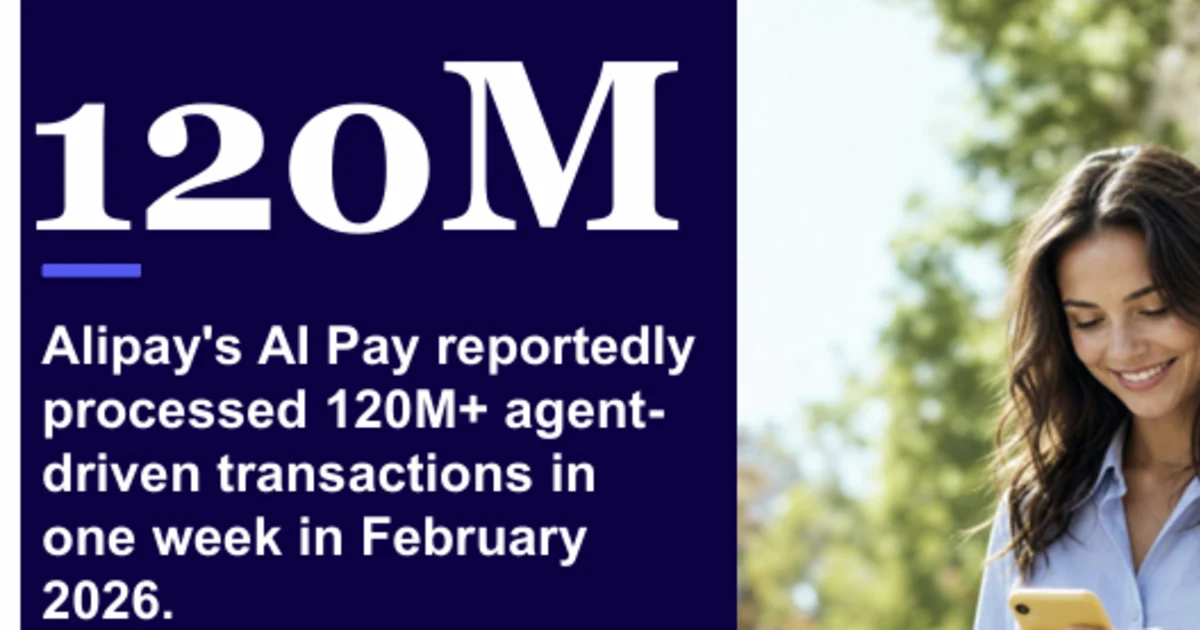
The standout figure comes from China. According to Ant Group, Alipay's AI Pay processed more than 120 million transactions during the week of February 5 to 11, 2026. On the US side, the report cites Adobe Analytics data showing traffic from generative AI sources to retail sites rose 1,200% between July 2024 and February 2025.
Consumer caution sits in the same report. Only 8% of consumers let AI complete a purchase, leaving a wide gap between the size of the opportunity and actual delegation. Placing China's transaction scale next to Western delegation rates in a single document is what makes this report worth reading.
Amazon Business reaches $60 billion annualized as B2B procurement turns agentic

Amazon Business hits $60B in annualized gross sales. Here's what agentic AI discovery means for enterprise procurement and B2B ecommerce operations.
www.marketscale.comCiting Digital Commerce 360, reports put Amazon Business past $60 billion in annualized gross sales. The scale marks digital-first procurement as the default across categories from facilities management to IT purchasing to clinical supplies.
Running alongside that milestone is the arrival of AI agents in procurement workflows. On top of established enterprise features such as approval routing and spend analytics, agents that autonomously discover, evaluate, and transact are moving from pilots into live purchasing.
The implication for suppliers is direct. Product copy written for human scanning, pricing logic locked inside an ERP, and batch-updated stock data cannot answer an agent's query. The point that catalog data quality has become a question of procurement eligibility applies well beyond B2B.
Payments and Fintech
zerohash launches Agentic Finance Suite for agents to hold, move, and stream money

On-chain infrastructure firm zerohash has launched a set of products that allows artificial intelligence agents, intelligent applications and machine-to-machine systems to initiate financial transactions directly.
www.pymnts.comOn-chain payments infrastructure firm zerohash announced its Agentic Finance Suite on July 30, letting AI agents initiate financial transactions directly. It is positioned as the foundation payments companies and card networks need to embed programmable money movement and stablecoin balances into AI products.
The capabilities break into three groups: holding, moving, and streaming on-chain money. Streaming covers metered access, publisher paywalls, and public API monetization for AI agents. CEO Edward Woodford said the suite answers two questions platforms kept asking: how to let an agent move money, and how to know the agent is who it says it is.
The company is also a member of the x402 Foundation, launched by the Linux Foundation on July 14. Per-call API and content charges are too small to fit the minimum-fee structure of card payments, and capital is flowing to the layer built to fill that gap.
Full article: zerohash Launches Agentic Finance Suite: Inside Hold, Move and Stream Onchain Money, and What Know Your Agent Really Solves
Visa also frames agentic commerce as a growth driver on its earnings call
CEO McInerney positions AI-driven payments as comparable to e-commerce and mobile commerce adoption curves during Q3 earnings call, with $3-5T in addressable volume at stake.
forkast.newsVisa made AI-driven payments a central theme of its third-quarter earnings call. CEO Ryan McInerney described the adoption curve as comparable to the early years of e-commerce and mobile commerce.
The company put $3 trillion to $5 trillion of addressable volume in play. Visa has been building out frameworks including Intelligent Commerce and Trusted Agent Protocol, and the earnings commentary extends that work.
Read together with Mastercard's remarks, both card networks made the same directional declaration in the same week. It functions as a joint answer to the view that agent-mediated transactions will route around cards.
Flipkart launches BNPL service Flipkart Pay Later

E-commerce companies are expanding their buy now, pay later (BNPL) offerings to attract more shoppers, with Flipkart on Thursday launching 'Flipkart Pay Later', a checkout-integrated credit service that allows customers to defer or split payments across its platforms.
www.aninews.inIndia's Flipkart launched Flipkart Pay Later on July 30, a credit service integrated into checkout. It supports deferred and split payments and works across the company's platforms.
Indian e-commerce players have been widening BNPL coverage in a market where payment options map directly onto completion rates. Credit embedded at checkout is positioned as a lever against cart abandonment.
Advertising and Retail Media
Pattern adds ChatGPT advertising to its campaign management platform
Pattern is adding ChatGPT Ads to the platform brands use for campaigns across Google, Meta, Snap, TikTok, and ecommerce marketplaces.
www.marketingtechnews.netEcommerce technology company Pattern has added ChatGPT advertising to its campaign management platform, extending tooling that previously covered Google, Meta, Snap, TikTok, and marketplaces into an AI service.
The foundation is Pattern's acquisition of ROI Hunter, which supplies product-level ad operations and performance measurement. The pitch is a single interface for running and measuring campaigns across search, social, marketplaces, and ChatGPT.
Ad inventory on AI assistants entering production campaign tooling signals retail media extending into conversational surfaces.
Corporate Moves and Partnerships
GR0 to acquire Ultimate Deployment and launch AI revenue platform GR0 AI

GR0 plans to acquire Ultimate Deployment, the enterprise division of Ultimate AI, and launch a new company called GR0 AI. The deal will combine GR0's performance marketing capabilities and customer relationships with Ultimate Deployment's AI agents and enterprise intelligence technology.
pulse2.comDigital marketing company GR0 announced plans to acquire Ultimate Deployment, the enterprise division of Ultimate AI, and to launch a new company called GR0 AI.
The combination connects GR0's performance marketing execution and customer relationships with Ultimate Deployment's AI agents and enterprise intelligence technology, to be offered as a revenue platform for ecommerce brands.
Customer acquisition work and AI agent operations landing in one company points toward brands no longer sourcing agency services and AI implementation separately.
Logistics and Fulfilment
Supply chain AI startup Freehand raises $75 million, works with Meta and Dunkin'

Freehand, a startup whose AI agents manage supply chain spend for enterprises, has announced $75 million in funding co-led by Battery Ventures and NewRoad Capital Partners.
retailtechinnovationhub.comFreehand, whose AI agents manage supply chain spend for enterprises, raised $75 million in seed funding. Battery Ventures and NewRoad Capital Partners co-led, with participation from former US Commerce Secretary Penny Pritzker's PSP Growth and Nexus Venture Partners.
The round is unusually large for a seed, and existing work with Meta and Dunkin' appears to have carried weight. The founders are Abhijeet Manohar and Nitin Jayakrishnan.
It signals investor attention moving past discovery and customer-facing AI toward procurement and spend management in the back office.
UNIT AI raises $12 million for fulfilment and returns automation
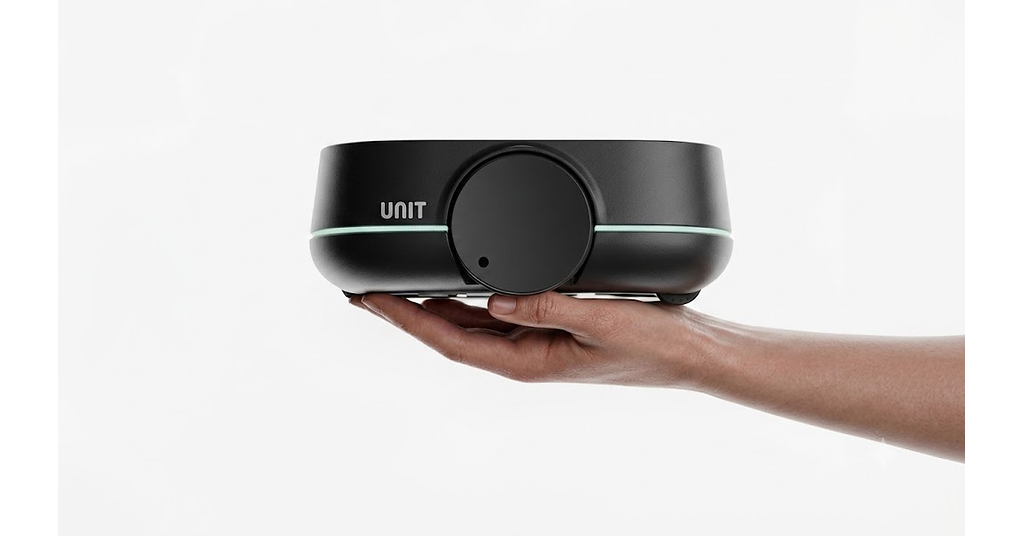
UNIT AI, a physical AI company making enterprise-grade automation more accessible for retailers and third-party logistics (3PL) providers, has raised $12 million.
www.prnewswire.comPhysical AI company UNIT AI raised $12 million to make enterprise-grade warehouse automation more accessible to retailers and third-party logistics providers.
Its focus is fulfilment and returns processing. Returns remain a structural cost burden for ecommerce operators and one of the areas where manual steps persist.
Together with Freehand, $87 million went into supply chain and logistics AI across these two days.
Wildberries warehouses hit by drone strikes, wiping out seller inventory
Nearly a dozen drone strikes in recent days have wiped out merchants' inventory stock and forced hundreds of companies to ask for loan restructurings.
www.businessinsider.comLogistics facilities belonging to Wildberries, Russia's largest ecommerce platform, were struck repeatedly by Ukrainian long-range drones, with nearly a dozen strikes reported in recent days.
The damage extends past the warehouses themselves. Seller inventory was destroyed and hundreds of companies have sought loan restructurings. The company is reported to have lost part of its logistics capacity, with replacement sites in neighbouring countries under discussion.
It is an extreme illustration of the fragility that comes with concentrating inventory on a single platform.
Consumer Trends
Enthusiasm and mistrust coexist, with AI stalling at the payment step

A study finds that beauty and fashion e-commerce sites are among the heaviest investors in AI tools, yet these solutions still reach their limits at checkout and in the face of customer reluctance.
us.fashionnetwork.comBeauty and fashion ecommerce sites lead on AI tool investment, yet a new study finds the returns flattening out short of checkout.
Technical constraints and consumer reluctance are working at once. Even where discovery and assisted selling land well, shoppers repeatedly decline to give up control at the moment of payment.
That squares with the 8% figure in today's NielsenIQ research. Automating discovery and automating payment are less continuous than operators tend to assume.
Beauty brands outpacing retailers on AI shopping readiness

New Google Trends data suggests beauty brands are getting ahead of retailers when it comes to AI-powered shopping, as they look towards a faster, more personalised world of e-commerce.
cosmeticsbusiness.comAnalysis of Google Trends data indicates beauty brands are moving ahead of retailers on AI-powered shopping readiness.
Beauty is a category where individual conditions such as skin type and preference drive purchase decisions, which suits conversational narrowing. A structure in which personalization accuracy maps closely to revenue has pulled investment forward.
It overlaps with the finding above about heavy AI investment across fashion and beauty, and suggests category-level gaps in AI readiness are starting to open up.
Salesforce finds AI raising customer expectations faster than brands can meet them

Salesforce's State of Commerce report reveals how AI is raising customer experience expectations while fragmented data holds brands back.
www.cxtoday.comSalesforce's State of Commerce report finds brands unable to keep pace with the customer expectations AI is raising.
The bottleneck it identifies is data fragmentation. When inventory, customer history, and pricing sit in separate systems, conversational selling cannot respond the way customers now expect.
The point that the barrier to AI adoption is data infrastructure rather than the technology itself echoes the catalog quality question raised around Amazon Business.
Global E-commerce Trends
CERRE argues EU consumer law is not ready for agentic AI

Existing EU rules offer little protection when AI agents make the wrong purchase.
dig.watchEuropean policy research institute CERRE published a paper arguing that current EU consumer law was not written with agentic AI in mind.
The issue is liability and redress when an AI agent makes the wrong purchase. Existing frameworks assume either a human deciding and contracting directly or a business soliciting directly, leaving the autonomous agent in between unaccounted for.
It follows the New York State Department of Financial Services interest covered on July 29, putting the same question on both sides of the Atlantic.
Delaware proposes a new corporate form for autonomous agents

Delaware is proposing a new type of corporate entity designed specifically for autonomous artificial intelligence (AI) agents.
www.pymnts.comDelaware has proposed a new type of corporate entity designed specifically for autonomous AI agents. Coming from the centre of US incorporation, the practical weight of the proposal is considerable.
The question at stake is where responsibility lands. When an agent behaves as a transacting party, existing corporate forms give no clear answer to who is party to the contract and who bears liability. Providing a purpose-built vehicle would let counterparties identify who they are dealing with.
Regulators moving to build a container rather than issue prohibitions or warnings makes a striking contrast with the problem CERRE raised.
Conclusion
What stood out across these two days is operators deliberately bounding how much they open to AI. Glovo opened discovery and retained payment, while Mastercard and Visa argued that a changing point of entry leaves the payment layer where it is. Opening up and fencing off are not opposites here; they are two sides of the same design decision.
On the numbers, 120 million transactions in China sat in the same report as the 8% of consumers who let AI finish a purchase. Whether that gap narrows is the biggest variable heading into next year.
On the regulatory side, the question of liability surfaced in Europe and the United States at once. Whether the container-building approach Delaware has taken spreads to other states and countries is worth watching next.