Amazon's About You Goes Viral: Shoppers Can Now See and Edit the Memory Behind Alexa for Shopping, and What It Means for Sellers
Amazon's About You lists the preferences Alexa for Shopping has inferred from purchases and conversations and lets shoppers edit them. We explain why it was called a dossier and how shopper context data now shapes AI shopping recommendations for e-commerce sellers.

Key Takeaways
- About You, which Amazon launched in May 2026, gathers the preferences inferred from purchase history and conversations with Alexa for Shopping in one place and lets shoppers edit or delete them. In October it spread rapidly on social media as a "personal dossier."
- At its core, About You is a window into the memory of an AI shopping assistant, and it makes visible a basic fact of agentic commerce: the quality of recommendations depends on the shopper's context data.
- Sellers cannot see individual shoppers' profiles, so stating attributes that can be matched against those profiles, such as household, dietary needs, and use case, in product data becomes a precondition for appearing in recommendations.
A feature launched in May was called a dossier in October
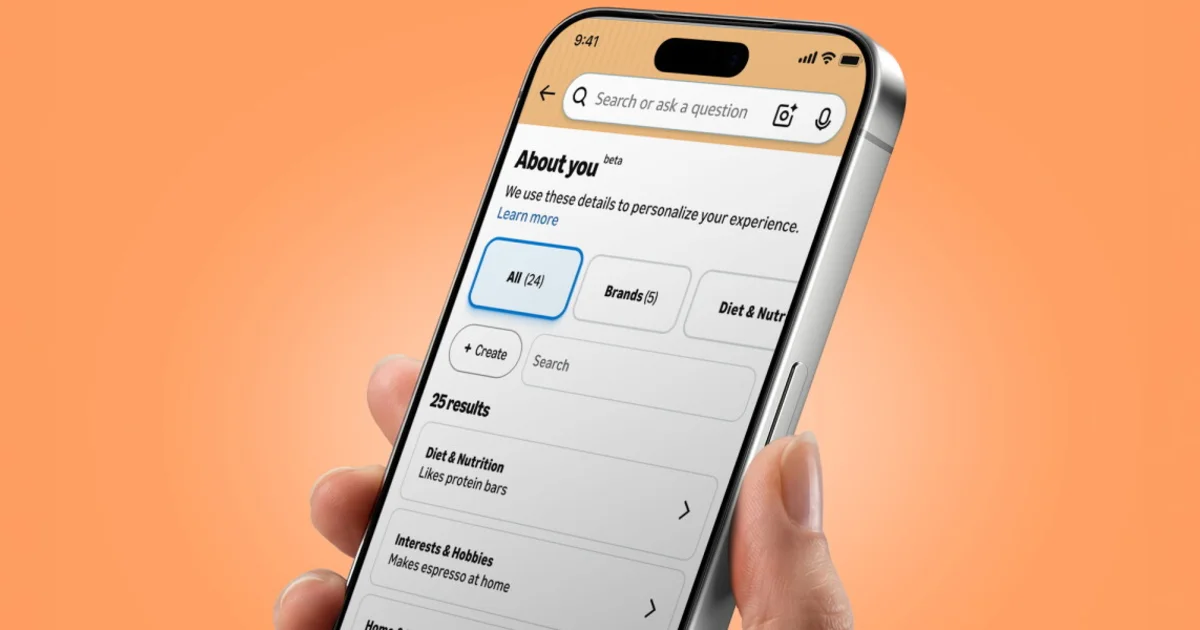
More easily update and edit the information that personalizes your Amazon shopping experience.
www.aboutamazon.comAmazon's About You is not a new feature. On May 13, 2026, the same day it launched its AI shopping assistant Alexa for Shopping, Amazon published an introduction to About You. Nearly five months later, in October, it suddenly drew attention.
It started with a single social media post. According to Futurism, a shopper stumbled on the page deep in her Amazon account and posted a screenshot of what had been inferred about her. The post drew well over a million views, and other shoppers began sharing their own pages.
What appeared on those pages varied widely. Some entries made people uncomfortable: remarks about body shape, the wrong gender or age, assumptions about their social lives. Others surprised people by being accurate, such as reading habits or favorite brands. The New York Post noted that some were calling it a personal dossier, and Futurism framed it as a reminder of how much customer data companies accumulate.
What appears in About You, and how to change it
Amazon says About You draws on five types of information: conversations with Alexa for Shopping, product reviews you have written, purchase history, items saved to Lists, and searches. The preferences and attributes inferred from them appear as a list of short statements. The screen shown in Amazon's announcement groups them into categories such as Brands, Diet & Nutrition, and Interests & Hobbies, with entries like "Likes protein bars" and "Makes espresso at home."
Shoppers can do three things. They can add information they want used, correct specific entries, and remove anything they do not want used for personalization. The page is reachable from the account screen in the app, on mobile web, and on desktop, and shoppers can also ask Alexa for Shopping, "What do you know about me?"
Amazon's own examples are easy to follow. Tell the assistant about your cat's favorite foods, and it recommends treats in those flavors. Add gardening tools to a List, and it suggests soil nutrition products and companion plants. Keep buying non-dairy milk, and it recommends other non-dairy products when you shop for groceries. Shoppers could already adjust recommendation settings and edit browsing history before, but seeing and editing all of it in one place is what is new.
This is the memory of an AI shopping agent, made visible
Treating About You as just another settings page misses its weight. It is a screen that shows exactly what an AI shopping assistant remembers about you.
The background is the merger of Rufus into Alexa for Shopping in May. According to Amazon's Alexa for Shopping announcement, Rufus helped more than 300 million customers research, compare, and buy products in 2025. Alexa for Shopping is built around memory that runs both ways: what you tell Alexa on an Echo informs your shopping on Amazon, and your conversations, browsing, and purchases on Amazon make Alexa more helpful. Rajiv Mehta, vice president of Conversational Shopping, compares the experience to an expert personal shopper "who already knows you."
Under this design, the same question gets different answers for different people. ZonGuru, which builds tools for Amazon sellers, reported that when its CEO searched for just "swingball," the assistant led with the pickleball edition, drawing on a pickleball set in his purchase history. A traditional results page shows dozens of products, but an AI answer names only a handful. Which handful you see is shaped by the profile.
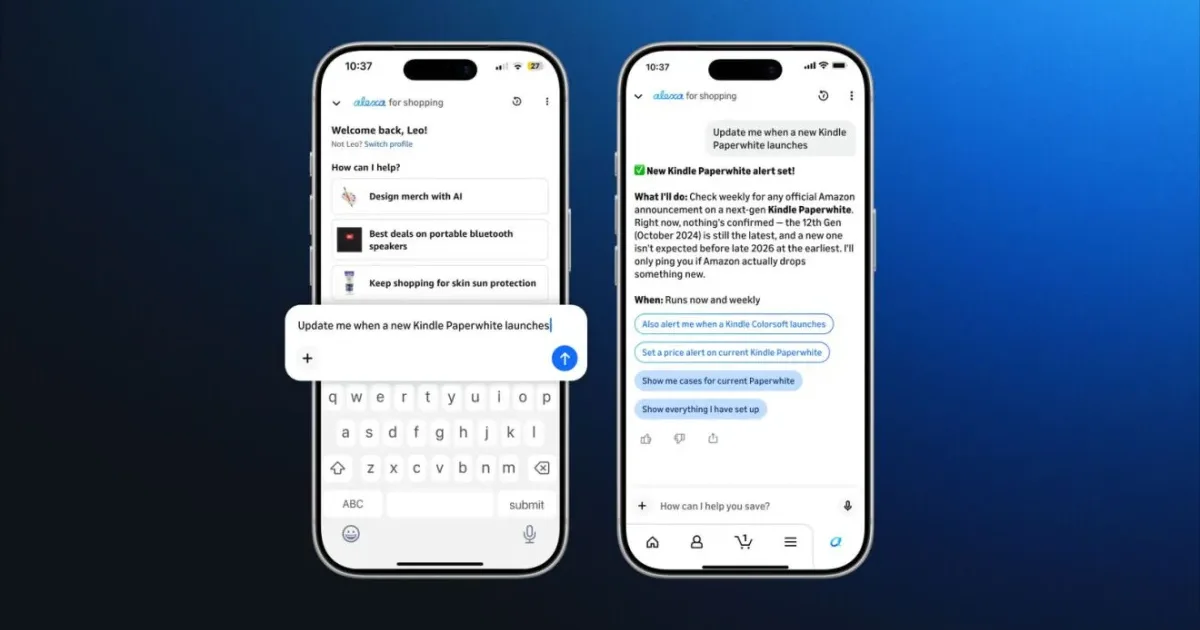
This memory also underpins other features. Update Me When, added in September, lets the AI alert shoppers ahead of time when something new happens around topics they care about. The Interests & Hobbies entries in About You and the topics registered in Update Me When are the same kind of information: what this person cares about.
Advertising sits on the same path. Branded Conversations, announced by Amazon Ads in September, is an ad format in which the AI holds a conversation based on product knowledge supplied by the brand, starting in the U.S. in January 2027. The brand's explanation enters the AI's answer, and that answer is further personalized by each shopper's memory. Whether About You data is used to choose who sees ads, however, is not disclosed in Amazon's announcements.
In agentic commerce, AI finds, compares, and sometimes buys products. What determines the quality of its recommendations is not only how capable the model is. It is context data: a person's household, dietary restrictions, favorite brands, and what they bought and returned. About You made that context data visible to shoppers. The uproar is what happened when many people saw, concretely and for the first time, what AI recommendations are based on.
How it compares with ChatGPT and Gemini memory
General-purpose AI assistants already remember their users. According to OpenAI's help article, ChatGPT's memory can draw on past chats, saved memories, and content from connected apps, and users can review, correct, and delete it from a summary view. In an August 2025 blog post, Google announced a setting, on by default, that lets Gemini learn preferences from past chats, along with Temporary Chats that are not used for personalization.
| Item | Amazon About You | ChatGPT Memory | Gemini past chats |
|---|---|---|---|
| Main sources | Purchase history, conversations with Alexa for Shopping, reviews, Lists, searches | Past chats, saved memories, custom instructions, files in Library, connected apps such as Gmail (varies by plan and region) | Past chats |
| How to review | The About You page, or ask the assistant 'What do you know about me?' | Memory summary, asking ChatGPT, Sources shown below responses | The Personal context setting |
| How to change | Add, correct, remove | Correct, ask it not to mention something, delete and turn off memory | Turn the setting on or off, manage and delete chat activity |
| Chats that are not remembered | Not mentioned in the announcement | Temporary Chats are not used for memory | Temporary Chats are not used for personalization |
| Main use of memory | Product recommendations and shopping help | Personalizing responses in general | Personalizing responses in general |
Side by side, Amazon's distinguishing feature is its data sources. General-purpose assistants mostly remember what users said in conversation. Amazon's memory includes transaction data about what people actually bought. That is why attributes a shopper never mentioned can be inferred from accumulated purchases. In the posts that went viral, the strongest discomfort came from entries describing things people had never said.
At the same time, every company is moving in the same direction: show the memory and let people fix it. The more an AI remembers, the sharper its recommendations, but the more wrong or unwanted memories it holds too. Offering ways to review and correct is becoming the minimum requirement for any AI that relies on memory.
What sellers and brands should put in product data
The first thing to understand is that sellers cannot see individual shoppers' About You profiles. ZonGuru's analysis starts from the same premise. What sellers can work on is the other side of the match: their own product pages.
Amazon's materials suggest which dimensions the profiles cover. The Alexa for Shopping announcement lists family members, pets, interests, and dietary needs as details shoppers can review and update. The About You screen shows categories for brands, diet and nutrition, and interests and hobbies. If a product page does not state what it offers along these dimensions, the AI has no handle for connecting a shopper's memory to that product.
Among Amazon sellers, a view is spreading that this is profile matching. PPC Land described e-commerce strategist Vanessa Hung's analysis that phrases naming a use case or audience, such as "designed for families with young kids" or "built for small home offices," become anchors that can be matched against profiles. A bullet list of specifications alone does not say who the product is for.
Amazon has not published how much weight profiles carry in its recommendations, though. The view above is a practitioner's observation, not an official explanation from Amazon. Still, writing facts such as non-dairy, target age, compatible pet types, and situations of use as concrete attributes rather than vague adjectives does no harm under any recommendation system.
Sellers outside the U.S. should also check availability. Alexa for Shopping is offered to U.S. customers, and Amazon's announcements say nothing about bringing About You to other countries, including Japan.
Privacy caveats
The reaction also showed how hard it is to reveal memory. Some inferences touched on things people had not disclosed, such as body shape or social life, and were rude when wrong. Shoppers can edit them, but the order is reversed: the uncomfortable inference is created first, and the shopper has to find it and delete it.
Amazon also has a track record with voice data. In May 2023, the U.S. Federal Trade Commission and the Department of Justice announced an action seeking a $25 million civil penalty from Amazon, alleging among other things that Alexa kept children's voice recordings even after parents asked for them to be deleted. Now that Alexa+ and Amazon shopping data are linked in a single memory, explaining what is kept, for how long, and for what purpose matters even more.
Amazon's About You announcement does not address how long the data behind the inferences is retained, whether it is used for advertising, whether the memory itself can be switched off, or which kinds of information are excluded from inference. All of these are not disclosed for now.
Conclusion
About You made it visible to everyone that AI shopping recommendations rest on memories of the shopper. This time the rough edges of the inferences drew both laughter and backlash, but the move toward memory-driven shopping is unlikely to reverse.
The next things to watch are whether Amazon adds explanations about retention and advertising use, and how brand explanations and personal memory combine when Branded Conversations launches in January 2027. For e-commerce sellers, the question is whether their product data states attributes concrete enough to connect their products to the "you" that the AI remembers.