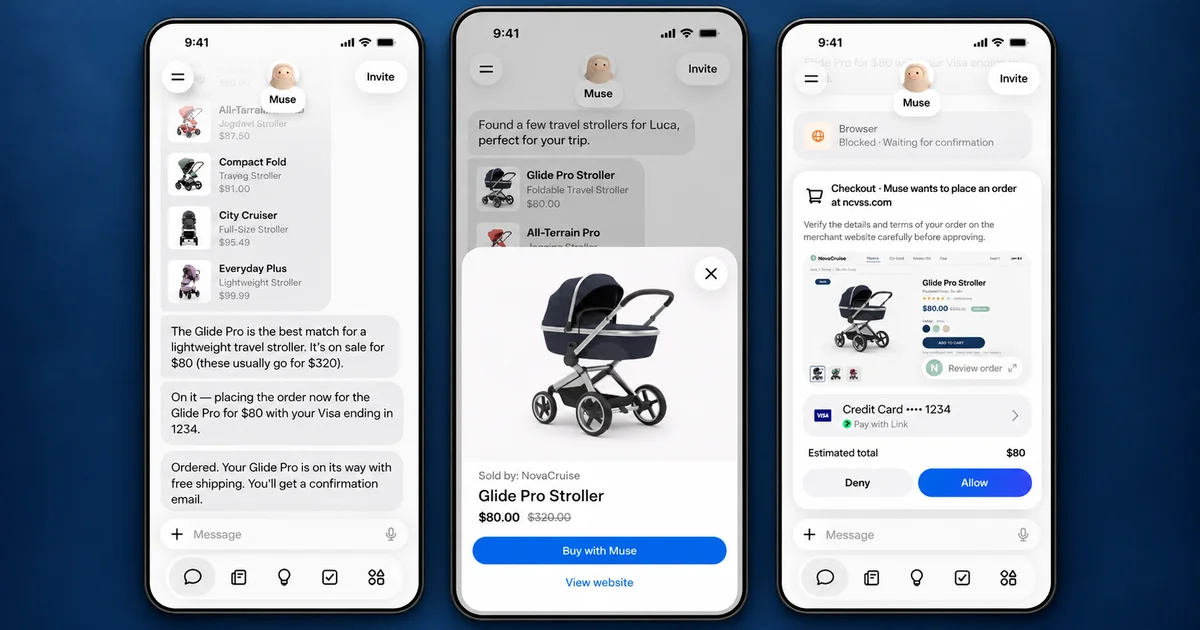
AI Commerce News Digest (October 9, 2026)
AI commerce news for October 9, 2026. Crossmint launches Agent Commerce Toolkit, bundling agent payments and checkout into one integration, and Jefferies reports that one-third of websites it tested block Meta's Muse agent. Also covered: the Skyfire Know Your Agent technology Mastercard highlighted and Amazon's Auto Buy.


Key Takeaways
- Crossmint bundles agent payments and checkout into one API
- Jefferies finds one-third of sites it tested block Meta's Muse
- How merchants let agents in is becoming the central question
Here is today's AI commerce news for October 9. The building blocks that let AI agents actually complete a purchase, and the stance of the stores on the receiving end, both made headlines. Crossmint released a developer toolkit that covers everything from storing a card to completing checkout. Meanwhile, Jefferies reported that Meta's Muse agent was shut out by one-third of the websites it tested. The common standard that Meta and Sierra announced, covered in yesterday's digest, is an answer to exactly this "can't get in" problem. Mastercard also published an explainer on how to verify who is behind an agent.
Top Stories
Crossmint launches Agent Commerce Toolkit so AI agents can pay with any card and buy at any store
Crossmint, the multi-rail payment infrastructure platform, today launched Agent Commerce Toolkit, a developer toolkit that lets AI agents pay with any card and complete purchases at any online store.
www.prnewswire.comOn October 8, payments infrastructure company Crossmint launched Agent Commerce Toolkit, a developer toolkit for letting AI agents pay and buy. A single API covers card storage, card-network credentials for agents, and checkout at merchants. It is already live, and developers can start using it on a self-serve basis.
According to Crossmint, giving an agent the ability to pay has meant combining four or more vendors: a card vault, a wallet, browser automation and individual card-network programs. Where a card is eligible, the new toolkit uses tokenized credentials from Visa Intelligent Commerce and Mastercard Agent Pay, issued as scoped virtual cards with spend limits and expiration dates. Cards that are not eligible can still complete the purchase securely from the vault. For checkout, it picks a path for each purchase based on availability, reliability and cost, choosing among embedded Shop Pay, protocols such as UCP, or browser automation where neither exists.
For agent developers, this is a tool that can buy at any store. But purchases made through browser automation run into stores that refuse automated checkout. The default robots.txt on Shopify stores prohibits automated purchases without an explicit, contemporaneous human approval step. How this squares with merchants' preference for agents that identify themselves will be a key question going forward.
Full article: Crossmint Launches Agent Commerce Toolkit, Bundling AI Agent Card Payments and Checkout Into One API
Jefferies says one-third of sites tested block Meta's Muse, as Amazon's lockout draws debate (follow-up)
Meta Platforms Inc (NASDAQ:META, XETRA:FB2A, SIX:FB) could see revenue from agentic commerce delayed after Jefferies, the investment bank, found about...
www.proactiveinvestors.comInvestment bank Jefferies published the results of testing Meta's AI agent Muse on several hundred leading US websites, including e-commerce and reservation sites. According to Proactive Investors, about one-third blocked access, about one-third challenged or restricted it, and only the remaining third were easy to navigate. New restrictions were appearing almost daily.
Jefferies argues that the bottleneck in agentic commerce is shifting from model quality to whether an agent can get into a site at all. Meta is building sanctioned connections with merchants such as Walmart, Best Buy, Wayfair, Sephora and Dick's Sporting Goods, but many are still at an early stage. The bank also sees a structural advantage for Google, since most companies are unwilling to block Googlebot for fear of losing search traffic.
On Amazon's lockout of Muse, Y Combinator's Paul Graham posted on X that refusing outside agents opens the door for a new competitor. GuruFocus noted that blocking protects Amazon's customer relationship but risks diverting agent-mediated purchases to retailers that do connect. The question now is how far identity schemes such as the Personal Agent Protocol, covered yesterday, can ease this standoff.
Agentic Commerce
Amazon's Alexa for Shopping offers Auto Buy during an October sale for the first time
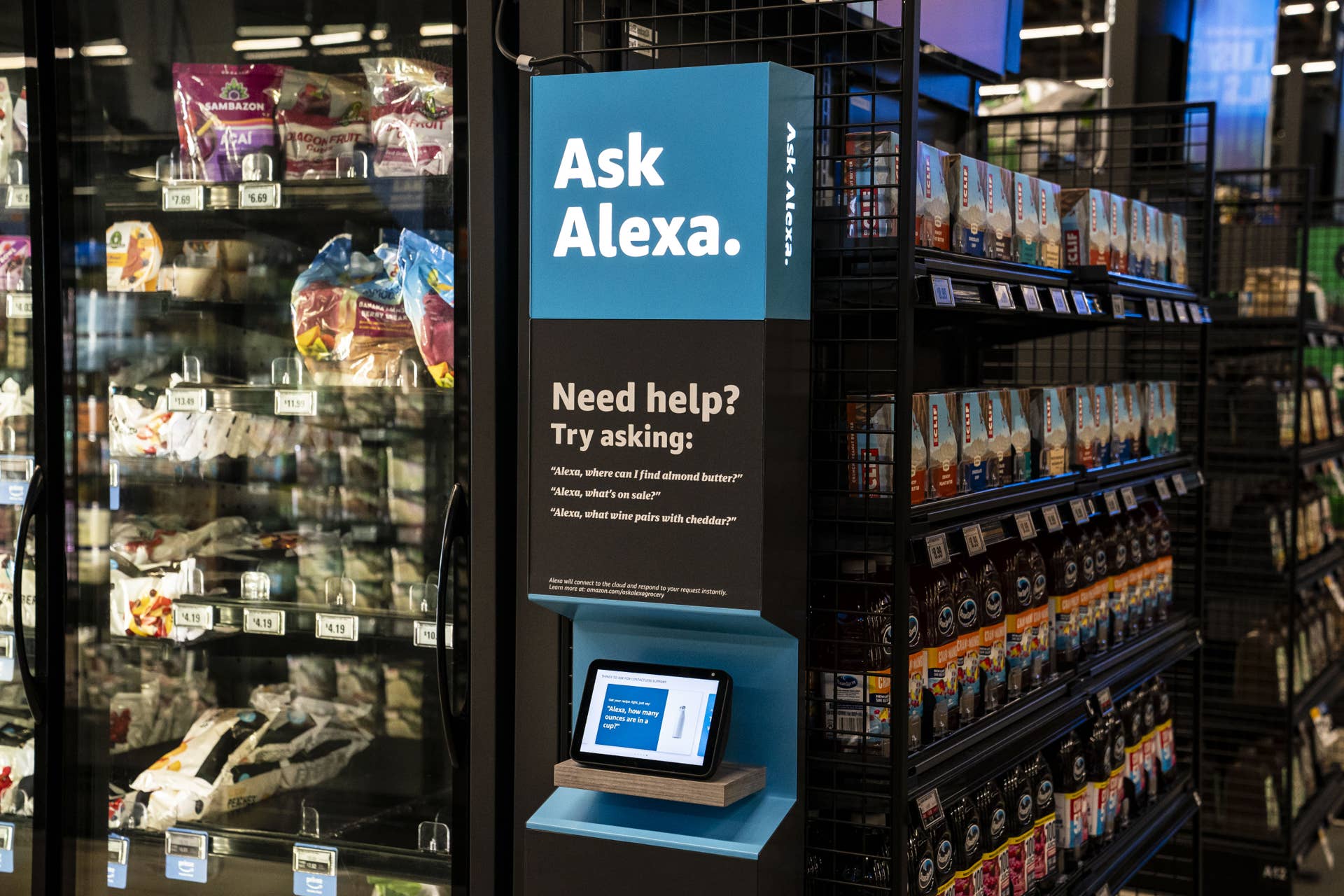
Auto Buy removes the pause where you'd normally ask yourself if you still want the thing.
www.thestreet.comTheStreet reported that Prime Big Deal Days on October 6 and 7 was the first big fall sale for Amazon's Alexa for Shopping. With Auto Buy, a shopper sets a target price and Alexa places the order with the default card as soon as the item drops to that price. It is the first October sale since the feature launched in May.
According to PCWorld, Auto Buy is Prime-only and works on items fulfilled by Amazon. Orders can be canceled within 24 hours, coupons do not apply, and up to 200 Auto Buy requests can be active at once. The article points out that retailers also reprice automatically based on demand and rival prices, setting up a contest between a bot waiting for a number and a bot deciding whether that number ever appears.
Once shoppers start telling agents "buy it at this price," the way prices are set begins to change. Together with the 365-day price history Amazon now shows, it is a prompt to rethink discount strategy for an era when agents buy on conditions.
Animoca's identity layer teams up with Reap and Pivota to pilot agents that prove shopper eligibility (follow-up)

The pilot aims to let shopping bots prove user eligibility for discounts and benefits while keeping personal data hidden from merchants.
ecommercenews.com.auAIR and Minds by Animoca Brands announced a partnership with payments company Reap and commerce data company Pivota to pilot AI agents that shop on behalf of verified users. The agent can prove that a user qualifies for a loyalty reward or discount without revealing the personal data behind that proof.
The division of labor is clear. AIR handles proof of eligibility, Minds the conversation with the user, Pivota product and merchant selection and order execution, and Reap the issuance of payment credentials scoped to a specific merchant, amount and time window. The partners will start with a controlled demonstration involving one unnamed merchant.
In July, Animoca also announced it had completed a similar pilot with Visa in Hong Kong. For retailers, the point to watch is whether agent-led shoppers can receive offers under existing loyalty programs and promotion rules without changes to the storefront.
TCC Global publishes an e-book on loyalty for grocers in the age of AI agents

“Loyalty 3.0 in the Age of Agentic Commerce” outlines an 18-month roadmap to help retailers remain relevant as AI increasingly influences grocery purchasing.
massmarketretailers.comTCC Global, a loyalty marketing company that works with retailers including Kroger, Albertsons and Carrefour, published the e-book "Loyalty 3.0 in the Age of Agentic Commerce." It warns that once AI agents build and purchase grocery baskets, points and coupons lose their power, and grocers risk becoming interchangeable fulfillment layers chosen on price and speed alone.
The proposed response has two tracks. The first is becoming agent-ready by simplifying loyalty economics into values agents can compute, cleaning up product and pricing data and building an API layer. The second is creating cultural and community-based rewards that make shoppers want to tell their agent to prefer one retailer. The authors put the window to prepare at 18 months.
Payments and Fintech
Mastercard explains how to verify who is behind an AI agent

As AI agents begin shopping and paying on consumers' behalf, merchants need new ways to verify who's behind them and build trust in agentic commerce.
www.mastercard.comMastercard published a story on how to confirm who an agent is and whom it is acting for. In September, the company announced new services that add identity, fraud and behavioral insights to Agent Pay and give issuers a score indicating whether a legitimate agent is involved. The story describes the overall foundation as the "Agent Pay Trust Framework."
It also features Skyfire's Know Your Agent (KYA) technology. Skyfire, part of Mastercard's Start Path startup program, creates a token that verifies the agent and the user it represents, and can pair it with tokenized payment details limited to an authorized amount. Because KYA is recognized by the security and fraud tools merchants already use, many can start accepting trusted agents without rebuilding their sites. It is the receiving-side counterpart to the Muse blocking story above.
Ecommpay reports an average 11.95-point lift in retail approval rates from AI analysis of payment data

Failed payments are costing online merchants sales, as Ecommpay says AI can also pinpoint lost revenue and lift conversion rates.
itbrief.co.ukPayment service provider Ecommpay published a white paper urging merchants to apply AI to payment data well beyond fraud prevention. The company has built an engine that analyzes three common causes of declines: 3DS authentication failures, fraud flags and customer errors.
Across a sample of retail e-commerce brands, approval rates rose by an average of 11.95 percentage points over two months, and by 7% on average across five sectors. Ecommpay argues that PSPs are well placed to find lost revenue because they can combine merchant data with issuer and acquirer signals such as authorization responses and chargebacks.
AI Commerce Tools
Indian e-commerce players use AI to read regional demand ahead of festive sales

From spotting trends before they become popular and predicting what consumers are likely to buy to personalising recommendations, AI is doing a bulk of the work behind the scenes.
m.economictimes.comThe Economic Times reported that Indian e-commerce companies are weaving AI into every step of the shopping journey ahead of the festive season. Meesho's TrendPulse analyzes about 400 million searches a day and identifies around 65 emerging shopping moments daily, often up to 60 days before they peak. About 97% of them have a regional or hyper-local dimension.
Flipkart is combining search, conversation, voice and visual inputs to understand intent and ask follow-up questions. Amazon India pointed to review summaries and price history, while Myntra said its size-and-fit intelligence covers about 85% of its apparel. In advertising, agents that automatically shift budget away from fatigued creative are on the table, but the prevailing view is that large budget changes and brand-sensitive decisions will still require human approval.
ThredUp CEO on rising AI costs: "I was both surprised and didn't care"

James Reinhart said nothing should be done to slow employees’ use of AI because the benefits will outweigh those initial costs eventually.
www.retaildive.comThredUp co-founder and CEO James Reinhart said at an industry conference in September that he was "both surprised and didn't care at all" about how fast AI costs were growing. Token usage rose faster than he expected, but he does not plan to slow employees' use.
In August, Reinhart told analysts that AI would bring significant savings by reducing the need to grow headcount as fast and making teams more productive. The secondhand e-commerce company's second-quarter revenue rose about 17% year over year to $90.8 million, while operating expenses grew more than 17%. As a public company, he said, ThredUp needs to get better at projecting these costs.
Advertising and Retail Media
Asda expands checkout offers with Rokt, more than doubling Rokt revenue at George

Asda, one of the UK's largest grocers, and Rokt today announced a partnership to deliver relevant offers to Asda's customers at checkout across its online grocery business and George.
www.prnewswire.comUK grocer Asda announced it is extending its partnership with Rokt across its online grocery business and George, its clothing and home brand. With Rokt Pay+ on the payment page and Rokt Thanks on the order confirmation page, AI picks the most relevant next action for each customer in real time.
At George, Rokt revenue more than doubled after Pay+ was added, and on the grocery business it grew 72% year on year. Customer conversion was unaffected. It is a move to turn the moments just before and after purchase, when intent is highest, into advertising inventory.
Saudi grocer Panda teams with Spike Media Saudi and GoWit to scale e-commerce retail media

Panda Retail, one of Saudi Arabia’s largest grocery retailers, partners with Spike Media Saudi, GoWit's strategic partner in Saudi Arabia, to accelerate its digital media transformation.
finance.yahoo.comSaudi grocery retailer Panda Retail announced a partnership with Spike Media Saudi and GoWit to scale its e-commerce retail media business. Panda has more than 200 stores, over 14 million online shoppers and one million monthly active app visits.
Spike Media brings local advertiser relationships and ad operations, while GoWit provides the technology: first-party data activation, AI-powered auction and bidding, campaign automation and real-time measurement. Efforts to put retailers' purchase data to work in advertising are gaining momentum in the Middle East as well.
Corporate Moves and Partnerships
Amazon cuts jobs in its retail division during Prime Big Deal Days

Amazon has cut hundreds of "Stores" unit jobs both in the U.S. and internationally amid a larger slate of 30,000 job cuts.
www.cnbc.comOn October 8, Amazon confirmed it had cut jobs, primarily in its Stores unit, which oversees the main e-commerce site. A person familiar with the matter said fewer than 1,000 white-collar workers were affected, including teams in customer service and selling partner services, with employees in the US, India and the UK among them.
A spokesperson said the changes would "better enable us to deliver on our priorities." The cuts are the latest small reductions following a larger round of about 30,000 job cuts that began last year, and founder Jeff Bezos attributed them to overhiring during the pandemic.
Target-owned Shipt brings back former COO Raj Kapoor as CEO
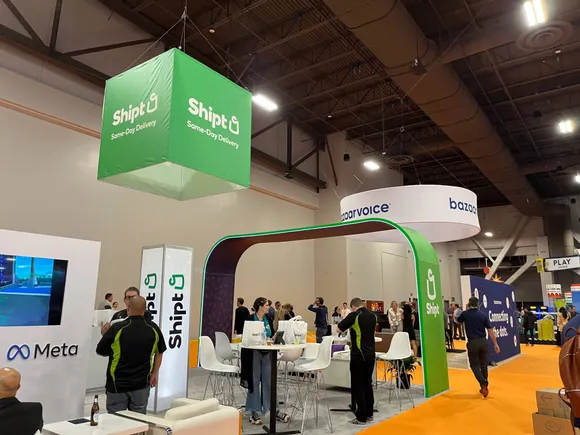
Raj Kapoor, the e-commerce company’s former chief operating officer, is rejoining after a year-long stint as a Target senior executive.
www.grocerydive.comShipt, Target's shopping and delivery service, named former COO Raj Kapoor as CEO effective October 18. Kapoor was Shipt's COO from 2022 to 2025 and then served as Target's senior vice president of marketplace, overseeing Target Plus.
Kamau Witherspoon, who led Shipt for more than four years, is stepping down. Grocery Dive noted that the change comes as Shipt continues to build out its AI capabilities. Kapoor said he will focus on customer convenience, supporting the shopper and driver community, and business performance.
Coupang sues to overturn a record privacy fine over its data breach

The e-commerce giant has filed lawsuits challenging a record 624.7 billion won ($462 million) privacy fine over a data breach affecting about 37.5 million users in Korea.
www.koreajoongangdaily.comSouth Korean e-commerce company Coupang filed two lawsuits with the Seoul Administrative Court seeking to nullify the 624.7 billion won (about $462 million) in fines imposed by the Personal Information Protection Commission in June. It is the largest fine the commission has ever imposed on a single company.
The total breaks down into 423.6 billion won for the data breach and 201.1 billion won for the unauthorized collection of user activity records and other violations. The breach exposed the names, phone numbers and delivery details of about 37.5 million users. Some US officials and lawmakers had questioned whether the Korean unit of US-listed Coupang was being treated unfairly.
Consumer Trends
Household spending during Prime Big Deal Days dips slightly below June's Prime Day, Numerator finds

Consumers who shopped Amazon’s 2-day promotion Oct. 6 and 7 curtailed their spending a bit compared to those who shopped the retailer’s Prime Day event last June.
www.hometextilestoday.comAccording to Numerator, the average Prime Big Deal Days order on October 6 and 7 was $48.74, slightly below $48.99 during June's Prime Day. Average spend per household was $114.01, down from Prime Day's $121.96.
Among shoppers who compared prices elsewhere, 66% checked Walmart, followed by Target at 40%. Some 74% said inflation influenced their decision to shop the event, up 4 points from June. More than a third completed at least half of their holiday shopping during the sale, and intent to shop Black Friday and Cyber Monday fell from last year. As tools like Auto Buy spread, more of this comparison work will move to agents.
Logistics and Fulfillment
Zenkraft launches Shipping for Agentic Commerce app for Salesforce's Storefront Next

Zenkraft today announced the launch of Zenkraft Shipping for Agentic Commerce, a new Commerce App available for Salesforce B2C Commerce's Storefront Next.
finance.yahoo.comZenkraft, which makes Salesforce-native shipping tools, launched Zenkraft Shipping for Agentic Commerce for Storefront Next, the new storefront foundation of Salesforce B2C Commerce. Available in the Commerce App Registry, it lets merchants add estimated delivery dates, branded tracking and returns to their storefronts without custom integration work.
Salesforce positions Storefront Next as an AI-first storefront, and the October 7 digest covered fraud prevention company Forter being named a launch partner. Delivery dates and return terms are also inputs agents use when comparing products, and whether a platform can expose this information in structured form is becoming a differentiator.
Summary
Today's news shows the agentic commerce debate moving from "can agents buy?" to "will stores let agents in?" Crossmint is bundling payments and checkout so agents can buy anywhere, yet Jefferies found one-third of sites shutting out Muse. The Skyfire KYA technology Mastercard highlighted and Animoca's eligibility proofs are mechanisms for stores to recognize agents that identify themselves.
On the retail side, Asda and Rokt's checkout offers and TCC Global's call to rework loyalty programs show that preparing to be chosen by agents is now being discussed with concrete numbers and deadlines. Next week, watch for the Personal Agent Protocol specification that Meta and Sierra plan to publish in October, and for how far merchants loosen their blocks.