ChatGPT Launches Virtual Try-On and Favorites: How It Differs from Google and What It Means for Apparel E-commerce
OpenAI added a Try on button that lets shoppers see clothes on their own photo, plus Favorites for saving products, to ChatGPT shopping. We explain how it differs from Google's try-on, the strategy after the checkout retreat, and what apparel brands should review on product images and returns.

Key Takeaways
- On October 1, 2026, OpenAI announced the global launch of a "Try on" button in ChatGPT shopping that lets users see clothing and accessories on a selfie or full-body photo, along with "Favorites" for saving products. Image generation runs on the new ChatGPT Images 2.5 model
- After ending Instant Checkout and stepping back from owning payments, OpenAI is moving to capture the "deliberation" stage before purchase inside ChatGPT. Because shoppers can also try on items from screenshots of external sites, products from merchants not listed in ChatGPT are covered too
- For apparel e-commerce brands, product images become raw material for AI try-ons, and Favorites becomes a new shortlist. How accurately try-on images reflect size, usage figures and any way for merchants to opt out are undisclosed, and the effect on returns has not been verified
ChatGPT's product listings now have a "Try on" button

OpenAI has introduced a virtual try-on feature alongside a dedicated 'Favorites' library in ChatGPT, moving the AI assistant beyond basic product recommendations into interactive visual commerce.
www.adgully.com"How would this black jacket look on me?" Until now, even after ChatGPT found the product, the final judgment came down to looking at the model photos on the product page and imagining. On October 1, OpenAI made it possible to take that last step inside ChatGPT.
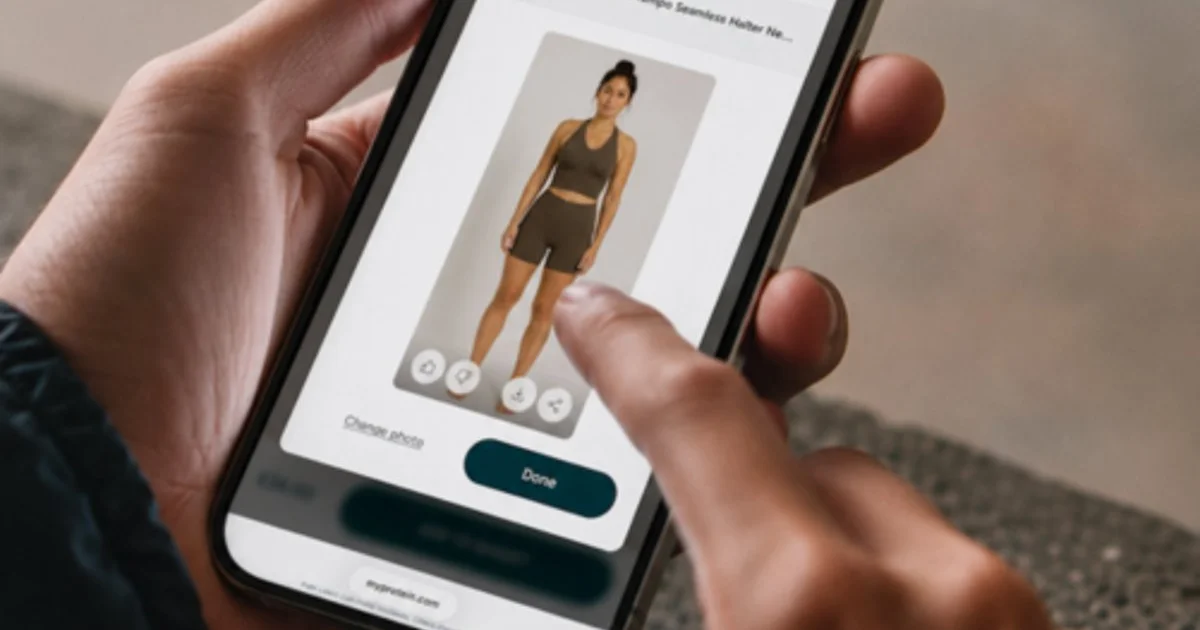
According to the ChatGPT release notes, a "Try on" button appears on clothing and accessory listings shown in ChatGPT. Selecting it prompts the user to take or upload a selfie, and ChatGPT Images generates an image of that person wearing the item. The reference photo is saved for future try-ons and can be changed or deleted under Settings, Personalization, Reference photos.
The other feature is "Favorites." Users can save products they find to their ChatGPT Library and organize them into folders. According to TechCrunch, saved products appear alongside try-on images. The features are available on mobile and web, and OpenAI describes this as a global launch.
Image generation is powered by ChatGPT Images 2.5, released in September. OpenAI says it produces more natural lighting and richer fabric textures, follows editing instructions more reliably and reduces generation latency. These are all the company's own claims, and no figure was given for how much faster it is.
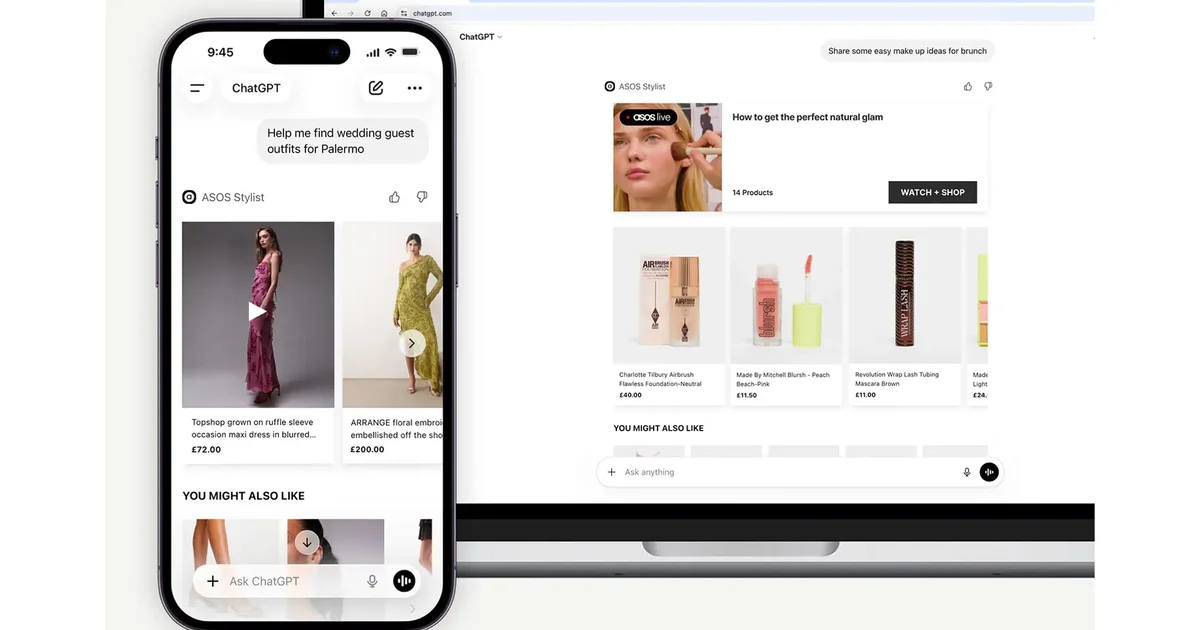
ChatGPT's product listings are not the only entry point for try-ons. Users can upload a screenshot of clothing found on another e-commerce site and have ChatGPT try it on. OpenAI also highlighted describing a style in text and asking ChatGPT to gather the pieces, or uploading a photo of a celebrity's outfit and asking it to find purchasable items.
After stepping back from checkout, OpenAI goes after the "deliberation" stage
The announcement makes more sense when placed on the path ChatGPT shopping has taken over the past year.
It began with shopping research in November 2025. Users describe what they need, and ChatGPT asks follow-up questions, researches multiple retail sites and builds a buyer's guide. It was offered to logged-in users including the Free plan, with results described as organic and based on publicly available retail sites, and merchants could join through an allowlisting process.
Around the same time, OpenAI was also pushing "Instant Checkout," which let users complete payment inside ChatGPT. In March 2026, however, the company ended the feature and shifted to an app-based model with retailers. A Walmart executive revealed that conversion for checkout inside ChatGPT was about one-third of Walmart's own site. Walmart then moved to embedding its own AI assistant, Sparky, in ChatGPT.
After the effort to bring checkout into ChatGPT fell short, OpenAI turned to the step before purchase. In June, it announced a partnership with L'Oréal to bring Maybelline's makeup virtual try-on into ChatGPT, with the brand bringing its own technology (ModiFace). Try on goes a step further: OpenAI uses its own image model to let shoppers try on clothing in general, regardless of brand.
When buying apparel, shoppers hesitate over whether it suits them, whether it goes with what they own and which of several options is better. Try on answers "does it suit me," and Favorites answers "line up the options and compare." Digital Trends noted that ChatGPT has more than 1.2 billion weekly users, many of whom already use it for shopping inspiration, and argued that OpenAI is building on an existing habit rather than inventing one.
What should not be overlooked is that Favorites lets ChatGPT take over the role a retailer's favorites list used to play. Until now, shoppers saved candidates in each e-commerce site's wishlist or cart. If that list moves to the ChatGPT Library, it is OpenAI, not the retailer, that knows which products were saved and how often. OpenAI has given up checkout but is moving to hold the place where purchase decisions are recorded. That is how this combination reads.
How it differs from Google's try-on
AI try-on itself is not new. Google launched virtual clothing try-on in the U.S. in July 2025 and in October expanded it to Australia, Canada and Japan and added shoes. Consumers in Japan can already try a similar experience on Google.
| Item | ChatGPT | |
|---|---|---|
| Launch | October 1, 2026 (announced as a global launch) | U.S. in July 2025; expanded to Australia, Canada and Japan in October 2025 |
| Photo used | Selfie or full-body photo | Full-length photo |
| Products you can try on | Clothing and accessories shown in ChatGPT, plus screenshots from external sites | Clothing in Google's product listings; shoes since October 2025 |
| Saving | Favorites (folders in the Library, saved alongside try-on images) | Save or share the generated image |
| Eligible plans and pricing | Undisclosed (only stated as available on mobile and web) | Offered as a Google Search feature |
The difference lies in the breadth of the entry point. Google's try-on covers products in Google's listings and uses a full-length photo. ChatGPT can start from a selfie, and any product from any site can be tried on as long as there is a screenshot. TechCrunch framed the use of finding products from celebrity outfits as a move into fashion inspiration and discovery, territory long dominated by Pinterest and Google.
At the same time, the outlet wrote that whether ChatGPT becomes people's first choice for this remains to be seen, given that Google launched try-on a year earlier. Offering try-on is not a differentiator in itself. The real point of comparison is whether gathering candidates in conversation, trying them on and saving them can be connected without interruption.
Products not listed get tried on too: what the screenshot path means
For e-commerce merchants, the biggest impact comes from try-on via screenshots.
To appear in ChatGPT's product listings, public product pages had to be read or merchants had to go through a listing process. With the screenshot path, however, a try-on starts as soon as a shopper crops a product image from a merchant's site and hands it to ChatGPT. Even if a merchant has no relationship with ChatGPT, its product images become raw material for AI try-ons.
That cuts both ways. On the plus side, products from smaller brands not listed in ChatGPT can still enter the shopper's consideration set. On the minus side, merchants cannot control how the try-on image turns out. If the drape of the fabric or the color is rendered differently from the real thing, the shopper takes that as their impression of the product. The announcement did not say how merchants could exclude their products from try-on via this path.
How product photos are shot also matters. A product with only a single flat-lay photo and a product with front, side and on-body shots plus fabric close-ups give the AI very different amounts of information. The generation process has not been made public, but since images are being used as try-on material, product photos are starting to serve not just as model shots but as input data for AI.
Caveats: a try-on image does not guarantee size
Some issues are not visible from the promoter's explanation alone.
The biggest is accuracy. What OpenAI described was image quality, such as lighting, texture and adherence to editing instructions. It has not said how accurately try-on images reproduce size and fit. How body shape is estimated from a selfie, and whether size charts are referenced, are also undisclosed. Digital Trends pointed out that whether shoppers trust an AI's rendering of themselves remains the real question.
From a returns perspective, this point carries weight. The National Retail Federation (NRF) and Happy Returns estimated for 2025 that 19.3% of online sales would be returned, and Zalando explains that return rates in European online fashion reach around 50%, with up to half caused by size and fit. If checking appearance alone strengthens the push to buy while size mismatches go unresolved, returns may not fall and could even rise. In the case of THG Ingenuity's AI Stylist, conversion figures were shown, but no figures on return reduction were given.
There is also the issue of trust. The same week, TechCrunch covered how proactive product recommendations from AI startup Instinct were seen by some users as an overreach, more like ads. A shopping experience that stores your photo and learns from the products you save sits close to the line between convenient and creepy. On whether reference photos are used for anything beyond try-on, the release notes only explain how to save and delete them.
Usage scale is also unknown. No figures have been released on how often try-on is used or what share of try-ons lead to a purchase.
What apparel e-commerce merchants should review now
First, product images and product data. Review whether on-body photos exist, how many angles are covered, how fabric and color are described, and whether size charts and the model's height and size worn are listed. The same information is used both when AI renders a try-on image and when the shopper decides whether to buy after trying on.
Second, how traffic from ChatGPT shows up. Since Instant Checkout ended, products found in ChatGPT are generally purchased on the retailer's own site. Segmenting referrals from ChatGPT in your analytics and preparing to compare that traffic's return rate with other channels lets you judge the effect of try-on with your own data.
Finally, the listing process. The allowlisting process for reliably appearing in ChatGPT's product listings has been available since shopping research launched. Being shown with information from product pages you control makes it easier to avoid incorrect prices and stock than waiting to be tried on via screenshots.
Conclusion
ChatGPT's Try on and Favorites are OpenAI's move to bring the pre-purchase deliberation stage inside ChatGPT after stepping back from owning checkout. By extending the try-on entry point to screenshots, products from merchants with no relationship to ChatGPT also enter that deliberation.
The next things to watch are whether try-on extends into size and fit judgments, and how data on products saved to Favorites connects with price alerts and advertising. As JD.com's full rollout of try-on ahead of its 618 shopping festival shows, try-on is becoming a standard feature across platforms. What merchants can control is the quality of the product images and data that AI reads.