Product Page Updates From 35 Minutes to Under One: Inside Newell's AI Content Agent With CommerceIQ
How Newell Brands and CommerceIQ built a custom AI Content Agent in under 80 days, what the 40x time-saving figure really measures, and how e-commerce teams should prepare product data that AI shopping agents can actually read.

Key Takeaways
- Newell Brands, the CPG group behind Rubbermaid, Sharpie and Coleman, cut product detail page update time from roughly 35 minutes to under one minute using a custom AI Content Agent built with CommerceIQ in under 80 days.
- The speed matters beyond labor cost. ChatGPT and Gemini do not crawl merchant catalogs on demand; they read product feeds submitted in advance, so update latency directly shapes whether an AI agent recommends your product.
- The published figures come from the vendor and the brand. SKU count, retail channels in scope and contract value are all undisclosed, so e-commerce teams should translate the case into their own product data update lead time rather than the 40x headline.
A CPG Giant Took Product Page Updates From 35 Minutes to Under One

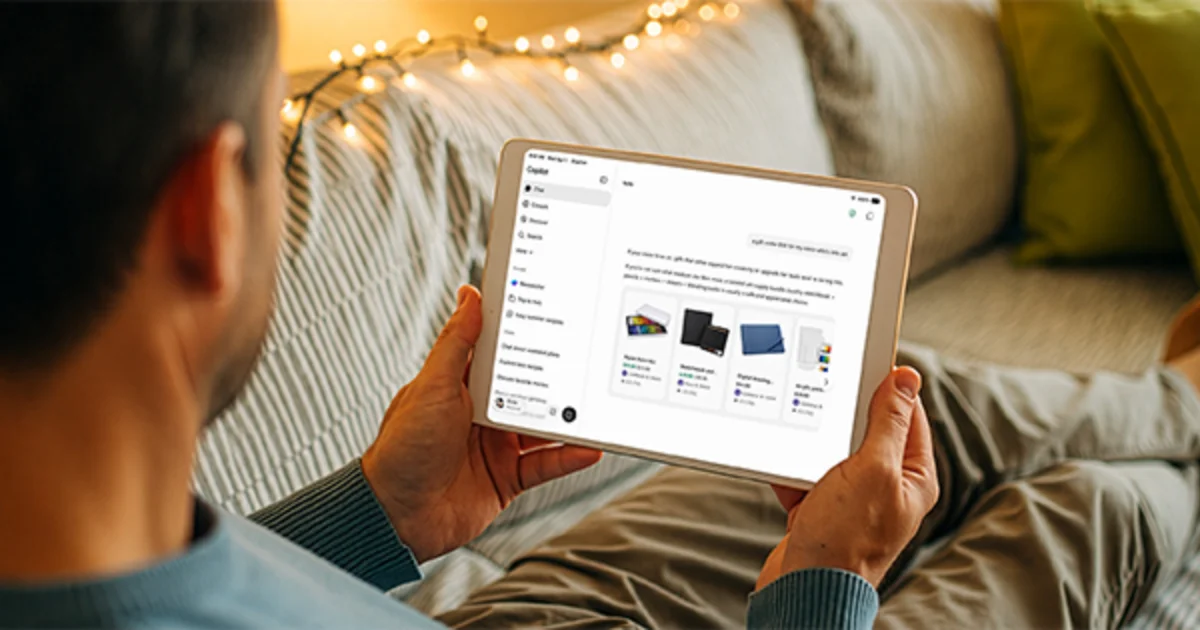
CommerceIQ built a custom AI Content Agent for Newell Brands, cutting product page updates from 35 minutes to under one, a 40x time savings.
www.demandgenreport.comNewell Brands, whose portfolio includes Rubbermaid, Sharpie and Coleman, automated its product content operations with retail AI platform CommerceIQ, in a case study Demand Gen Report published on August 27, 2026. Stated plainly, updating a single product detail page (PDP) used to take about 35 minutes and now takes less than one, a 40x improvement in time saved, delivered in under 80 days, while holding 100% compliance with Newell's product information management (PIM) standards.
PIM refers to the discipline of maintaining product names, model numbers, specifications, imagery and claims in one place, then distributing them to each sales channel in the format that channel requires. The compliance figure sitting next to the speed figure is the part worth noticing. If speed were the only goal, a generative model could simply write the copy, and wrong model numbers or prohibited claims would follow.
Checking the primary source, the engagement was already cited as a customer proof point in CommerceIQ's Retail AI Agents suite announcement on March 3, 2026, with the same executive quote. The new case study elaborates on a deployment disclosed five months earlier rather than announcing a new one.
Our partnership with CommerceIQ to build a custom Content Agent in under 80 days has been a great example of using AI to drive productivity and improve outcomes. We automated what was a heavily manual, repetitive process that simply couldn't scale with our business.
Why a Single Product Page Took 35 Minutes
Anyone startled by 35 minutes is probably picturing their own CMS. Editing a page on your own storefront takes a few minutes. Product content operations at a CPG brand are heavy because the destination is not one site but many retail channels.
Amazon, Walmart and Target each impose different title length limits, different bullet counts, different image recommendations and different enhanced content specifications. The same physical product carries a different ASIN or retailer item code on each, and category tree labels rarely align. Layer PIM naming rules and legal review on top. Most of those 35 minutes go to checking requirements, transcribing values and handling rejections, not to writing.
CommerceIQ's own 2026 research, run with Qualtrics across 240 e-commerce leaders at companies above $300M in revenue, points the same way. 56% named data trust and quality as their top challenge, and 46% said their data lacks actionable insight. The problem is not a shortage of data but the gap between data and execution. What distinguishes the Newell deployment is that the Content Agent was fitted to Newell's existing workflows and governance requirements rather than dropped in as a generic assistant.
Product Data That AI Agents Can Actually Read
This is where the news gets larger than a productivity story. Faster product content used to be an operations metric. In 2026 it is a discovery metric.
The reason lies in how generative AI obtains product information. ChatGPT's shopping experience does not crawl merchant sites for current prices; it reads product feeds that merchants submit in advance. OpenAI's published product feed specification uses a flat file format requiring id, title, description, link, image_link, availability, price and brand, and also accepts Google-compatible product data formats. Google works the same way: the Shopping Graph is built on Merchant Center feeds, and the shopping surfaces in AI Mode and Gemini draw from there.
The implication is blunt. Information that has not reached the feed does not exist as far as an AI agent is concerned. Cut a price, restock an item, sharpen a claim, and none of it appears in an AI answer until the feed reflects it. At 35 minutes per update across several thousand SKUs, refreshing an entire catalog takes months, and throughout that window the agent decides whether to recommend you based on stale data. Shopify's report of AI-referred traffic and orders tripling in Q2 2026 shows that channel already converting into sales.
Machine readability forms a second barrier. EMARKETER's "The Digital Shelf 2026," published in May 2026, cited Adobe's AI Content Visibility Checker in reporting that a third of the content on the average retail product page cannot be read by large language models, the highest unreadable share among the retail page types Adobe measured. Specification tables baked into images, tab content injected later by JavaScript and review summaries without structured data are the usual culprits.
That context explains why CommerceIQ's Content Agent is positioned around resolving PDP compliance gaps together with SEO, AEO and GEO gaps. AEO means answer engine optimization and GEO means generative engine optimization, and both target inclusion in an AI-generated answer rather than a rank position. Automating product content is turning into a prerequisite for being discoverable through AI at all. What to fix on the storefront itself sorts into four layers of LLMO work.
How Far to Trust a Vendor's Numbers
The 40x figure is appealing, but it needs qualification.
First, both parties to the announcement are on the promoting side, and no third party verified the result. The scope of work behind the 35-minute baseline, the period it averages and the retail channels involved are not disclosed. CommerceIQ claims improvements ranging from 10x to more than 100x across live customer deployments, and the width of that range is itself evidence that measurement conditions move the answer substantially.
Second, research suggests enterprise AI adoption fails more often than it succeeds. MIT Media Lab's Project NANDA report "The GenAI Divide," published in 2025, reviewed more than 300 publicly disclosed initiatives alongside 52 organizational interviews and 153 executive surveys, and concluded that roughly 95% of generative AI deployments produce no measurable P&L impact. The report attributes failure to brittle workflows, weak contextual learning and misalignment with daily operations. Newell's decision to fit the agent to existing workflows and PIM standards reads as the inverse of those failure modes.
Third, the financial backdrop is worth noting. Newell Brands reported second quarter 2026 results with net sales of $2.0 billion, up 3.0% year over year on 2.3% core sales growth, its first return to growth in more than four years, with normalized operating margin improving from 10.7% to 16.2%. Those figures include roughly $100 million of pretax benefit from IEEPA tariff recoveries, which should be assessed separately from underlying business recovery. Choosing AI agents as a way to increase execution volume without adding headcount fits that earnings profile.
For this engagement, contract value, SKU count, retail channels in scope and whether the agent handles new listings or revisions are all undisclosed, which limits how far the case can inform a build-or-buy decision elsewhere.
What E-Commerce Teams Can Check Themselves
Nothing here requires Newell's budget. Three points carry over.
Start by measuring your product data update lead time: the hours between deciding on a price change or a restock and that change appearing in your ChatGPT and Google feeds. If feed submission still runs weekly, every AI-mediated recommendation is being made against outdated information. Microsoft Advertising's 90-day playbook likewise puts submitting the full product feed in the first 45 days.
Next, audit PDP machine readability. Check whether specification tables are images, whether critical attributes render inside JavaScript-driven tabs, and whether Product, Offer and MerchantReturnPolicy structured data are present. A page that looks complete to a human may be a third missing to a model.
Then design automation and governance together. What makes the Newell case meaningful is not the sub-minute figure but that speed and 100% PIM compliance held simultaneously. Generating product copy for speed alone pushes wrong model numbers and overstated claims into the feed and from there into AI answers. Decide in advance who approves and which fields stay manual.
Conclusion
The Newell and CommerceIQ engagement shows product content operations moving from back-office efficiency toward revenue opportunity management. Because ChatGPT and Google both read feeds submitted ahead of time, update speed is shelf speed.
The 40x number belongs to the parties promoting it and will not transfer intact to another business. The lead time from decision to feed, however, is measurable today at any scale. Preparing to be chosen by AI starts less with rewriting product pages than with knowing how many hours that information takes to arrive.