AI Commerce News Digest (June 2, 2026)
Daily digest covering Kurly's acquisition of 1G Labs, the Circle-Nium partnership on stablecoins for AI payments, AI shopping agents reshaping fashion search budgets, Shopify's six AI regulation principles, Snapdeal's report showing 56% AI adoption among Indian online sellers, and more.


Key Takeaways
- Korean grocery e-commerce leader Kurly acquired fashion AI solution startup 1G Labs, accelerating Korea's e-commerce AI competition in the agentic commerce era. The fresh-food specialist absorbing fashion AI capabilities marks a new trend of vertical e-commerce players consolidating AI capabilities
- Circle (USDC issuer) and Nium (cross-border payments) announced a partnership to jointly build infrastructure that combines stablecoins with AI agent payments. Following May's Alipay AI Wallet, Coinbase MCP, and Robinhood AI cards, this move addresses cross-border payment "gaps" in a world where AI agents operate 24/7
- Fibre2Fashion highlights AI shopping agents eroding fashion's search ad budget, Shopify announces six AI regulation principles, Snapdeal reports 56% AI adoption among Indian online sellers, and McKinsey warns of widening B2B AI gaps, signaling that e-commerce KPIs, budgets, and organizational structures themselves are being forced into redesign
Today's Top Stories
Kurly Acquires AI Firm 1G Labs — Korea's E-Commerce AI Competition Intensifies

Kurly is acquiring AI solution specialist 1G Labs and moving to strengthen its AI-based commerce capabilities.
biz.chosun.comKorean grocery e-commerce leader Kurly announced the acquisition of 1G Labs, a startup specializing in fashion AI. Kurly has grown through its dawn delivery (Saekbae) service and curated premium food selection, and this deal allows it to absorb product recommendation, personalization, and inventory prediction AI for fashion and lifestyle categories all at once.
Kurly completed its KOSDAQ IPO in 2024 but has faced challenges in profitability amid intense competition with Coupang and rising logistics costs. By bringing 1G Labs' technology in-house, Kurly aims to build its own proprietary AI stack for the agentic commerce era and differentiate itself from Coupang, Naver, and SSG.
The Korean market is experiencing parallel structural shifts including Cafe24's D2C support, SSG.com opening its Miu Miu official store, and the Trip.com fine, signaling that AI capability consolidation among e-commerce platforms will continue to accelerate.
Circle x Nium Partnership — New Infrastructure Combining Stablecoins and AI Agent Payments

Circle and Nium are connecting their tools to streamline the complexities of payments using digital assets and advanced artificial intelligence.
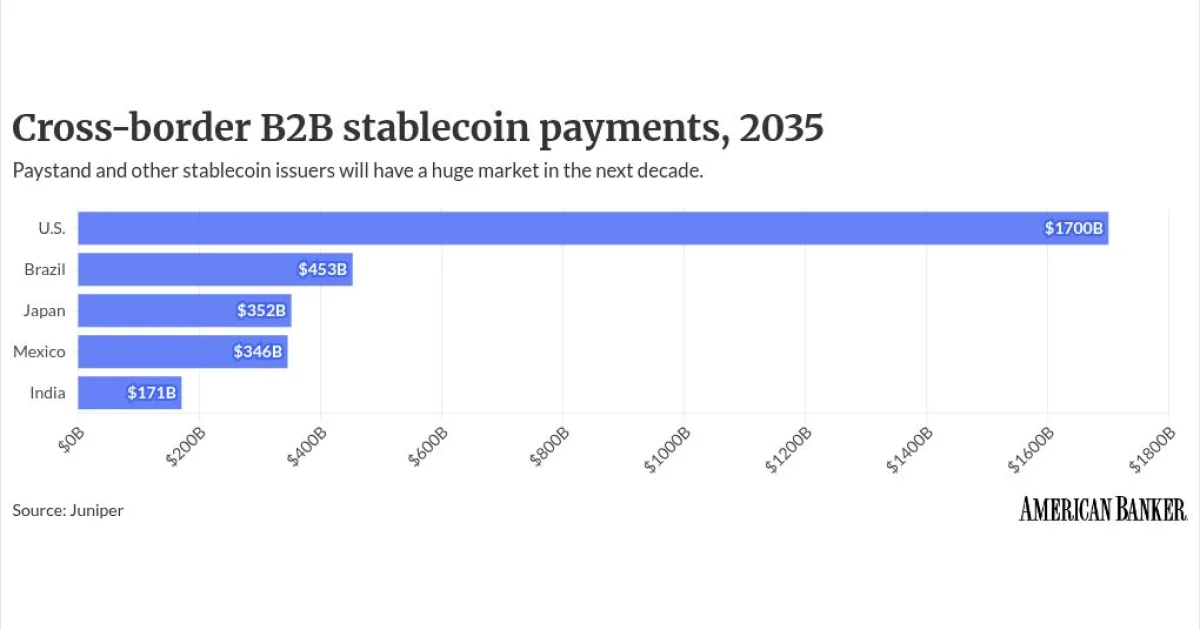
www.americanbanker.comUSDC issuer Circle and cross-border payments platform Nium announced a partnership to integrate their payment tools and unify the complexities of digital asset (stablecoin) and AI agent payments.
As agentic commerce spreads, AI agents executing transactions 24/7 need always-on payment rails that are not bound by banking hours. Credit card networks bring high friction from credit approval, chargebacks, and currency conversion, structurally producing "False Declines" in AI agent microtransactions and cross-border merchant settlements.
Circle's USDC has been emerging as a candidate to handle payments at "the time scale AI operates on," and following Coinbase (MCP release on May 27), Alipay (Token Pay on May 27), and Robinhood (AI agent cards on May 28), it has now broken into the B2B payment layer through the Nium partnership.
Agentic Commerce
AI Shopping Agents Are Taking Fashion's Search Budget — Fibre2Fashion Highlights Structural Shift

AI shopping agents are reshaping fashion e-commerce by shifting competition from keyword visibility to machine-readable product data.
www.fibre2fashion.comFashion industry publication Fibre2Fashion published an analysis arguing that the rise of AI shopping agents will "structurally erode fashion brands' search advertising budgets." The premise is that as purchase decision entry points shift from Google search to AI assistants like ChatGPT, Perplexity, and Amazon Rufus, brand visibility competition is moving from "keyword bidding" to "machine-readable product data."
The article identifies specific data points AI agents evaluate — structured information on sizing, fabric, fit, delivery terms, and return policies — and notes that brands lacking these are effectively excluded from AI shopping discovery. Fashion e-commerce companies have historically allocated significant budgets to product page SEO and SEM, but a budget shift toward AI optimization is now unavoidable.
The implication for e-commerce operators is clear: investments in foundational infrastructure that lets AI "correctly interpret" your products — JSON-LD product data, structured fit charts, sizing review schemas, machine-readable delivery and return policies — become the next priority.
PYMNTS Study — AI Reshaping Commerce Faster Than Retailers Can Adapt

Discover how AI-powered shopping, mobile commerce, and digital payments are reshaping consumer behavior and retail in 2026.
www.pymnts.comA joint study by PYMNTS and AWS reveals that retailers' response to AI-driven commerce transformation is failing to keep pace. According to the report, 47% of online shoppers have already incorporated AI tools into their purchase process, while retailer-side AI agent support lags behind.
The gap is especially pronounced in foundational layers — product data structuring, public APIs for AI agents, and agent authentication/payment handoff implementation — where consumer adoption speed far exceeds retailer preparation. Consistent with the Mirakl study on May 29 (retailers' average agentic commerce readiness of 4.4/10), the industry is collectively "unprepared for AI."
Shopify's Tobi Announces Six AI Regulation Principles — "Bad Regulation Crushes Entrepreneurs"

Six principles for AI regulation that protect entrepreneurs and innovation.
www.shopify.comShopify released an official news piece presenting six principles for how AI regulation should be designed. Led by CEO Tobi Lütke with the central message that "AI is a liberation device that transforms entrepreneurs into future-proof operators, but bad regulation crushes them," the six principles cover: (1) risk-based and reactive regulation, (2) consideration for open-source and small developers, (3) avoidance of centralized gatekeepers, (4) clarity on AI agent liability, (5) cross-border interoperability, and (6) minimizing innovation suppression.
With AI regulation entering the legislative phase globally — the EU's DSA and AI Act, U.S. state-level AI bills, Japan's AI Business Operator Guidelines — proposals from platforms that serve SMB e-commerce operators like Shopify bring a fresh perspective to the regulatory debate.
AI Commerce Tools & Corporate Moves
PayPal — New CEO Entrusts Cost-Cutting Campaign to Newly Appointed AI Chief

The company's new CEO, Enrique Lores, is counting on a newly appointed executive to lead a cost-cutting campaign using artificial intelligence.
www.paymentsdive.comPayPal's new CEO Enrique Lores announced that he will entrust the leadership of a cost-cutting campaign to the newly appointed AI chief. The organizational transformation centers on AI-driven operational efficiency, with plans to progressively automate customer support, fraud detection, credit decisions, and merchant onboarding.
PayPal was just reported on May 28 to be facing "competitive pressure in its online checkout business," and the company is now in a phase of fighting back in the agentic commerce era's payment infrastructure battle. As Visa, Mastercard, Stripe, and Adyen rapidly roll out AI agent-ready payment products, PayPal's AI-first organizational restructuring signals a fundamental business model shift.
McKinsey Warns of Widening B2B AI Gap — "The Floor Is Where the Ceiling Used to Be"

Roughly one in three B2B suppliers still lack online purchasing, even as buyers and rivals increasingly shift spending and research online.
ecommercenews.com.auConsulting firm McKinsey warns that the gap in online adoption and AI utilization in B2B commerce is rapidly widening between leading companies and the average. According to the study, roughly one in three B2B suppliers still lack online purchasing capabilities, while buyers are accelerating their shift to online procurement.
The phrase "the floor is where the ceiling used to be" reported by The Drum captures how online purchasing experiences once considered industry best practices have now become minimum entry requirements. As AI-driven B2B commerce optimization advances (auto-quoting, agent ordering, contract automation), companies that cannot keep up face rapid loss of trading opportunities.
Snapdeal Report — 56% of Indian Online Sellers Use AI Tools
Artificial intelligence is rapidly becoming a mainstream business tool for India's online seller community, with 56% of sellers already using AI-powered solutions.
www.medianews4u.comAccording to Indian e-commerce Snapdeal's "Bharat Seller Report 2026," 56% of India's online sellers are already using AI tools to grow their business. Applications range widely from product listing automation, price optimization, inventory forecasting, to customer support automation.
So-called "Bharat sellers" — small and medium businesses in regional cities and rural areas — are driving AI adoption. CNBC TV18's same-day coverage features BofA analysts noting that "AI-driven regional language and voice commerce could unlock hundreds of millions of new digital users in India." This is further evidence of accelerating AI-led restructuring of India's e-commerce market, alongside Flipkart Shopsy's complete overhaul (deep-dived May 26).
Logistics & Global E-Commerce
Cettire Turns to Tmall After ASX Trading Halt — Path to the China Market

Luxury online fashion retailer Cettire is expanding its presence in China, entering into a relationship with Tmall Global.
insideretail.com.auAustralian luxury cross-border e-commerce Cettire announced its move into China through Alibaba's Tmall Global while facing the critical situation of an ASX trading halt. Tmall Global is a cross-border e-commerce platform that allows overseas brands to reach mainland Chinese consumers, and Cettire is bringing its unique "licensed parallel import + cross-border shipping" model directly into the Chinese market.
After growth slowdowns in Australian and US markets and audit concerns left the company in financial distress, Cettire is now leveraging Alibaba's platform power. However, on Tmall it will face intense competition from China's domestic luxury direct stores, JD Worldwide, and Chinese platforms with agentic commerce capabilities.
Return Helper Raises $4M Series A — Profiting From Cross-Border Returns With AI
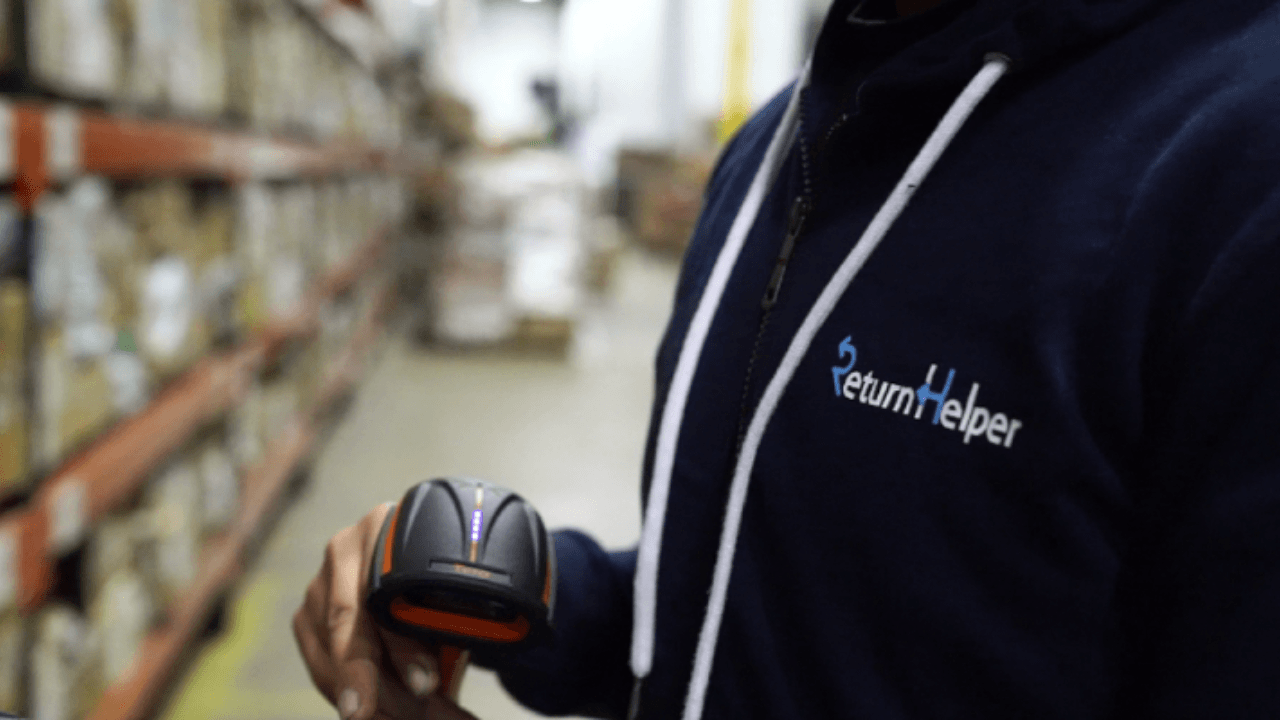
The logistics tech startup plans to scale its AI-powered returns platform across Europe and expand its recommerce operations after posting 60%+ growth and reaching profitability in 2025.
tech.euLogistics tech startup Return Helper raised $4 million in Series A funding. The company offers a platform that uses AI to process cross-border e-commerce returns and optimally allocates them across recommerce paths like resale, repair, and donation, turning "returns into profit."
After achieving over 60% growth and reaching profitability in 2025, the funds will be used to expand into Europe and grow recommerce functionality. As agentic AI's impulse-buy behavior raises concerns about higher return rates, AI optimization of returns processing is becoming a foundational layer that determines cross-border e-commerce profitability.
TikTok Shop — Pan-European Marketplace Launch on June 15 in Austria, Belgium, Netherlands, and Poland

TikTok Shop is expanding rapidly across Europe. On June 15, the platform will launch in Austria, Belgium, the Netherlands, and Poland.
ecommercenews.euTikTok Shop officially announced simultaneous launches in Austria, Belgium, the Netherlands, and Poland starting June 15, 2026. While European expansion was previewed on May 29, this announcement specifies the launch date and the pan-European marketplace concept (integration with the Fulfilled by TikTok logistics network).
This brings TikTok Shop to a 10-country footprint in Europe, adding to existing operations in France, Germany, Italy, Spain, the UK, and Ireland, cementing its position as the fourth pole in European social commerce after Amazon, Shein, and Temu.
South Korea Fines Trip.com for E-Commerce Law Violations — Korea's Platform Regulation Model

South Korea slapped a combined fine of 10 million won on Trip.com for e-commerce law violations in flight-ticket sales.
en.yna.co.krSouth Korea's Fair Trade Commission (KFTC) imposed a 10 million won fine on Chinese online travel platform Trip.com for e-commerce law violations in airline ticket sales. The issues include discrepancies between displayed prices and actual charges and insufficient pre-disclosure of additional fees.
While the fine is small, similar to the EU's €200M DSA-related penalty against Temu on May 28, this reflects a broader trend of regulators worldwide strengthening direct platform responsibility for merchant conduct in cross-border e-commerce. As agentic commerce spreads, discrepancies between agent-displayed prices and final settlement amounts could become new regulatory targets, making price transparency and agent-readable fee structures critical.
Closing Thoughts
Today's central themes are "infrastructure consolidation" and "organizational redesign" for the agentic commerce era. Kurly's 1G Labs acquisition (vertical e-commerce AI consolidation), the Circle x Nium partnership (fusion of stablecoins and AI payments), Shopify Tobi's six AI regulation principles (redefining platform-regulator relationships), and PayPal's AI-first reorganization each ask, from different angles, "how should agentic commerce infrastructure be built?"
At the same time, data points like Fibre2Fashion's "AI shopping agents eroding fashion SEO budgets," PYMNTS's "AI outpaces retailer adaptation," McKinsey's "widening B2B gap," and Snapdeal's "56% of Indian sellers using AI" highlight the reality that e-commerce operators' KPIs, budgets, and organizational structures are being forced into redesign.
Moves like Cettire x Tmall, TikTok Shop's pan-European expansion, the South Korea Trip.com fine, and Return Helper's returns AI funding show that the peripheral layers of agentic commerce — platform liquidity, regulation, and logistics — are also shifting in parallel.