AI Commerce News Digest (July 14, 2026)
Alipay's AI agent infrastructure, Jefferies' Shopify upgrade, and 75% of consumers shopping with AI — the July 14, 2026 digest of agentic commerce and AI commerce news.


Key Takeaways
- Alipay launched its AI Open Platform, with a major Chinese payments player opening its capabilities as infrastructure for agentic commerce
- Jefferies upgraded Shopify to Buy, calling it the AI agent enablement toolkit for merchants, as equity markets start pricing in the leaders of agentic commerce
- A Bloomreach survey found over 75% of consumers used AI to shop in the past six months, signaling AI shopping is moving from experiment to everyday behavior
Here is the AI commerce news digest for July 14. Today the infrastructure and the valuation of agentic commerce moved at the same time. In China, Alipay opened up its payment and merchant capabilities to AI agents, while in the US, Jefferies upgraded Shopify to Buy by positioning it as the toolkit merchants need to serve AI agents. Consumer surveys showed that shopping with AI is becoming the majority behavior, and a Saudi e-commerce startup rebranded around an AI agent. From infrastructure to stock prices to consumer behavior to regional expansion, the signals point to AI commerce entering its implementation phase.
Today's Top News
Alipay launches AI Open Platform, offering agent commerce infrastructure

Alipay unveiled its AI Open Platform, opening its payment, marketing and merchant capabilities to AI agents and developers building agentic commerce experiences.
pandaily.comAnt Group's Alipay unveiled its AI Open Platform, which opens payment, marketing and merchant capabilities to AI agents and developers. The aim is to let AI agents connect to Alipay's user base and payment and rewards systems to handle everything from product discovery to purchase and settlement.
Agentic commerce in China has so far been led by platform-side conversational shopping from players like Naver and Taobao. Here, a payments infrastructure giant is exposing agent-callable capabilities as APIs, and a payment network at billion-user scale is beginning to plug into the execution layer of the agent economy. It marks Alipay's full-scale entry into the agent-payment infrastructure race that Visa, Stripe and Shopify are running in the West.
Full article: What Alipay's AI Open Platform is: the agent commerce infrastructure and what it means for merchants
Why agentic commerce will matter more than ChatGPT ads (Search Engine Land)

The real AI commerce shift isn't happening in ChatGPT ads. It's happening in how agents discover, evaluate and buy products on behalf of shoppers.
searchengineland.comSearch Engine Land argued that the fundamental shift in AI commerce is happening not in ad slots inside ChatGPT, but in how AI agents discover, evaluate and buy products. The claim is that designing your products to be correctly read and chosen by agents will drive sales more than the AI chat ads that grab headlines.
The piece urges merchants to invest in agent readability, meaning structured product data, accurate inventory and pricing, and machine-usable checkout, with the same intensity they apply to ad spend. Just as search split into paid and organic, AI commerce is splitting into ads and the underlying fitness to be chosen by agents, and preparing for the latter will decide competitive advantage. For merchants weighing LLMO (LLM optimization), the perspective is highly practical.
Full article: Agentic commerce vs ChatGPT ads: where should merchants really invest
Agentic Commerce
Saudi Arabia's Shahbandr rebrands to Komrz, unveils AI agent Komi

Saudi e-commerce firm Shahbandr has rebranded to Komrz and unveiled AI agent Komi to drive expansion across the GCC and Europe.
fintechgate.netSaudi e-commerce company Shahbandr rebranded to Komrz and unveiled an AI agent called Komi. The move places an AI agent at the core of its strategy as it targets expansion across the GCC (Gulf Cooperation Council) and Europe.
The Middle East is a region where sovereign-fund-backed AI investment is accelerating and payments and retail digitization are advancing quickly. As agentic commerce implementations tend to cluster in North America and East Asia, a GCC-based company rebranding around an AI agent shows that the market's footprint is spreading geographically.
Full article: What Komrz (formerly Shahbandr) and its AI agent Komi are: the state of GCC-born agentic commerce
Understanding the rise of agentic commerce (BusinessLine)

Agentic commerce promises convenience by reducing search costs and simplifying the consumer decision-making process.
www.thehindubusinessline.comIndia's The Hindu BusinessLine ran an opinion piece framing the essence of agentic commerce as reducing search costs and simplifying consumer decision-making. By having AI agents take over the comparison of options, the friction of buying drops significantly.
At the same time, the piece notes the risk that as decisions are delegated to agents, brands lose their direct touchpoints with consumers. Whose agent chooses which product, and by what criteria? That transparency and trust will be the key to AI commerce adoption, a point merchants should keep in mind as they build agent readiness.
AI Commerce Tools
Over 75% of consumers now shop with AI, as AI shopping reaches maturity (Bloomreach)

Consumer behavior indicates the use of artificial intelligence shopping tools is becoming widespread.
chainstoreage.comA survey of over 4,000 US and UK consumers by marketing technology vendor Bloomreach found that more than 75% used tools like ChatGPT, Gemini or Claude to help them shop in the past six months. 42% use AI shopping tools daily, and nearly 70% use them at least weekly.
The behavioral impact is notable: 40% say AI has made them shop more often, 38% say they spend more, and 34% say they make more impulse purchases. But 41% also say they would rather buy through an AI assistant than visit a store, surfacing both opportunity and risk as customer touchpoints shift to AI. The data shows AI shopping moving from the experiments of a few early adopters to the everyday behavior of the majority.
Company Moves & Partnerships
Jefferies upgrades Shopify to Buy, calling it the AI agent toolkit for merchants
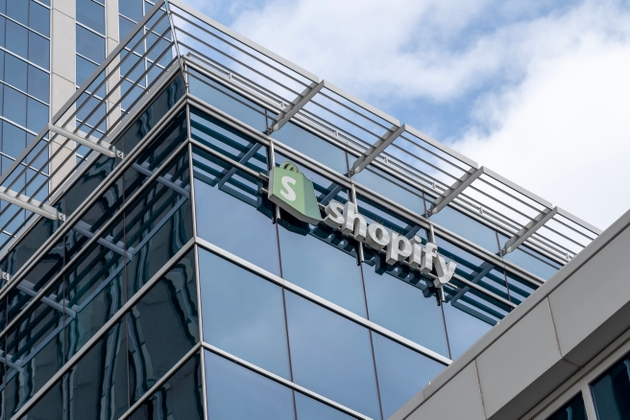
Jefferies upgrades Shopify (SHOP) to Buy, citing agentic commerce upside, likely Q2 beat, and a $140 target.
seekingalpha.comInvestment bank Jefferies upgraded Shopify to Buy with a $140 price target. It positioned Shopify as both the infrastructure layer for agentic commerce and the enablement toolkit merchants need to serve AI agents, and it expects a likely Q2 earnings beat. Stifel also turned bullish on Shopify the same day.
On July 8, BofA had upgraded Shopify to Buy for similar reasons, and multiple analysts are now backing Shopify as the frontrunner of AI commerce. The thesis, increasingly a market consensus, is that as agent-driven purchasing spreads, the value of Shopify's platform for unifying merchant product data, inventory and checkout only rises.
MediaMarktSaturn aims to double marketplace GMV by 2029

Ceconomy shared its strategy for MediaMarkt and Saturn for the coming years, targeting more than double marketplace GMV.
ecommercenews.euCeconomy, the parent of European electronics retailer MediaMarktSaturn, announced a strategy to more than double marketplace GMV from 800 million euros in fiscal 2025-26 to fiscal 2028-29. It puts a marketplace model combining physical stores and online at the center of growth.
Ceconomy's acquisition by China's JD.com has already been approved, and capital-backed marketplace expansion is likely to accelerate. Even in a mature category like electronics retail, the shift from first-party inventory sales to a platform that aggregates third-party sellers is underway, a move to secure catalog depth in an era where AI-driven product discovery is spreading.
AnyMind launches full-scale cross-border e-commerce support on Xiaohongshu (RED)
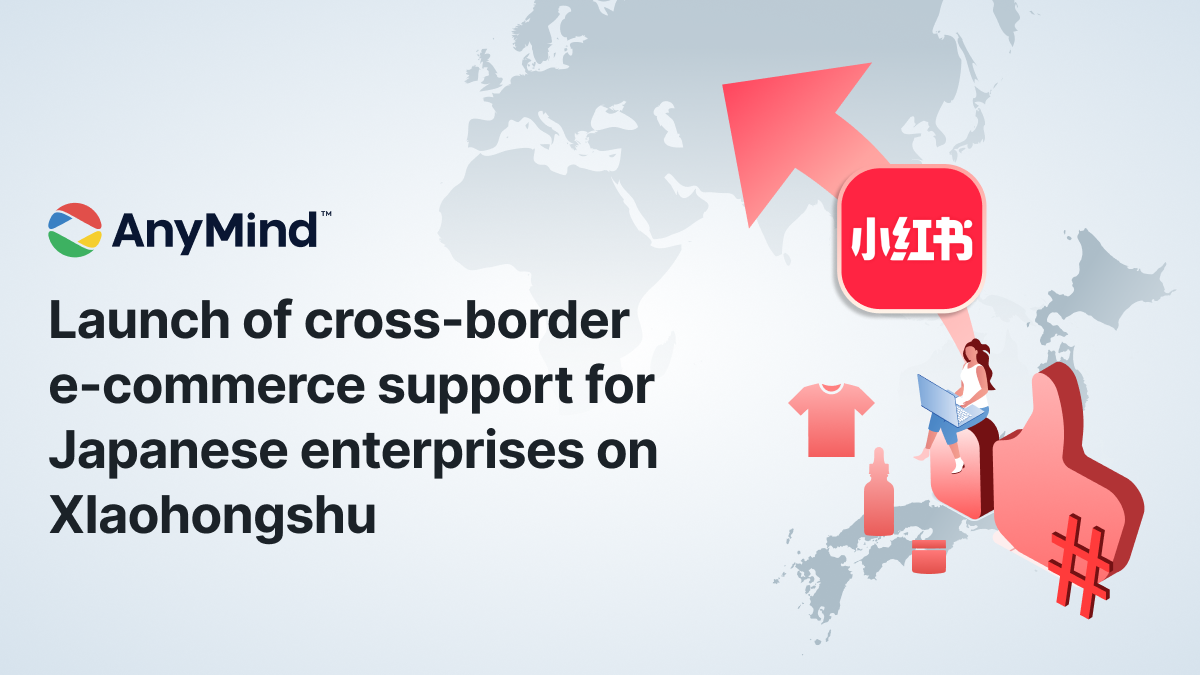
End-to-end BPaaS spanning account and shop setup, content localization, influencer marketing, live commerce, logistics and customer support.
anymindgroup.comAnyMind Group announced full-scale cross-border e-commerce support for Japanese companies on China's Xiaohongshu (RED). It is a BPaaS (Business Process as a Service) offering that handles everything from account and shop setup to content localization, influencer marketing, live commerce, logistics and customer support.
Xiaohongshu is a leading example of social commerce where word-of-mouth and purchasing merge, and it is a starting point for product discovery among China's younger consumers. As generative AI makes content creation, translation and customer service more practical, demand should rise for a support model that outsources the language, operations and logistics barriers that have long blocked cross-border e-commerce.
Payments & Fintech
Visa's tech chief on defense for the agentic era

Visa's President of Technology on fraud models, VVAH, and getting ahead of the quantum threat.
fastcompanyme.comVisa's President of Technology, Rajat Taneja, discussed the fraud and security strategy for an era in which AI agents become parties to transactions. He pointed to the need to advance fraud detection models and get ahead of threats from quantum computing as agent payments scale.
In recent months, Visa has completed a string of live agent-payment pilots with Nuvei, Worldline, CaixaBank and Animoca Brands. The posture suggests Visa wants to lead not only in the execution layer of the payment network but also in the trust and safety layer, showing that competition over agent-economy payment rails is broadening from function to security.
Global E-commerce
Taobao rolls out Good Price Card, doubling down on pricing strategy

Taobao added a Good Price Card to search, surfacing the lowest post-subsidy price product personalized to each user.
eu.36kr.comAlibaba's Taobao added a Good Price Card that surfaces low-priced authentic products at the top of search results. It calculates a post-subsidy effective price that factors in each user's personal assets such as coupons and red envelopes, then presents the single lowest-priced product.
The backdrop is the intense price competition among Chinese e-commerce players that continued even after the 618 shopping festival. As consumers lean toward lower prices, Taobao is steering not just its mega-sales but the everyday search experience itself toward price optimization. Personalized price presentation is one form the era of AI-driven product ranking is taking.
AI reshapes Mexican retail, with 42% of consumers using AI to buy

AI adoption is accelerating among consumers, with 42% now using AI assistants during the purchasing process.
mexicobusiness.newsCiting a KPMG report, Mexico Business reported that Mexican retail is moving from AI experimentation to full-scale adoption. While companies embed AI into operations, supply chains and customer engagement, on the consumer side 42% now use an AI assistant during the purchasing process.
It is telling that even in emerging markets, AI-driven product discovery and cross-border e-commerce are expanding in parallel. Demand for data governance is also rising, and technology vendors, retailers and consumer goods makers are entering a phase of making AI a scalable business capability. Beyond North America and Asia, the preconditions for AI commerce are taking shape in Latin America too.
Logistics & Fulfillment
Amazon announces 2026 holiday fulfillment fees, advises early shipping
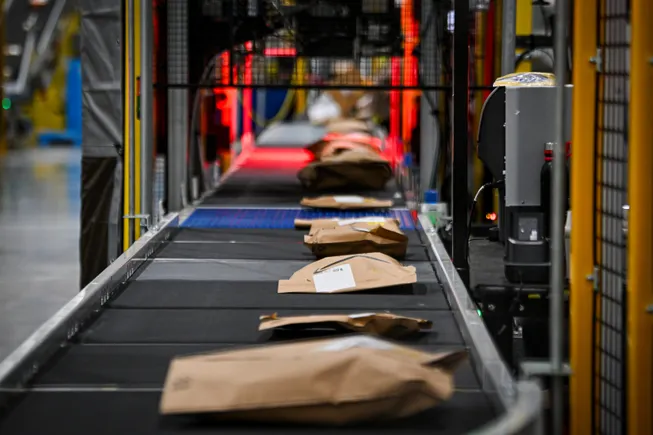
Amazon's ongoing 3.5% fuel and logistics surcharge will apply to peak season fees, which start Oct. 15.
www.supplychaindive.comAmazon announced the peak-season FBA (Fulfillment by Amazon) fees for the 2026 holiday season. Peak fees take effect on October 15, and the ongoing 3.5% fuel and logistics surcharge will be added on top. The company advises sellers to ship inventory early.
The holiday cost structure directly affects the margins of sellers on Amazon. Pulling fees forward and encouraging early shipping is aimed at smoothing the peak in logistics demand, and sellers need to lock in inventory plans and pricing earlier. The more AI-driven demand forecasting sharpens, the more the skill of positioning inventory around these fee schedules will separate winners from losers.
Conclusion
Today's moves show agentic commerce advancing infrastructure and market validation at the same time. Alipay opened its payment infrastructure to agents, Jefferies and Stifel upgraded Shopify as the frontrunner, and consumer surveys confirmed AI shopping is already majority behavior. Expansion into regions like Saudi Arabia and Mexico is beginning to show as well. With signals aligned across infrastructure, stock prices, consumers and geography, the next question is whether your own products are in a state to be correctly read and chosen by AI agents. We will keep watching moves around agent readability and trust infrastructure in the days ahead.