
AI Commerce News Digest (August 5, 2026)
Cloudflare launches Wallets and cloudflare.pay to give AI agents an identity and spending power, while Target reports a 2,000% surge in AI-driven traffic. Minty ships a Shopify app for cashback inside AI chats, Rokt unveils Brain V4, Razorpay staffs up for agentic commerce, and Shein targets a $30-40 billion Hong Kong IPO valuation.


Key Takeaways
- Cloudflare launches Wallets and cloudflare.pay, giving AI agents an identity and spending power
- Target reports a 2,000% surge in AI-driven traffic in Q1, with buying live on three major AI channels
- Standards bodies and payment players pile in as the trust layer for agent transactions takes shape
Here is your AI commerce news roundup for August 5. Yesterday's digest featured an IDC study showing that AI agents are already shopping while most merchants remain unprepared; today brought a wave of moves aimed at closing exactly that gap. Cloudflare attacked the infrastructure void around agent identity and funds, while Target proved with hard numbers that AI-referred customers are real and multiplying. From Minty's Shopify app that places offers inside AI chats to the Secure Technology Alliance's new cross-industry forum, players at very different layers of the stack moved in the same direction. In this digest, we take a close look at the two top stories and then organize the day's important news by category.
Today's Top Stories
Cloudflare launches Wallets and cloudflare.pay, an identity layer for AI agent shopping

The new service makes it easier for consumers to equip AI agents with tools that let them spend and identify themselves to merchants' agents.
fortune.comOn August 4, Cloudflare announced a new set of services to support shopping by AI agents. There are two pillars: cloudflare.pay, an identity layer that lets an agent prove to merchants on whose behalf it is acting, and Cloudflare Wallets, a virtual wallet that converts bank transfers into stablecoins and lets users grant their agents spending authority.
The wallets ship with guardrails such as spending limits and merchant whitelists, a design intended to prevent runaway agents from making unexpected purchases. Cloudflare is also providing a set of AI tools for merchants to respond to inquiries and purchases from customer-side agents.
According to Stephanie Cohen, the company's chief strategy officer, roughly 57% of web traffic now consists of bots. True to her words that "every interaction on the internet is a chance for commerce," the infrastructure Cloudflare has been stacking up, from agent verification to content monetization, now reaches the payment execution layer with wallets and identity. Together with its work on the x402 protocol alongside Coinbase and Stripe, the picture is now clear: infrastructure providers, not just payment companies, are gunning for the core of agent payments.
Target reports a 2,000% surge in AI-driven traffic, with shopping live on Google, ChatGPT and Copilot

Retailer, Target, has seen a 2,000% increase in AI-driven traffic during the first quarter of 2026 as it continues to shape its consumer experiences with conversational AI.
www.marketingtechnews.netUS retail giant Target has disclosed that its AI-driven traffic grew 2,000% in the first quarter of 2026. Set against the roughly 400% growth in AI-driven traffic to retail sites overall cited alongside it, Target ran at five times the industry pace.
Early platform coverage explains the number. Target is described as the first major retailer to enable product discovery, cart building and Target Circle loyalty integration across all three of Google Search (including AI Mode and the Gemini app), ChatGPT and Microsoft Copilot. Direct purchases from Google Search run on UCP (Universal Commerce Protocol), the open standard Target co-develops with Google.
The coverage traces back to an official fact sheet Target published on June 18. That the number is still being cited a month and a half later reflects how few hard, retailer-reported datapoints exist for AI shopping demand. It is a strong signal to the retail industry that customer acquisition through AI channels is no longer a future topic.
Agentic Commerce
Minty launches a Shopify app that delivers cashback inside AI chats

As more consumers consider how artificial-intelligence services can help with the shopping experience, payments and commerce providers are preparing.
www.digitaltransactions.netUS-based AI shopping app Minty released a free app for Shopify merchants. Its hook is placing cashback offers at the exact moment a shopper decides to buy, across AI chats, mobile and the Chrome and Safari browsers.
The company bills itself as the first cashback app with a live integration inside ChatGPT, and its Shopify App Store page lists compatibility with ChatGPT, Perplexity and Claude. Merchant profiles also surface in Google AI Overviews and Apple Intelligence, according to Minty.
With Mastercard's benchmarks putting the June cart-abandonment rate in the Americas at 74.22%, the push to build purchase touchpoints inside AI conversations, outside the merchant's own site, looks set to keep spreading.
Secure Technology Alliance launches the Agentic Trust and Commerce Forum
The Secure Technology Alliance announces the launch of its Agentic Trust and Commerce Forum.
www.globenewswire.comThe Secure Technology Alliance, an industry body for payments and security, announced the Agentic Trust and Commerce Forum, a new organization dedicated to trust issues in agent transactions. The initiative, developed out of the U.S. Payments Forum, points to projections that US agentic commerce will exceed $300 billion by 2030.
The forum will start with fundamentals: how purchase intent is established, what constitutes valid consumer authorization for an AI-initiated transaction, and how disputes and exceptions are handled when no human was at the point of transaction. It is calling for cross-industry participation including LLM providers, and its first in-person meeting will be held November 17 and 18 at Best Buy's corporate campus in Minneapolis.
Given that its parent body coordinated the industry through the EMV migration, the question is whether it can play referee for the proliferating frameworks in agent payments.
AI Commerce Tools
Rokt introduces Brain V4, a real-time ecommerce decisioning engine

Rokt, the leading ecommerce technology company using machine learning and AI to make transactions more relevant to each shopper, today announced its new Brain V4.
www.prnewswire.comEcommerce technology company Rokt announced Brain V4, a reengineered version of its core AI engine. It decides in real time what each customer sees at the Transaction Moment, the point when a purchase is being completed, including the decision to show nothing at all.
The previous architecture tightly intermingled product configuration, machine learning and attribution, so a change in one area often forced updates across the stack. V4 separates those concerns, letting product surfaces, business configuration and the decisioning engine evolve independently.
Rokt's network is expected to power more than 10 billion transactions in 2026, and 2025 revenue exceeded $800 million. With expanding partnerships including PayPal, Fanatics and Ulta Beauty, AI decisioning around the checkout is becoming a competitive focal point.
Pie lands investment from Amex Ventures

Pie, an AI powered platform for small businesses, has announced an investment from Amex Ventures, the corporate venture capital arm of American Express.
retailtechinnovationhub.comPie, a US company offering an AI growth platform for small businesses, received an investment from Amex Ventures, the corporate venture arm of American Express. The amount was not disclosed. It follows the $19.5 million Series A led by Lightspeed announced when Pie emerged from stealth in June.
Pie's core is improving AI-driven discovery and visibility and acquiring customers through high-intent local channels such as Google Maps. It also offers Front Desk, a voice agent that answers calls and takes bookings. In its partnership with pet-care SaaS provider MoeGo, participating businesses reported an average 15x return on ad spend.
Corporate Moves
Razorpay hires AI executives to build its agentic commerce stack

Fintech unicorn Razorpay has strengthened its artificial intelligence leadership by hiring senior engineering executives from Microsoft, Salesforce, CRED.
www.techcircle.inIndian payments unicorn Razorpay announced a string of senior engineering hires from Microsoft, Salesforce, CRED and Divyam.ai to accelerate its shift toward AI-native financial infrastructure. Sudhir Reddy, co-founder and former CTO of Divyam.ai, will lead AI and data architecture.
The company has already shipped products including Agentic Payments, Agent Studio and Agentic Dashboard, and frames the hires as building for a future where AI agents autonomously purchase, negotiate and pay. "The next decade of financial infrastructure will be built very differently from the last," said co-founder and CTO Shashank Kumar.
Kily raises Rs 30 crore led by Sorin Investments (follow-up)

Razorpay and Wyser Capital also backed Kily, an autonomous AI platform for brands across e-commerce and quick commerce.
analyticsindiamag.comIndian agentic commerce startup Kily raised Rs 30 crore (about $3.1 million) in a round led by Sorin Investments, with participation from Razorpay and Wyser Capital. It follows the WPP Media partnership we covered last week.
Founded in 2025, Kily provides brands with AI agents that autonomously run pricing, advertising, inventory and marketplace operations across platforms such as Amazon, Flipkart, Blinkit, Zepto and Swiggy Instamart. The presence of payments major Razorpay on the cap table is telling when read alongside the same day's news of Razorpay's own agentic commerce hiring spree.
Amazon crosses the $3 trillion market cap milestone

Shares of the e-commerce and cloud-computing giant surged up to 5.3 per cent early Monday morning, extending a powerful rally ignited by last week's second-quarter earnings report.
www.etnownews.comAmazon's market capitalization crossed $3 trillion for the first time, making it the fifth company to reach the mark after Nvidia, Alphabet, Microsoft and Apple. The trigger was last week's earnings report showing AWS growing at its fastest pace since 2021, which sent the stock up more than 15% in a single day, its biggest jump in about 14 years, and the rally has continued since.
The milestone comes roughly two years after Amazon reached $2 trillion in June 2024. A stock that sagged in the spring on skepticism about AI infrastructure spending has reversed course on the back of reaccelerating cloud growth.
Argos opens a curated marketplace

Argos, one of the United Kingdom's largest omnichannel retailers, has launched a marketplace. Sellers can now apply.
ecommercenews.euArgos, one of the UK's largest omnichannel retailers, officially launched its marketplace. The retailer, whose website attracts more than a billion visits a year, has added products from roughly 80 vetted "Trusted Sellers" and runs the platform on Mirakl. Applications from international sellers are also open.
Argos is explicit that this "will not be an open or unregulated platform," positioning its curation-first approach around quality and product safety against Amazon and newcomers like JoyBuy. The launch lands right after parent Sainsbury's announced the sale of Argos to the Swift Partners consortium.
Global E-commerce Trends
Shein targets a $30 to $40 billion valuation for its Hong Kong IPO (follow-up)

Shein is aiming for a $30 billion to $40 billion valuation in a Hong Kong initial public offering that the online fast-fashion retailer plans to launch as early as mid-August.
www.thestar.com.myAccording to Reuters, Shein is aiming for a $30 billion to $40 billion valuation in a Hong Kong IPO it plans to launch as early as mid-August. That is a steep markdown from the $98.2 billion valuation of its 2022 fundraising, and terms may still change based on the investor meetings that began last week.
Last month's draft prospectus revealed a swing to a $99 million quarterly loss, weighed down by the removal of the US de minimis exemption for small parcels. Following the FTC scrutiny we covered last week, Shein's listing preparations continue against stiff headwinds.
Wayfair posts its fastest growth since the pandemic, stock jumps 30%

The e-commerce platform is wrestling market share away from its rivals.
www.fool.comFurniture e-commerce major Wayfair grew second-quarter revenue 7.5% year over year to $3.5 billion, and its stock surged about 30%. US revenue grew nearly 9%, the best pace since the pandemic-era boom. Active customers reached 21.7 million and average order value expanded to $332.
Luxury banner Perigold grew more than 35% and specialty retail brands nearly 20%, leading the share gains. Free cash flow came in at $301 million.
TikTok Shop passes 300,000 UK small-business sellers

Over 300,000 small businesses from the United Kingdom are now selling on TikTok Shop, according to the platform.
ecommercenews.euMore than 300,000 UK small businesses now sell on TikTok Shop, up sharply from 200,000 at the end of 2024, with new sellers joining at a rate 200% higher than a year ago. Sales through live commerce rose 55%, and more than 6,000 live shopping broadcasts take place in the UK every day.
The platform also highlights what it calls a halo effect, where visibility on TikTok Shop translates into wholesale deals, physical retail expansion and growth on other channels. The numbers suggest social commerce is becoming a standard sales channel for small UK merchants.
Russia weighs seller aid as Wildberries strikes continue (follow-up)

Russia is weighing support for retailers after Ukrainian strikes caused billions of dollars of estimated losses at warehouses owned by Wildberries, the country's answer to Amazon.
theedgemalaysia.comAccording to Bloomberg, the Russian government is weighing support measures for sellers on Wildberries after Ukrainian drone strikes hit the marketplace's warehouses. More than a dozen logistics facilities have been struck since mid-July, costing the company over 17% of its warehouse capacity. Russian media estimates put seller losses at roughly 280 billion roubles.
Options under discussion include loan-payment holidays of up to a year, tax relief and access to storage run by the state-owned Russian Post. Wildberries itself is offering three-month payment holidays through its finance arms and reorganizing its logistics network, while Ozon, X5 and other retailers begin hardening their own warehouse networks.
Consumer Trends
Amazon executive: AI fraud is hitting India's new internet users hardest

India's next big e-commerce challenge is not artificial intelligence itself but protecting millions of first-time online shoppers from AI-powered scams, according to Amazon's global trust and safety chief.
timesofindia.indiatimes.comRohan Oommen, Amazon's vice president for customer and partner trust, told The Times of India that generative AI has made fraud more sophisticated and that the damage is concentrated among India's first-time online shoppers. Fake identities, forged documents and synthetic reviews have become easier to produce, while Amazon counters with agentic AI systems that run continuous audits.
According to the company's latest report, Amazon removed nearly 300 million fake reviews globally last year, took down about 70,000 phishing websites and acted against around 14,000 scam-linked phone numbers. In fast-growing emerging markets, consumer education matters as much as technology, Oommen argues.
Advertising and Retail Media
Havas Market executive: only one product wins in agentic commerce
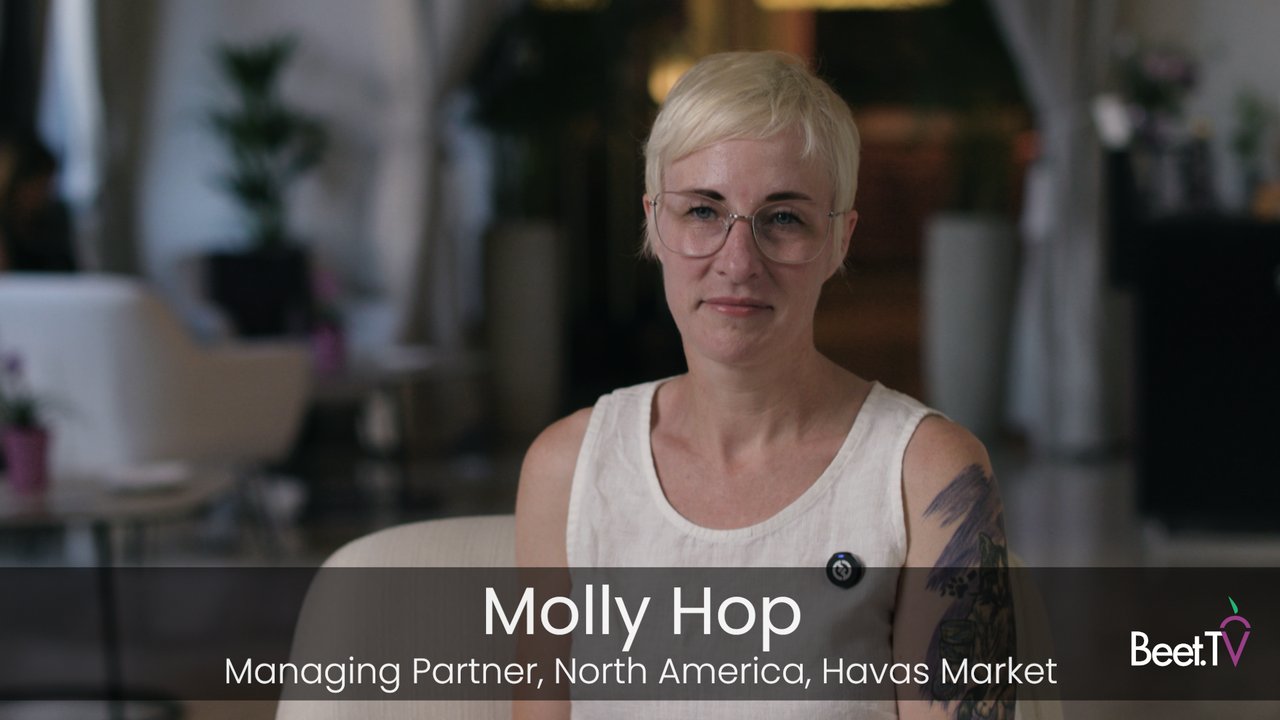
Search used to surface the top results through infinity. Agentic commerce surfaces one. And most retailers have not yet built the product content infrastructure needed to be that winner.
www.beet.tvMolly Hop, managing partner for North America at Havas Market, warned in a Beet.TV interview about the winner-take-all structure of agentic commerce. Where traditional search lined up endless results, an agent returns a single answer, making product content infrastructure the deciding factor in getting chosen.
"Consumers' expectations are that what is discoverable is the best product for them. But I don't think retailers have figured out how to allow the products to necessarily have the right content to meet that consumer expectation," Hop said. Agencies, too, are now urging clients to fix the product data foundation before optimizing ad spend.
Conclusion
Infrastructure and the retail front line advanced on the same day. Cloudflare's wallets and identity tools attempt to fill the void in agent payments, while Target's 2,000% surge proves that AI channels are already growing into a real entry point for revenue. Against the merchant-readiness gap that yesterday's IDC study exposed, answers like Minty's Shopify app and the Secure Technology Alliance's forum are starting to line up.
Shopify reports second-quarter earnings on August 5 US time, and commentary on its AI strategy will draw attention. With Shein's Hong Kong IPO potentially moving in mid-August and Russia's Wildberries seller-aid proposals due by August 10, this week looks set to keep delivering news that maps the structural shifts in global e-commerce.