AI Commerce News Digest (August 25, 2026)
Willy Chavarria's AI storefront doubled revenue and Oxfam GB grew daily listings 292% with AI. Plus Helium 10's Amazon agent, Alibaba's $10.2 billion raise, and the day's AI commerce moves for August 25, 2026.

Key Takeaways
- Willy Chavarria's AI storefront doubled revenue, and 44.8% of conversations were about sizing
- Oxfam GB signed with an AI listing platform after daily listings grew 292% in a pilot
- The differentiator is shifting from buyer-side experience to the granularity of product data machines can read
Here is the AI commerce news for August 25, 2026. Today brought two cases where the results of AI commerce can finally be checked against numbers. If yesterday's Microsoft 90-day playbook was a manual for what to prepare, today's news is the answer coming back from companies that already did the preparing. What makes it interesting is that a fashion label and a charity retailer, about as far apart as two businesses get, landed on the same place: the granularity of product data. Chinese platform earnings and Shein's listing round out the day.
Today's Top Stories
Willy Chavarria's AI storefront doubles revenue, and 44.8% of questions were about size

Willy Chavarria is testing AI-powered e-commerce, including virtual try-on and a future AI voice that could sound like the designer himself.
www.glossy.coAmerican fashion label Willy Chavarria has disclosed results from the Adidas World Cup collaboration it sold in June through an AI storefront built on the commerce platform Swap. Compared with the brand's previous collection launch, revenue doubled. Conversion rate and average order value were roughly unchanged, so the growth came from a larger number of buyers.
The first six days produced more than 1,000 orders at a $249 average order value, with overall conversion at 3%. Direct, owned and email traffic drove 81% of revenue, which is worth noting: the AI storefront itself did not function as an acquisition channel.
More instructive is what shoppers actually asked. Of 802 conversational signals tracked during the launch, 44.8% concerned sizing and fit. How heavy or stiff the fabric is, whether pieces fit as they do on the model, whether items run large or small. Every one of those belongs on a product page. Only 376 shoppers used virtual try-on, but around 20% of those sessions ended in a purchase. Against a site-wide purchase conversion of 0.8% the gap is wide, though shoppers who go as far as try-on are likely already closer to buying.
The designer has also floated adding an AI voice modeled on his own to the shopping experience. Timing and everything else about it remain undisclosed, and Chavarria himself says he has not yet thought it through.
Full article: 2x Revenue on an AI Storefront, and 44.8% of Questions Were About Size: What Willy Chavarria x Swap Exposed in Product Data
Oxfam GB signs with an AI listing platform after daily listings grew 292%
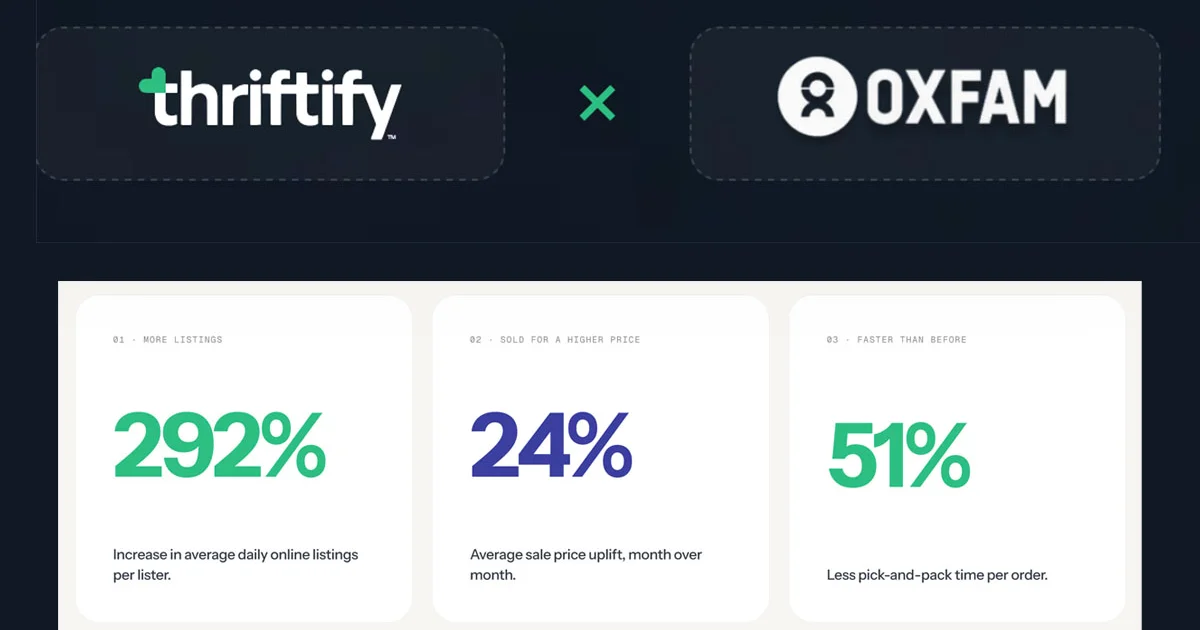
Thriftify grew Oxfam's daily online listings 292%, lifted ASP by 24% month-on-month, and cut pick-and-pack time per order by 51%
channelx.worldBritish aid organization Oxfam GB has signed an enterprise agreement with Thriftify, an omni-channel listing platform built for resale. The decision followed a pilot in which average daily online listings per lister grew 292%, average sale price rose 24% month-on-month, and pick-and-pack time per order fell 51%.
Thriftify's platform uses AI to turn photographs of donated items into complete, marketplace-ready listings. In the pilot, listing data per item grew by up to 1,200%, with size grids, fabric composition, fit, rise, season and eBay item specifics filled in automatically. The source article attributes the faster, higher-priced sales to exactly those signals, which eBay's search algorithm rewards.
Resale, where most stock is one of a kind, is the hardest place to keep product data complete. The fact that filling in those attributes translated directly into revenue is not unique to charity shops. The same structured data is what an AI agent needs in order to understand a product, compare it, and recommend it. The figures come from Thriftify's own case study and have not been independently verified.
Full article: Oxfam GB Grows Daily Listings 292% with AI: Why Product Data Granularity Decides AI-Era Discovery
AI Commerce Tools
Helium 10 launches Helium, an AI agent that reasons across an Amazon business

Meet Helium, the AI agent that helps you run your entire Amazon business. Get instant answers in plain english to complex questions.
www.helium10.comHelium 10, a major toolset for Amazon sellers, announced Helium on August 24, a conversational AI agent that runs inside its own platform. It reasons across research, ads, commerce and billing to diagnose problems, surface opportunities and recommend the next move.
The problem the company points to is data scattered across separate screens. Sellers move between the ads console, research tools and profit reporting, assembling the full picture by hand. Helium answers natural-language questions using live data from the connected account, cites its sources, and says so when the data is not available.
For now it analyzes and recommends without acting. The company has previewed a next stage in which the agent executes changes such as pausing campaigns or adjusting bids once a target metric is set, with approval required before any action. Where to draw the line on delegating seller-side operations to AI is now being framed concretely by the tool vendors themselves.
Consumer Trends
AI search traffic grows at triple-digit pace at Costco, with the highest conversion of any channel

Costco Wholesale Corporation is seeing signs that artificial intelligence could become a meaningful new traffic source for its e-commerce business. In the third quarter of fiscal 2026, traffic from AI search grew at a triple-digit pace, though volume remains low.
www.tradingview.comCostco says AI search is becoming a new acquisition channel for its e-commerce business. Traffic from AI search grew at a triple-digit pace in the third quarter of fiscal 2026, with the caveat that absolute volume remains low. The company says this traffic converts at the highest rate of any channel reaching its site.
The work underway is about how its merchandise gets understood and surfaced by large language models. Appliances and tires are the examples the company gives. Appliance pricing can include delivery, installation and haul-away, while tires come with installation, road-hazard protection and nitrogen. An AI answer can present that bundled value as a whole in a way a single line of search results cannot.
For context, digitally enabled comparable sales rose 21.5% and site and app traffic grew 37%. We covered the company’s wider AI push in the 2026 strategies of the three largest e-commerce players. The figures come from a Zacks commentary summarizing earnings-call remarks, and whether AI traffic scales to the point of moving total sales is still an open question.
Company Moves and Partnerships
Alibaba raises $10.2 billion in a share placement to fund AI

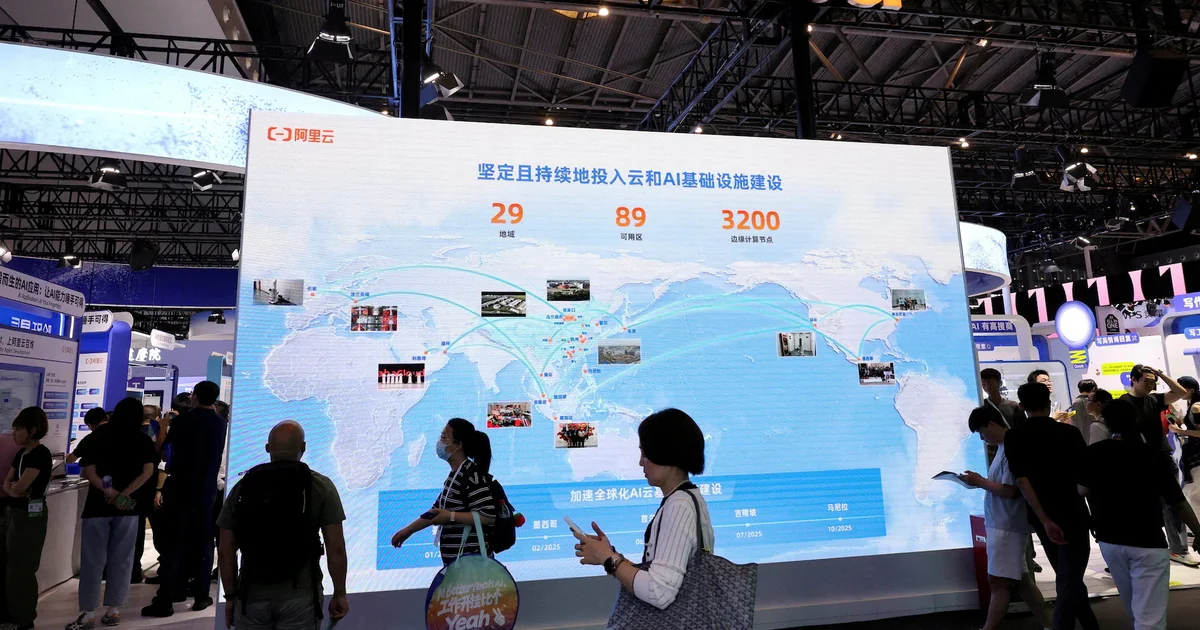
China's Alibaba shares slumped in Hong Kong trade on Monday after it launched a $10.2 billion share sale at a steep discount to fund its AI ambitions, with investors focused on stock dilution and execution risks.
www.reuters.comAlibaba announced on August 24 that it would issue HK$80 billion (about $10.2 billion) of new shares in Hong Kong, sending the stock down as much as 10.5%. The placement price of HK$112.70 represents an 8.4% discount to the previous close. Proceeds go to chips, AI infrastructure and model development.
The sale covers 710 million shares, equal to 3.6% of enlarged shares outstanding. Demand was strong, with the order book reaching $28 billion, of which $6 billion came from long-only and sovereign investors including the Qatar Investment Authority and Norway's Norges fund. Chairman Joe Tsai and CEO Eddie Wu both bought shares themselves.
With e-commerce growth slowing, AI has become the company's biggest growth driver. The market is not uniformly convinced. Yang Tingwu of asset manager Tongheng Investment argues that Alibaba's DNA is in e-commerce rather than advanced technology, and that however much it invests in hardware it may be outmaneuvered on innovation.
Mary Kay expands My Shop and AI shade matching to digitize its direct-selling model

Mary Kay is transforming its direct-selling model through global e-commerce expansion, AI-powered beauty technology and social commerce to reach a new generation.
www.globalcosmeticsnews.comMary Kay is digitizing a direct-selling model long built on personal visits. Mary Kay My Shop, the e-commerce platform launched in the US and Germany in 2025, expanded into Canada, Mexico and Spain this summer and is being rolled out globally.
My Shop gives each Independent Beauty Consultant a personalized digital storefront connected to e-commerce, payments, fulfilment and social media. Alongside it, the company deployed an AI-powered Foundation Finder that analyzes 151 facial points to recommend shades, and formed a Global Social Squad of more than 70 consultants across 15 markets.
The design keeps the human network intact while adding digital routes for product discovery and purchase. How far an old-line direct-selling format can reach younger consumers by grafting on AI diagnosis and social discovery is worth watching for any face-to-face retailer.
More merchants leave Rakuten Ichiba over a reported drone partnership

A Tokyo-based eatery said Monday it has withdrawn its store from Rakuten Group's e-commerce website, adding to the growing number of Japanese companies who have pulled out over Rakuten's reported tie-up with a German interceptor drone start-up.
japantoday.comMerchants are pulling their stores from Rakuten Ichiba following reports that Rakuten Group will partner with the German defense AI company Helsing. On August 24, Berg, a cafe bar in Tokyo's Shinjuku district, announced its withdrawal on X, saying the tie-up is incompatible with its anti-war stance.
The same day, an Osaka-based maker and retailer of the leather brand QuatroGats also withdrew, saying the partnership does not match its corporate philosophy. The company sells wallets featuring peace and nuclear abolition themes. Last week, mail-order firm Cataloghouse pulled its official Tsuhan Seikatsu store.
Founded in 2021, Helsing builds systems that fly drones autonomously using AI, including drones capable of shooting down missiles. According to a source familiar with the matter, Rakuten will support the company's supply to Japan's Defense Ministry. The episode shows how a platform operator's wider business portfolio can directly affect whether merchants stay.
Global E-Commerce Trends
Shein lists in Hong Kong at $27 billion, down 70% from its peak

Shein is going public in Hong Kong, but its 73% valuation plunge highlights mounting cost, regulatory pressures, and a reputational crisis.
www.forbes.comFast-fashion giant Shein lists on the Hong Kong Stock Exchange on September 1, raising $1.8 billion at a $27 billion valuation, sharply below its $100 billion peak. Listings in the US and London had stalled over regulatory hurdles concerning supply chain transparency and data ownership.
Several forces compounded the decline. The end of duty-free treatment for low-value parcels and tariffs on Chinese imports raised sourcing and shipping costs, while price competition with Temu and TikTok Shop intensified. Investigations into product safety and intellectual property, along with repeated fines, have weighed on the brand.
How investors weigh sharply slowing revenue growth and declining profitability will decide the stock's path after listing. Separately, Bloomberg reports that Shein's acquisition of US apparel brand Everlane is under US national security review.
Temu owner PDD posts higher revenue but misses estimates
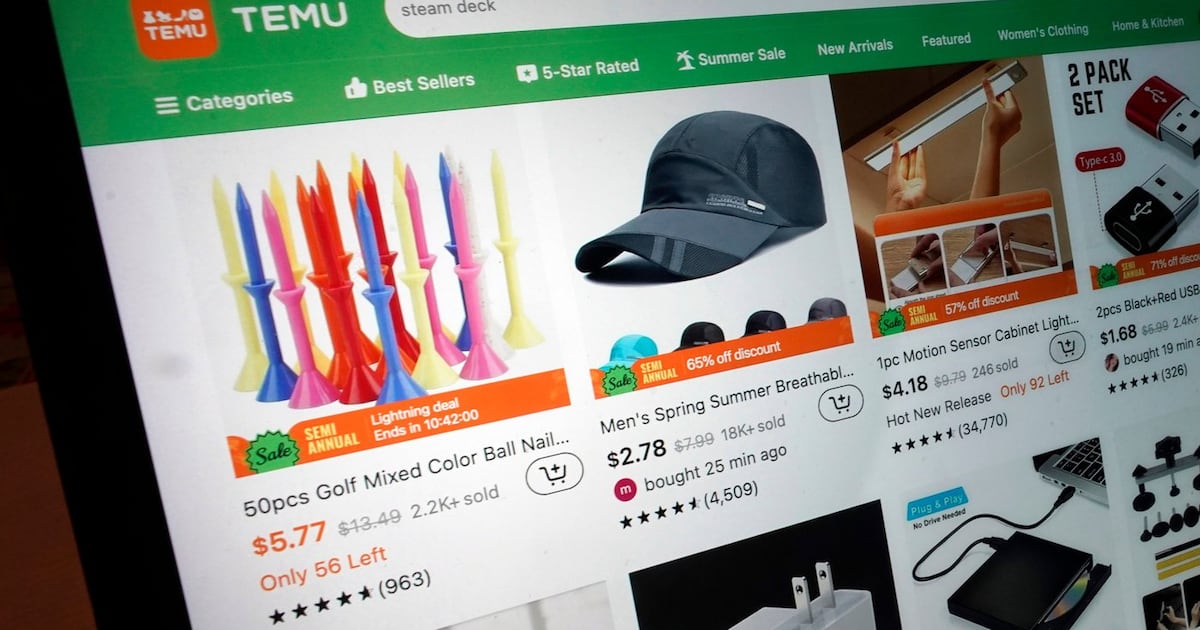
Chinese e-commerce discounter PDD Holdings reported an eight per cent rise in Q2, missing market estimates, hampered by price competition at home.
www.bnnbloomberg.caPDD Holdings, operator of Pinduoduo in China and Temu internationally, reported second-quarter revenue of 112.36 billion yuan ($15.7 billion), up 8% year over year but short of the 116.35 billion yuan analysts expected, according to LSEG data. Net income attributable to ordinary shareholders fell 12% to 27.2 billion yuan.
At home, the discount war with Alibaba's Taobao and Tmall, JD.com and ByteDance-owned Douyin continues. Weak consumer confidence, job security concerns and a prolonged property downturn have kept shoppers cautious, and even the 618 shopping festival failed to lift spending despite weeks of promotions.
Overseas, Temu faces growing scrutiny in its largest markets. The model of shipping low-cost goods directly from Chinese suppliers was built on assumptions that US tariffs and the end of the de minimis exemption have undone. Some merchants have raised prices to absorb higher shipping and compliance costs, which tests demand among price-sensitive shoppers.
Meesho reports 264 million annual transacting users in FY26, up 33%

In FY26, Meesho's annual transacting users grew 33 per cent to 264 million, and its active seller base grew 87 per cent to 961,000 sellers. Placed orders grew 45 per cent and revenue from operations grew 34 per cent to Rs 12,626 crore.
www.deccanherald.comIndian e-commerce platform Meesho published its first annual report as a listed company. Annual transacting users grew 33% year over year to 264 million in FY26, while the active seller base grew 87% to 961,000.
Orders placed rose 45% and revenue from operations rose 34% to Rs 12,626 crore. Seller growth outpacing buyer growth by such a margin reflects how much weight the company has put on the supply side. Its zero-commission proposition, aimed at bringing small sellers in smaller cities online, shows up directly in the numbers.
India's market is tilting toward instant delivery at the same time, with Flipkart's quick commerce reaching 1.2 million daily orders. Meesho competing on assortment breadth and others competing on delivery speed looks set to run in parallel for a while.
TikTok Shop on track to exceed $100 billion in global GMV in 2026

Rapid expansion across Southeast Asia and Western markets puts ByteDance's e-commerce arm in direct competition with Shopee, Lazada, and Temu.
retailnews.asiaTikTok Shop is on track to surpass $100 billion in global gross merchandise volume in 2026, driven by aggressive merchant acquisition in Southeast Asia and rapid adoption in the United States. In Indonesia, Thailand and Vietnam it has taken share from Sea Group's Shopee and Alibaba's Lazada.
The structural difference is where a purchase starts. Conventional marketplace apps depend on search intent, while TikTok inserts checkout prompts into entertainment feeds and generates purchases from people who were not looking for anything. That is why Shopee and Lazada rushed to invest in their own live streaming hubs.
Having scaled in the UK and US, ByteDance is preparing localized rollouts in continental Europe and Latin America. The metric to watch into 2026 is take rate: converting volume into operating profit means lifting seller commissions, which can change the math for merchants.
India's CCPA fines Flipkart and rejects its safe harbour defence
CCPA has fined Flipkart Rs 5 lakh for facilitating the sale of toys that did not comply with mandatory BIS standards.
www.medianama.comIndia's Central Consumer Protection Authority has fined Flipkart Rs 5 lakh for facilitating the sale of toys that did not meet mandatory Bureau of Indian Standards requirements. According to information Flipkart supplied, four sellers sold 1,338 toys after the order took effect, generating about Rs 5.46 lakh in seller revenue and about Rs 1.43 lakh in fees for Flipkart.
Flipkart argued it was an intermediary rather than the manufacturer, importer or seller, and that Section 79 of the IT Act shields it. The CCPA rejected that defence in this case. Its reasoning treats the Consumer Protection Act and the E-Commerce Rules as imposing platform-level obligations independent of the IT Act safe harbour. It noted that non-compliant toys remained listed as of December 2025, treating that as a failure of due diligence after actual knowledge.
Tags such as Flipkart Assured factored into the finding. The CCPA said the tag could give consumers the impression that Flipkart had verified a product's safety and quality, supporting its conclusion that the platform was not a neutral host here. The order does not hold that Section 79 fails to apply to e-commerce marketplaces generally.
Payments and Fintech
noon Egypt partners with AMAN to embed credit as a checkout payment method

Under this collaboration, AMAN's services will be integrated as one of the primary and direct payment options on the noon platform, enabling eligible customers to instantly and seamlessly finance their purchases using their approved credit limit from AMAN.
techafricanews.comThe Egyptian arm of MENA e-commerce platform noon has partnered with fintech company AMAN. AMAN's services will be integrated as one of the primary, direct payment options on noon, letting eligible customers finance purchases instantly using their approved credit limit.
Card penetration in Egypt is low and cash on delivery has long dominated. Embedding credit inside checkout is a practical way to move customers without cards into online buying. Because the arrangement draws on a pre-approved limit, there is no wait for underwriting on each purchase. Terms such as instalment counts and fees were not disclosed in the announcement.
This matters for agentic commerce too. When an AI completes a purchase on someone's behalf, every redirect to an external site or separate approval step is another place the flow can break. Credit infrastructure in emerging markets moving inside the platform is a change that pays off later.
Wrap-Up
The numbers arrived all at once today. Revenue doubled, listings up 292%, AI search converting better than any other channel. Taken separately they read as good news, but what they share is that the source of the result was product data, not a flashier experience. The most valuable thing Willy Chavarria got was not the revenue but the discovery that 44.8% of customer questions were about size. What worked at Oxfam was filling in the fabric and fit fields. What Costco is working on is making an LLM understand a total price that includes delivery and installation.
Open your own product pages and count how many questions an AI still could not answer. That is probably the homework today's news is setting. Looking ahead, we will be watching Shein's Hong Kong listing and how the Chinese price war develops.