2x Revenue on an AI Storefront, and 44.8% of Questions Were About Size: What Willy Chavarria x Swap Exposed in Product Data
Willy Chavarria's Adidas collab doubled revenue on Swap's AI storefront, but 44.8% of 802 conversations were sizing questions. What merchants should fix in their product data.

Key Takeaways
- Willy Chavarria's Adidas collaboration sold through Swap's AI storefront and produced a 2x revenue increase over the brand's previous collection launch
- Of 802 conversational signals recorded during the launch, 44.8% were about sizing and fit, exposing questions the product pages were never answering
- For merchants, the real finding is not the conversion number but the ability to identify missing product data from conversation logs
What a dedicated AI storefront actually produced for an Adidas collaboration
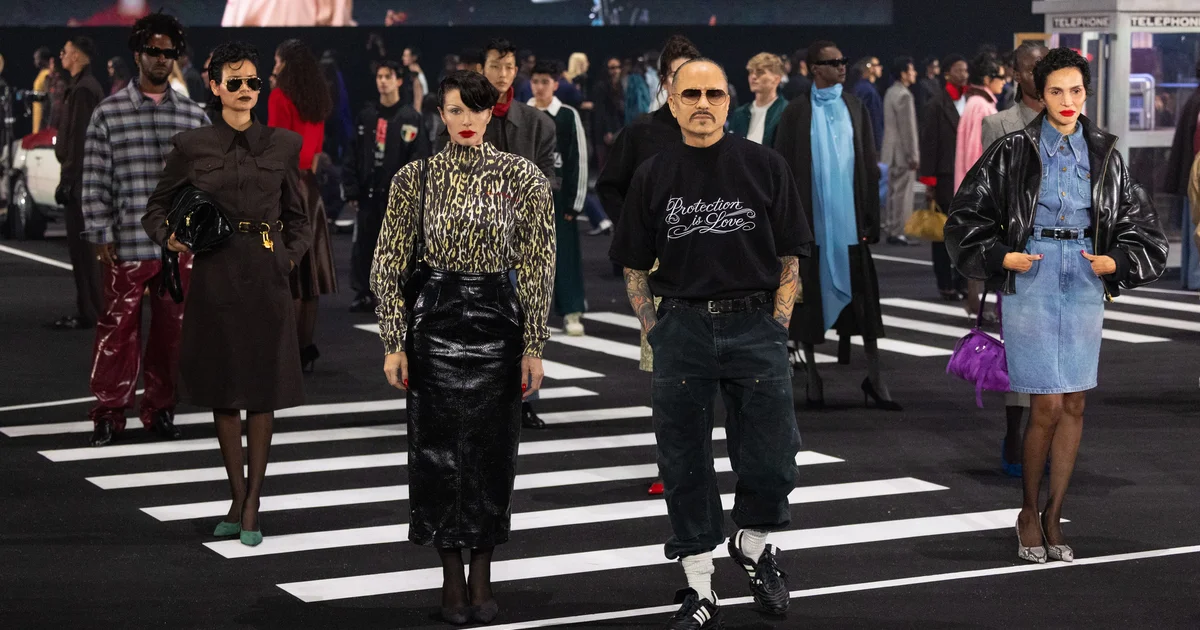
Willy Chavarria is testing AI-powered e-commerce, including virtual try-on and a future AI voice that could sound like the designer himself.
www.glossy.coNew York designer Willy Chavarria launched his Adidas World Cup collection in June 2026 not through his regular online store but through a separate AI-powered storefront built by the commerce platform Swap. According to reporting by Zofia Zwieglinska for Glossy on August 24, 2026, the experiment delivered a clear result on the revenue line.
A representative from the brand told Glossy that comparing the Swap launch with the previous collection launch showed a 2x increase in revenue with comparable conversion and average order value. Figures released by Swap put the first six days at more than 1,000 orders, a $249 average order value, and overall conversion of 3%. Direct, owned, and email traffic accounted for 81% of revenue.
That traffic split matters. The AI storefront did not pull in new shoppers from search or social. It replaced the experience for people the brand was already reaching. The doubling of revenue should be read as the effect of a redesigned experience, not of new demand capture.
Shoppers could ask product questions in chat, receive recommendations, virtually try on garments, and check out, all inside a domain separate from the brand's main site. Chavarria views that separation as a feature. It let the team build a distinct world around the collaboration, and he expects to use the format again, particularly for collabs.
The 802 conversations that pointed at an unresolved sizing problem
More interesting than the revenue is the data Chavarria himself calls the most useful.
Of the 802 conversational signals tracked during the launch, 44.8% related to sizing and fit. Which size would work, whether pieces fit as they did on the model, whether products ran large or small. Nearly half of all conversations concentrated on the same unresolved anxiety that the product pages had failed to settle.
Up until now, it's all been based on just literal sales. You don't really know a lot of detail behind why somebody might return something or why somebody may decide not to purchase something.Source: Willy Chavarria
Conventional e-commerce measures the fact of abandonment and nothing more. What the shopper was stuck on can only be inferred from heavily biased samples such as free-text return reasons or support tickets. A conversational storefront converts that silent abandonment into a question you can read.
Chavarria offers the example of a customer wanting to understand the weight or stiffness of a fabric before buying. Repeated questions, he says, tell the brand something. Read the other way, 44.8% is evidence that apparel product information still rarely goes beyond a size chart and a photo of a model.
This gap is not only a human shopper problem. As more discovery flows through AI systems that compare products and make recommendations, a catalog that lacks fit and material attributes will not make it into the comparison at all. The sizing questions surfacing in these logs are a local symptom of a broader issue: product data that agents can actually read mostly does not exist yet.
How to read the virtual try-on number
One figure Swap emphasizes is the effect of virtual try-on. Around 20% of VTO sessions ended in a purchase, against a site-wide purchase conversion rate of 0.8%.
The caveat is that only 376 shoppers used it. That group accounted for roughly 7% of launch orders. People who go out of their way to use a try-on tool are already further along in intent than the average visitor. The 20% figure blends the effect of VTO on purchasing with the self-selection of shoppers who were going to buy anyway.
Juan Pellerano-Rendón, CMO of Swap, frames the opportunity as addressing the uncertainty that remains in buying clothes online, noting that seeing a garment on yourself gives a quick read on whether it works with your skin tone. The direction is reasonable, but 376 users is too thin a base for a product decision.
The industry context is worth holding alongside it. A 2026 study published by DRESSX reports apparel return rates running at 30% to 40% and online conversion at 1% to 2%, against 23% to 30% for physical retail. The inability to try before buying is widely recognized as a structural bottleneck.
Swap itself reports that its storefront delivers twice the conversion of traditional e-commerce, three times longer engagement, and 20% fewer returns. All of these are vendor-published numbers with no third-party verification. Anyone evaluating the platform should confirm them against their own existing store in parallel.
A designer's synthetic voice, and the fact that it has not shipped
The headline of the Glossy piece is that Chavarria is considering putting an AI version of his own voice into the shopping experience.
"At some point, you may even hear my voice talking," he says. "It would sound just like me and speak just like me." Whether that means recording specific messages or supplying enough audio for a model to answer questions in his voice is undecided. Another voice might handle most of the experience, with his own surfacing at particular moments.
It's very weird. That's why we haven't done it yet because I still need to put a lot more thought into it.Source: Willy Chavarria
None of this has been implemented. Timing, cost, and the rights framework around a synthetic voice are all undisclosed. What the reporting captures is a designer's hesitation, not a shipped feature.
His reference point is Ralph Lauren's Ask Ralph, the conversational styling assistant built on Microsoft Azure OpenAI and rolled out to US app users in September 2025, which returns complete shoppable looks aligned with the brand's aesthetic. It does not use Ralph Lauren's own voice. Chavarria imagines visiting the site and having Lauren himself explain a sweater, and calls the idea fun.
Behind this sits a shift in where brand appeal comes from. The State of Fashion research from BoF and McKinsey finds emotional connection has become the top driver of luxury brand desirability in both the US and China, ahead of craftsmanship and heritage. Creative-director news now moves demand directly: when Jonathan Anderson's departure from Loewe was announced, brand searches on Lyst rose 38%. For a label sold through around 150 retail stores plus direct-to-consumer, with no physical store network of its own, leaning on digital to carry the brand world is a natural move.
What merchants should take from this: turn conversation logs into a product data backlog
The practical lesson sits upstream of whether to adopt an AI storefront at all.
The first move is to treat repeated customer questions as evidence of missing product data. If you already run a chatbot, a contact form, or product Q&A, the text sitting in those systems is the same class of data as these 802 signals. Classify the questions, then check whether the attributes implied by the largest categories exist in your product master. The priority order more or less writes itself.
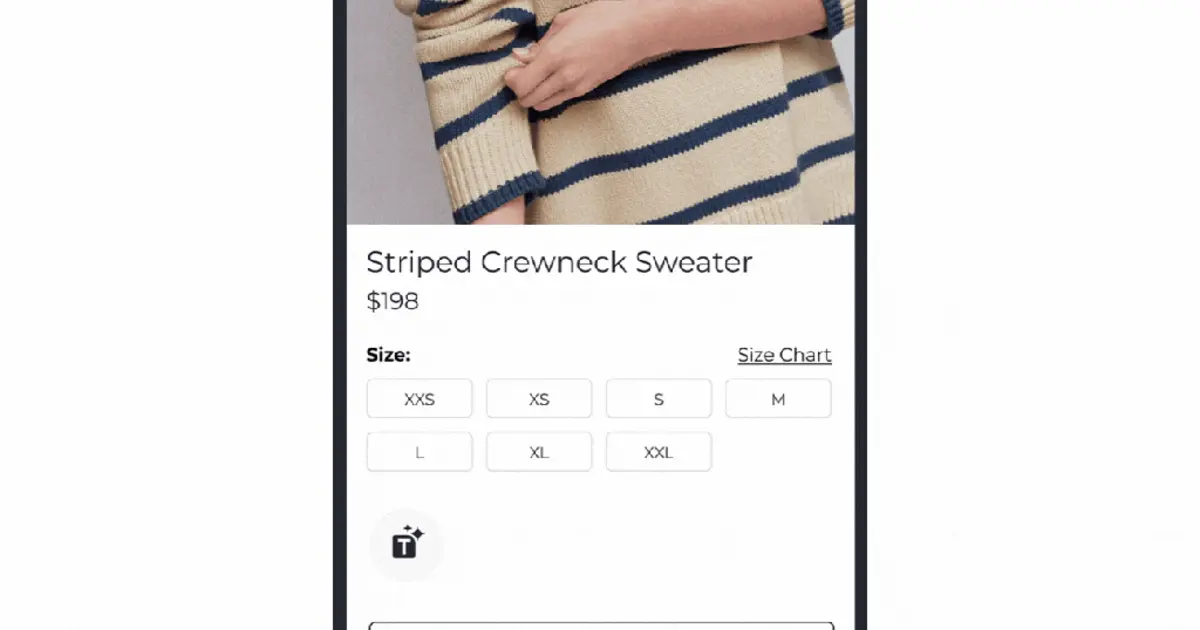
If sizing and fit come out on top, what to add is concrete. Not just garment measurements, but the height and worn size of the fit model, how much ease the cut carries, fabric weight and stretch, and how the piece behaves after washing. This copy serves human shoppers reading a page and AI agents comparing products at the same time. Publishing the same attributes in structured data and in your feeds makes it work on both fronts.
Next comes how you scope the experiment. This storefront lived apart from the brand's main site and functioned as a dedicated world for one collaboration. Testing conversational selling on a limited drop rather than replacing the whole store is a realistic way to gather learning data while containing risk. Framing a move toward agentic commerce as a company-wide replatform tends to exhaust the budget before the first test runs.
At the same time, do not misread the preconditions. 81% of revenue here came from direct, owned, and email. The AI storefront worked because an existing audience and a newsworthy launch delivered traffic to it. A conversational interface does not acquire customers on its own, and every claim that it lifts revenue has an audience-building mechanism quietly sitting underneath.
Finally, conversation logs need a handling policy. Questions and answers are first-party input for both merchandising and service quality, and they are also free text that may contain personal information. Decide what you retain, how far it feeds analysis, and who can read it before the first session is recorded.
Conclusion
The most transferable part of the Willy Chavarria and Swap experiment is not the doubled revenue. It is the 44.8% breakdown. Once you can receive customer hesitation as structured signal, what used to be visible only as a return rate becomes a specific, fixable gap in your product data.
The synthetic designer voice remains a thought experiment. Whether it ships matters less than what happens when conversational selling settles in as an ordinary channel, and how brands route the questions accumulating there back into product information. The gap worth watching next is how quickly merchants with that loop pull away from merchants without one.