
AI Commerce News Digest (August 26, 2026)
Albertsons reports higher AOV from conversational AI, eComID raises $17M for a shopper context layer, and Fanplayr makes product catalogs AI-readable. Your August 26 AI commerce roundup.


Key Takeaways
- Albertsons reports higher average order values from conversational AI
- eComID raises $17 million to build a shopper context layer for AI
- Preparing product and customer data for AI is becoming an investment theme
Here is the AI commerce news roundup for August 26. Two threads stood out today: retailers putting numbers on the value of AI-assisted shopping, and companies working on the data layer that makes those numbers possible. Yesterday brought brand-side experiments with AI avatars and automated listings, while today the money moved toward the less glamorous foundations of purchase and product data. Payments and logistics also showed signs of being rewired around AI agents.
Today's Top Stories
Albertsons reports 10% higher average order value from conversational AI
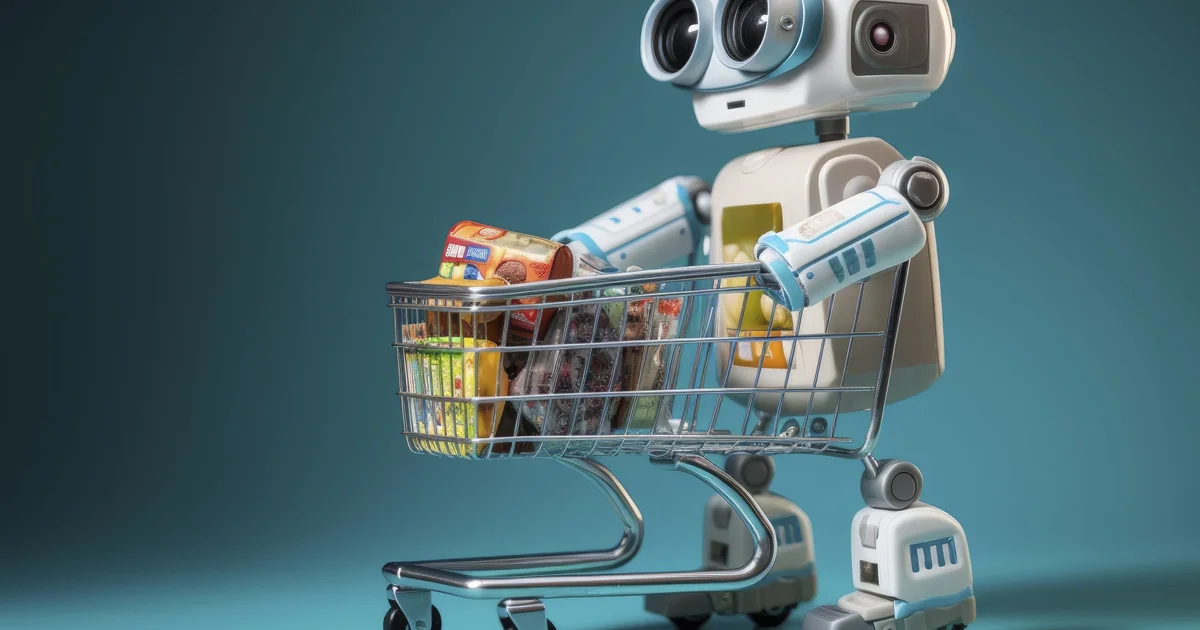
Albertsons has revealed that its conversational AI tools are helping generate higher average order values as cost and value take centre stage in shopper's minds.
www.marketingtechnews.netThe US grocery chain Albertsons has attached specific figures to its AI shopping tools. According to the company, average order value runs 10% higher for customers who use conversational search, and 26% higher for those using the broader assistants that build recipes and match dietary preferences.
The context matters. In-store sales have been soft while online pre-orders have grown, so AI-suggested basket building lands at a useful moment for a chain dealing with cautious consumers. Albertsons has concentrated its enterprise AI work on digital customer experience, merchandising intelligence, labor optimization and supply chain optimization.
What stands out is which features moved the numbers. The gains came not from a generic chatbot but from tools that take over part of the decision itself, assembling ingredients from a recipe or substituting items to fit a dietary restriction. For merchants weighing where to invest in AI-assisted selling, this is a concrete signal about which capabilities change what ends up in the basket.
Full article: Albertsons Reports 10% to 26% AOV Lift From Conversational AI: What the Numbers Do and Do Not Measure
eComID raises $17 million for a shopper context layer that AI can read

eComID, a Stockholm-based startup that claims to be building the shopping passport for the future of commerce, announced a €14.58 million seed round.
www.eu-startups.comSweden's eComID announced a seed round of €14.58 million, or roughly $17 million. Systemiq Capital led the round, and H&M Group, an investor since 2023, stayed on as a strategic backer.
The idea behind the company is what it calls a shopping passport. Shoppers carry their sizing, taste and purchase context across connected brands, so a store can understand them from the very first visit. eComID's AI shopping agent, Vera, uses that context to run sizing guidance, conversational search and product discovery on each brand's own site.
Since launching in 2024, the company says it works with more than 60 brands and reaches 20 million shoppers a month. It reports a 30% lower return rate for shoppers using the service and a 10% higher conversion rate for brands. Those figures are self-reported and lack third-party verification, but they point at a concrete answer to a live question: where the context that AI needs about a customer should live.
Full article: eComID Raises $17M with H&M Backing, Betting the Shopper Context Layer Belongs on Brands' Own Sites
Agentic Commerce
Klaviyo executive on what agent-led commerce changes for brands
Klaviyo APAC Managing Director Brian Kealey discusses agent-led commerce, first-party data, customer consent, loyalty and human oversight across Asia.
technode.globalBrian Kealey, who leads APAC for the marketing automation firm Klaviyo, laid out the practical stakes of agent-led commerce. The company's Singapore research found that 76% of shoppers have used AI to help find or decide on a purchase, and 51% would be open to AI agents handling routine repurchases.
Kealey's central point concerns what brands should optimize. Today a shopper's agent reads your website or product feed. Before long, he argues, it will talk directly to the systems behind the storefront: the pricing engine, the loyalty platform, the service bot. In that world the API and the data structure become the storefront.
He put it bluntly, saying brands that treat this as a marketing problem will lose to those treating it as a plumbing problem. As agent-driven repurchasing grows, so does the risk of commoditization, which makes staying the option the agent keeps choosing the real competitive question.
AI Commerce Tools
Fanplayr launches Catalog Intelligence to make product data readable by AI

Fanplayr announced Catalog Intelligence, a new solution that transforms traditional product catalogs into AI-ready product intelligence.
pressreleasehub.pa.mediaFanplayr, a conversion optimization vendor, introduced Catalog Intelligence, a service that restructures product data into a form AI systems can work with. Built on the company's Verada AI, it generates category-specific attributes, product facts and identifiers, audience and use-case signals, semantic search language and variant relationships.
The premise is straightforward. Most catalogs were written for human readers, and gaps or inconsistencies get in the way of a machine understanding what a product is. The result, the company argues, is weaker placement in AI search, recommendations and shopping assistants.
Each engagement starts with an AI Visibility Assessment that produces an AI Visibility Score, rating readiness across completeness, classification, identifiers, imagery and search signals. Customer names and pricing were not disclosed, but the launch shows the question of AI-readable product data turning into a product category of its own.
AnyMind Group extends AnyAI Insight from analysis to execution
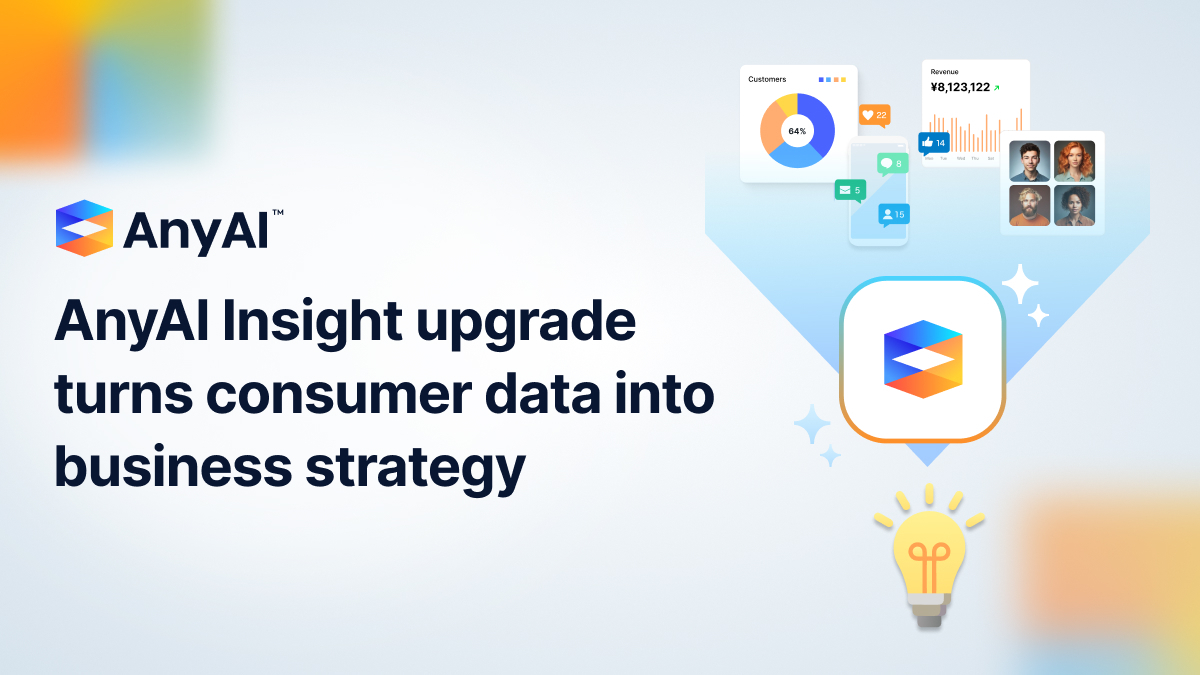
AnyAI Insight is now accessible through AnyAI Agent, and enables businesses to develop pricing, promotion, portfolio, premiumization and communication strategies, and activate them through AnyMind Group's platforms.
anymindgroup.comAnyMind Group expanded the capabilities of AnyAI Insight, its consumer intelligence tool. The service reads social and e-commerce data to surface the tensions, choice drivers and barriers behind consumer behavior, then turns them into pricing, promotion, portfolio, premiumization and communication strategies.
With this update those outputs become available through AnyAI Agent, the company's enterprise agentic AI product. Teams can call the analysis from Slack or a custom interface, act on it through AnyMind platforms such as AnyTag for influencer marketing, AnyX for e-commerce and AnyLive for live commerce, then feed the results back into the same loop.
Connecting analysis and execution in one conversational surface is a practical answer to a common problem, which is AI work that stops at the insight stage. For merchants, it is a useful reference for designing AI adoption as a cycle rather than a report.
Advertising and Retail Media
Back-to-school season previews an AI-driven holiday, Tinuiti research finds

Walmart's booming ad business and Tinuiti research show how AI, retail media and value-conscious consumers are reshaping shopping ahead of the holidays.
www.thecurrent.comThe US back-to-school season has become a testing ground for AI-assisted shopping. In a Tinuiti survey of 1,040 parents, only 32% said they do not plan to use an AI tool for back-to-school purchases. The rest expect to use ChatGPT or Gemini to hunt deals, compare products and summarize reviews.
Separate Tinuiti research found 48% of US adults now trust AI to recommend products, with ChatGPT used by 52% of respondents and Gemini by 45%. When the journey starts with an assistant, the consideration set narrows before a shopper reaches any retailer.
Retail media has not lost ground in the process. Walmart's global advertising revenue grew 38% in the quarter and Walmart Connect grew 43% in the US. Retailers still own the checkout, but the place where choices get made is drifting elsewhere.
Consumer Trends
Coveo executive says AI shopping has to show its evidence
Learn how trusted data, retrieval controls, and human handoffs can help commerce teams build more reliable AI shopping experiences.
www.cxtoday.comSimon Langevin, VP of Product at Coveo, described a widening trust problem in AI-assisted buying. A confident answer becomes a customer experience failure when the data behind it is incomplete, stale or contradictory.
The stakes climb in B2B purchasing, where complex catalogs, negotiated price lists and purchasing permissions all come into play. An assistant that recommends an unavailable item or shows list price instead of a contracted rate produces returns and awkward follow-ups.
Langevin traces the cause to both model hallucination and weak data governance, and locates the fix in retrieval. Rather than pulling data separately from commerce, ERP and content systems, a single system that queries and ranks the data cuts errors sharply. When retrieval confidence is low, he argues, the assistant should hand the customer to a person.
Payments and Fintech
DEUNA takes its PayPal alliance global with single-API checkout

DEUNA expands its global strategic alliance with PayPal, granting enterprise merchants one-click access to PayPal's full suite via a single API.
mexicobusiness.newsThe payment orchestration platform DEUNA extended its PayPal partnership across every market where it operates. A single API integration now covers PayPal Wallet, Venmo and PayPal Pay Later.
Checkout fragmentation is the target. Baymard Institute research finds one in five online shoppers abandons a purchase because checkout is too long or complicated, and enterprise merchants operating across borders carry the added weight of maintaining separate integrations per market.
DEUNA positions itself as an agentic payments intelligence platform, connecting more than 400 payment providers and anti-fraud tools through a no-code orchestration layer. Its Athia engine analyzes payment data and recommends routing strategies against merchant KPIs. How payment methods get bundled is becoming competitive territory in its own right.
EBANX CEO says the next rival in payments may not be a payments company

As AI changes the cost and speed of building companies, the next competitor in payments may come from a completely different kind of organization, EBANX's CEO says.
www.pymnts.comJoão Del Valle, CEO of the emerging-markets payments firm EBANX, argued that AI has changed who can enter the business. Because building a company now costs less and moves faster, the next serious competitor may come from an entirely different kind of organization.
Standard technology, in his view, has been commoditized. Differentiation shifts to the parts that resist copying: customer relationships, geographic presence, regulatory infrastructure and partnerships.
On the longer horizon he offered little certainty, saying that five years from now we will not even have an idea of what a payments platform looks like. The framing treats payments less as back-office plumbing and more as a destination that AI agents will choose between.
Global E-commerce
Naver accelerates Korean commerce with beauty and faster delivery

Beauty talent hires, luxury tie-ups, and faster shipping lift Naver's commerce momentum.
biz.chosun.comNaver, chasing Coupang in Korean e-commerce, continues to build out its commerce business. After fresh food and fast delivery, beauty is the current focus, with the company hiring brand partnership specialists and expanding the Naver Plus Store lineup.
Luxury has been part of that push. Chanel Beauty joined the High End luxury service in January, followed by Prada Beauty and Burberry Beauty. Naver's luxury beauty transaction volume rose 29% year over year.
On delivery, a tie-up with Kurly added same-day shipping alongside dawn delivery. Second-quarter service revenue reached 455 billion won, up 31.3% year over year, and N Delivery, which guarantees an arrival date, grew 76% in transaction volume. Platforms are tightening their grip on both discovery and logistics.
Ukraine's strikes widen to Russian e-commerce group Ozon, shares fall about 30%

Kyiv says the attacks are aimed at disrupting Russian supply chains and inflicting further pressure on Putin's wartime economy.
www.cnbc.comUkraine's drone campaign against Russian e-commerce logistics has expanded from Wildberries to Ozon, the country's second-largest online retailer. Strikes in southern Russia brought the number of facilities hit over three days to six.
Ozon shares fell nearly 30% on the Moscow Exchange. A logistics center in the Samara region caught fire after a strike, and the company said via Telegram that more than 500 employees were evacuated within minutes.
The Institute for the Study of War reported that Ukrainian forces have shifted emphasis toward Ozon warehouses since Saturday, after concentrating on Wildberries hubs since mid-July. E-commerce logistics becoming a target of economic pressure is a stark reminder of concentration risk.
Karnataka suspends food licences for Amazon and two other platforms

E-commerce and quick-commerce platforms that sell food products fall under the category of Food Business Operators, so they must comply with food-safety obligations even without physical stores.
indianexpress.comThe Indian state of Karnataka ordered the suspension of food licences held by Amazon, Swiggy Instamart and BigBasket after toxic datura fruits and seeds were found listed for human consumption. The platforms were also told to remove the listings and halt sales.
Under India's Food Safety and Standards Act of 2006, any business selling or distributing food is regulated as a Food Business Operator. E-commerce and quick-commerce platforms fall inside that definition even without physical stores, and must hold a central licence regardless of turnover.
Location matters as well. A company operating across states needs a central licence for its head office plus separate licences or registrations per site. Once a platform accepts orders, regulators treat it as an operator rather than an intermediary.
Logistics and Fulfillment
Amazon officially launches Prime Air drone delivery in the UK

Amazon has officially launched its Prime Air service in the United Kingdom, using its fulfillment center near Darlington, England.
ecommercenews.euAmazon has launched Prime Air drone delivery in the United Kingdom, the first time the service has operated outside the United States. Deliveries run from the company's fulfillment center near Darlington in north-east England.
Eligibility is tight. Customers must live within a 12-kilometer radius and have a garden, yard or driveway for the drop. Items have to fit in a large shoebox and weigh 2.2 kilograms or less, with delivery targeted within 60 minutes of the order.
For now the service is included with Prime at no extra charge, though Amazon has indicated fees comparable to other premium speed options may follow as coverage widens. European pilots announced in 2023 needed aviation regulator approval before reaching this point.
Wrapping Up
More companies are now describing AI-assisted selling in numbers. Albertsons with average order value and eComID with return rates both moved the conversation from whether the experience feels better to what it does to revenue.
At the same time, money is flowing into the groundwork those numbers depend on. Fanplayr restructuring catalogs for machines, eComID carrying shopper context between brands and AnyMind linking analysis to execution are all attempts to rebuild data on the assumption that AI will read it. The Klaviyo executive's line about a plumbing problem captures the shift well.
Looking ahead, watch how retailers prepare AI-assisted shopping for the holiday season, and how the payments layer adapts to purchases arriving through agents.