
AI Commerce News Digest (August 28, 2026)
AI commerce news for August 28, 2026: a Best Buy engineer maps the agentic commerce protocol stack, DBS and Stripe partner across Asia, and NIQ reports that 74% of shoppers now use AI for product discovery.

Key Takeaways
- A Best Buy engineer lays out the working implementation stack for agentic commerce
- DBS and Stripe partner to target agent-driven payments and cross-border flows in Asia
- NIQ finds 74% of shoppers now use AI for discovery, moving the visibility fight upstream
Here is the AI commerce news for August 28, 2026. Today the agentic commerce conversation dropped a level, from vision to implementation detail. An engineer at a major electronics retailer walked through the plumbing in public, while in Asia a bank and a payments platform tied themselves together at the money movement layer. Read alongside yesterday's Payouts.com settlement story, the pattern is a simultaneous build-out of the infrastructure behind agent transactions. On the consumer side, the share of shoppers using AI for discovery has reached three quarters.
Today's Top Stories
A Best Buy engineer on the implementation stack behind agentic commerce

Agentic commerce, shopping done by AI assistants on behalf of humans, is not a theoretical future. It is a $7 billion market today, and Best Buy…
finance.biggo.comAhnaf Prio, a senior engineering manager at Best Buy, gave a technical briefing on agentic commerce on the AI Engineer podcast. By his account, roughly 45% of agent sessions on ChatGPT and Google Gemini are already shopping related.
The core of the talk was sorting out the proliferating protocols: MCP for tool discovery, A2A for agent-to-agent communication, OpenAI's ACP and Google's UCP for commerce operations, and AP2 for autonomous payment authorization. What Prio stresses is that ACP and UCP use different schemas, so merchants selling on both ChatGPT and Gemini have to implement both. Neither platform supports a live catalog search call, so product feeds must be pushed in advance. Feed formats are not standardized either, which means separate pipelines for ACP, UCP, and Meta's specification.
On payments he is blunt that the industry is not there yet. ChatGPT routes through a shared payment token, Gemini accepts only Google Pay, and a human stays in the approval loop.
The point that carries the most weight from a practitioner is his framing of evaluation. Citing the case where users got Chipotle's agent to answer programming questions, he described running conversational AI without evals as playing whack-a-mole.
Full article: Merchants Have to Implement Both ACP and UCP: Best Buy's Engineering Lead on the Plumbing Behind a $65 Billion Market
DBS and Stripe strike a strategic partnership aimed at agentic commerce in Asia
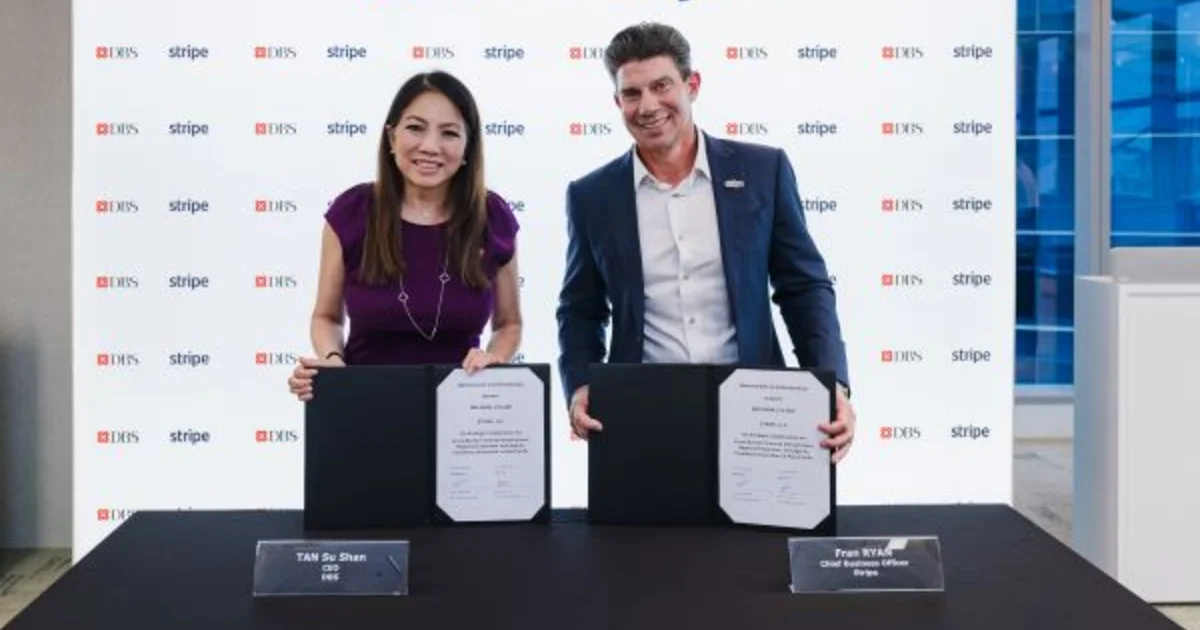
DBS and Stripe have announced a strategic partnership to accelerate the growth of agentic commerce and cross-border payments in Asia.
www.dbs.comSingapore's DBS Bank and Stripe announced a strategic partnership on August 26. Both named the same goal explicitly: accelerating agentic commerce and cross-border payments across Asia.
The arrangement runs in two directions. Stripe will use DBS' digital banking capabilities to broaden collection options for merchants on its platform, and DBS' money movement and cash management will also serve Stripe's own liquidity optimization across corporate entities. In the other direction, DBS will tap Stripe's platform and embedded finance to extend its cross-border network for institutional clients. Jointly developing agentic AI capabilities for DBS customers is also on the table.
The figures both sides cite are McKinsey's estimate that AI agents could orchestrate up to $5 trillion of global consumer commerce by 2030, and a Money20/20 and FXC Intelligence projection that Asia's outbound cross-border payments reach $24 trillion by 2033.
DBS has already run the first Visa Intelligent Commerce pilot in Asia Pacific, so the pattern of a bank reaching for agent-mediated transactions from its own side continues.
Full article: DBS and Stripe Sign a Strategic Partnership: What Actually Moves in Asia's Agentic Commerce and Cross-Border Payments
Agentic Commerce
Synchrony on how AI put every checkout in play

Agentic commerce is forcing payments companies to make investment decisions before the experience has been won by anyone.
www.pymnts.comMaran Nalluswami, who leads strategy and business development at US consumer finance group Synchrony, spoke about how fast agentic commerce is arriving. The shift from credit to debit, new payment rails, and crypto adoption all unfolded gradually. By contrast, AI-driven shopping is moving at a pace the payments industry has not seen before.
The open question he raises is where the transaction actually happens. Today consumers discover products on AI platforms and complete purchases on retailer sites or in stores. There is no guarantee that separation holds. Large retailers are already asking for payment options and financing to travel with the customer into AI ecosystems they do not own.
As he puts it, you have to place bets along the entire experience because no one has won it yet. Merchant demand splits in two: sophisticated retailers want the technical means to manage catalogs and payment options across emerging AI channels, while small businesses want the simplest, most frictionless path available.
THG Ingenuity takes its Gemini-based AI shopping assistant to market

CTO Jo Drake explains how shifting team mindsets turned two-week sprints into two-hour deliveries while enabling seamless Google Cloud migration
technologymagazine.comJo Drake, CTO of UK commerce platform provider THG Ingenuity, described how the company uses AI internally. The showcase project was a shoppable runway event built with Topshop, where attendees could buy items through their phone camera as models walked, with 85% of the collection purchasable that night.
The shopping agent built for that project runs on Gemini, alongside a feature called Virtual Triumph that lets shoppers test whether a dress works with a given pair of shoes or a bag. The essential move was compressing the months it normally takes for runway looks to reach shelves into an on-the-spot purchase.
That work led to the AI Shopping Assistant unveiled at Google Cloud Summit London in June. Built on the Gemini Enterprise Agent Platform, it learns a brand's tone of voice and complex catalog, and is now offered through Google Marketplace. Turning an in-house build into a sellable product is becoming a standard path for commerce platform providers.
AI Commerce Tools
CommerceIQ's AI agent cuts Newell Brands product page updates from 35 minutes to under one

CommerceIQ built a custom AI Content Agent for Newell Brands, cutting product page updates from 35 minutes to under one, a 40x time savings.
www.demandgenreport.comNewell Brands, the CPG group behind Rubbermaid, Sharpie, and Coleman, deployed a custom AI agent with CommerceIQ for product content operations. According to the published case study, updating a single product detail page dropped from roughly 35 minutes to under a minute, a 40x improvement in time.
Rather than dropping in a generic AI assistant, CommerceIQ built the agent around Newell's workflows, governance requirements, and product data. The build took under 80 days and reportedly held 100% compliance with Newell's product information management standards.
More important than the headline number is what this work feeds. Neither ChatGPT nor Gemini supports live catalog search, so both index feeds pushed in advance. The freshness and structure of product content therefore determine directly whether a product is discoverable through an AI agent.
Full article: Product Page Updates From 35 Minutes to Under One: Inside Newell's AI Content Agent With CommerceIQ
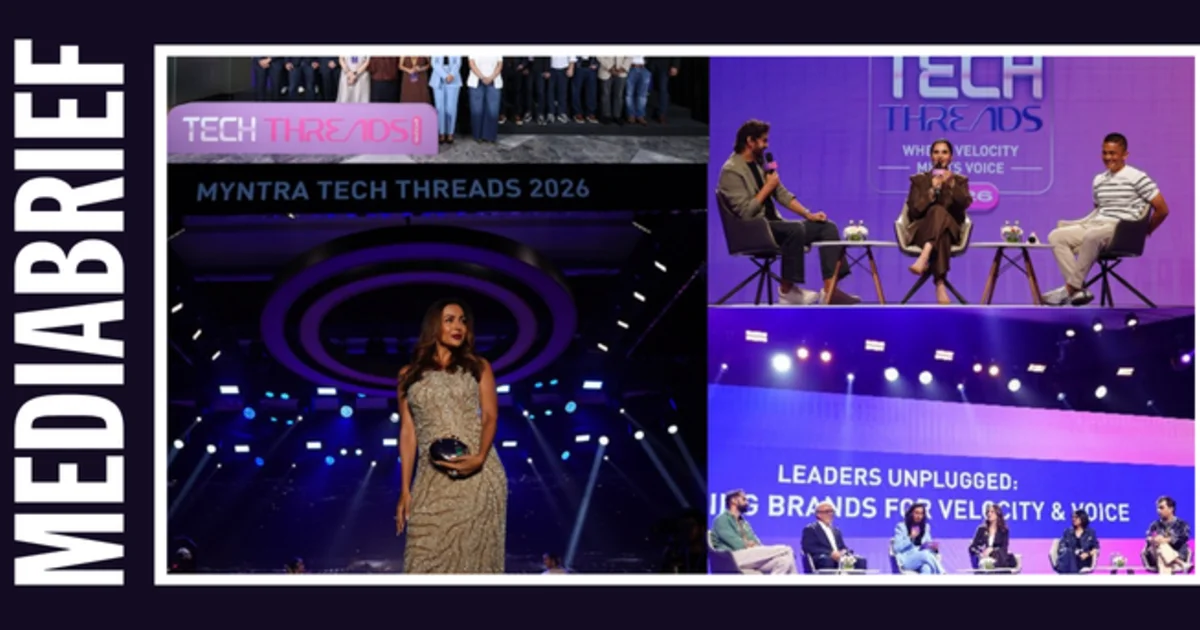
Myntra shows its AI shopping and rapid delivery lineup at Tech Threads 2026

Myntra highlighted AI-led shopping, social commerce and rapid delivery solutions at Tech Threads 2026, bringing brands and industry leaders together.
mediabrief.comIndian fashion commerce leader Myntra presented its technology lineup to brand partners at Tech Threads 2026. At the center were Maya, a conversational discovery tool, and Glamstream, an inspiration-led shopping experience.
On the supply side, the AI Powered Brand Stack was described as compressing design lifecycles that used to take weeks into minutes. The partner app Mitra was revamped and repositioned as an operational strategist for brand growth. For fulfillment, the company showed M-Now, its rapid delivery service.
Sharon Pais, Head of Myntra, said propositions such as Glamstream, Maya, and M-Now help brands build deeper salience with customers and power growth at scale. Bundling conversational discovery, creator-driven demand, and rapid fulfillment into one package is becoming the standard shape of AI commerce in the Indian market.
Consumer Trends
74% of shoppers use AI for discovery, according to NIQ and World Data Lab

A new NIQ and World Data Lab report reveals how AI, retail media, and social commerce are transforming the consumer purchase journey.
www.morningstar.comNIQ published a report with World Data Lab on how the consumer path to purchase is shifting. The headline finding is that 74% of shoppers now use AI during product discovery, with 20% using AI as part of the shopping process itself.
Regional splits are stark. Close to a third of Western consumers have purchased a product after discovering it on a social platform, yet 68% of North American consumers have never bought through social media. In APAC, nearly 60% shop through social and quick commerce channels. Retail media has grown into a $184 billion global market.
Troy Treangen, Chief AI and Product Officer at NIQ, noted that consumers are making purchasing decisions earlier and across more channels than before. The report warns that brands failing to optimize product content and digital shelf presence risk becoming less visible as AI agents and recommendation engines take on a larger role.
Corporate Moves and Partnerships
Levanta raises a $22 million Series B to build creator commerce infrastructure

Levanta, whose technology helps brands find creators, send them products, set up affiliate commissions, track sales and handle payments, has announced a $22 million Series B led by Volition Capital.
retailtechinnovationhub.comCreator commerce platform Levanta raised a $22 million Series B led by Volition Capital, taking total funding past $43 million. For Volition it is a second lead investment after the $20 million Series A in 2024.
Levanta provides the machinery for brands to find creators, ship them products, set affiliate commissions, track sales, and handle payouts. CEO Ian Brodie says the platform currently spans Amazon, Shopify, and Walmart, with more than 90,000 vetted creators.
The stated use of proceeds is expanding the set of supported marketplaces. The thesis is that most retail marketplaces have not yet given their sellers a route into creator and affiliate marketing, leaving room for infrastructure to sit between the two sides. The company says it has been profitable or break-even since launch.
SSG.com splits, separating grocery from fashion and beauty
Shinsegae Group's e-commerce unit SSG.com is dividing into two companies, splitting fashion, beauty and lifestyle into a separate platform while holding onto its grocery-focused marketplace.
www.koreaherald.comSSG.com, the e-commerce unit of Korea's Shinsegae Group, is dividing into two companies. The board approved spinning off fashion, beauty, and lifestyle into a new entity tentatively named Shinsegae Mall, while the existing company keeps the SSG.com name as a grocery-focused marketplace.
The stated rationale is that each business should concentrate on its core strengths through a more specialized structure rather than running multiple categories on one integrated platform, with independent decision-making allowing faster responses to market change. Customers will still browse Shinsegae Mall products through the SSG.com app, while Shinsegae Mall expands its own reach through outside channels.
The split reverses a 2019 decision that merged the online operations of E-mart and Shinsegae into a single platform. A special shareholders meeting is planned for late October, with the split taking effect December 1.
Global E-Commerce
Shein's IPO valuation lands about 70% below its 2022 private mark

Industry experts say Shein's Hong Kong IPO is testing how public investors value a global e-commerce model being reshaped by slower growth, rising fulfilment costs, and tighter rules for low-value parcels.
asianews.networkShein's Hong Kong IPO points to a market capitalization of up to $27 billion at the top of its proposed range, roughly 70% below the nearly $100 billion private valuation of 2022.
Pan Helin, a member of an expert committee under China's Ministry of Industry and Information Technology, attributes part of the reset to the maturity of e-commerce itself. The 2022 surge coincided with overseas supply chain disruption and sharp price increases, and today's conditions leave less room for those growth expectations. Capital rotating toward AI-related companies further limits the premium available to conventional e-commerce platforms.
Regulation compounds the pressure. The US ended de minimis duty-free treatment for covered parcels under $800 in May 2025, and the EU abolished its exemption for consignments under 150 euros on July 1 this year, adding a temporary 3 euro duty per item category. Shein is responding by shifting toward a business-to-business-to-consumer model, consolidating goods in China, shipping in bulk to Europe, and delivering from local warehouses.
Coupang refuses on-site inspection, stalling the Korean regulator's probe

The fair trade watchdog's probe into the Korean arm of US-listed Coupang Inc. appears to have hit a setback after the e-commerce giant refused inspections.
www.koreatimes.co.krThe Korea Fair Trade Commission's investigation into Coupang's Korean unit has stalled after the company refused on-site inspections. The allegations center on suspicions that Coupang shifted discount costs onto its suppliers, in violation of the Act on Fair Transactions in Large Retail Business.
Coupang declined to cooperate on the grounds that it had not received the seven days' advance notice required under the Framework Act on Administrative Investigations, and filed suit over the procedural failure. The FTC attempted inspections four times and withdrew earlier this week after learning of the lawsuit. The framework act exempts investigations under eight FTC-administered laws from advance notice, and the parties disagree over whether the large retail business act falls within that exemption.
FTC chairperson Ju Biung-ghi called the refusal unprecedented and vowed stern measures. A case pursued to the Supreme Court can take three to four years, so delay looks difficult to avoid. In February, when Coupang was fined 2.19 billion won in a related supplier pricing case, it cooperated with the inspection without objection.
Amazon extends quick commerce into fashion in India, targeting 300 cities

Amazon is enhancing its quick commerce strategy in the fashion sector, planning to expand Amazon Now to 300 cities and tapping into time-sensitive fashion demand.
retail.economictimes.indiatimes.comAmazon is extending Amazon Now, its rapid delivery service in India, into fashion and lifestyle, with plans to reach 300 cities. The target is demand from occasions where consumers need a product immediately.
Event-driven demand is the archetype. Around fixtures with fixed dates such as the T20 World Cup, buyers cluster around getting something to wear that day. A multi-day delivery window misses that moment, which is the case for extending rapid fulfillment into fashion.
Quick commerce in India grew up around groceries and daily essentials, so the next question is whether higher-ticket, higher-margin fashion can ride on it. The operational challenges are the cost of distributing inventory across many locations and holding down the rate of size exchanges and returns.
Logistics and Fulfillment
Maersk partners with ShippyPro to place its international network inside merchant workflows

A.P. Moller Maersk has partnered with shipping management platform ShippyPro, integrating its e-commerce parcel delivery services.
logistics-manager.comShipping group A.P. Moller Maersk has partnered with shipping management platform ShippyPro, integrating its e-commerce parcel delivery services directly into ShippyPro's multi-carrier software.
Merchants can now select Maersk's international delivery network and parcel orchestration from inside their existing shipping workflow. There is no separate integration to build, and labeling, dispatch, tracking, and returns are handled in one place.
Helena Garcia, Maersk's Regional Head of E-Commerce Europe, framed the collaboration as part of the company's investment in digital platforms, easing access to logistics services within established software ecosystems. Carriers pushing into shippers' operating systems is part of a broader search for revenue less exposed to container rate swings.
The EU's 3 euro duty pushes US sellers toward DDP
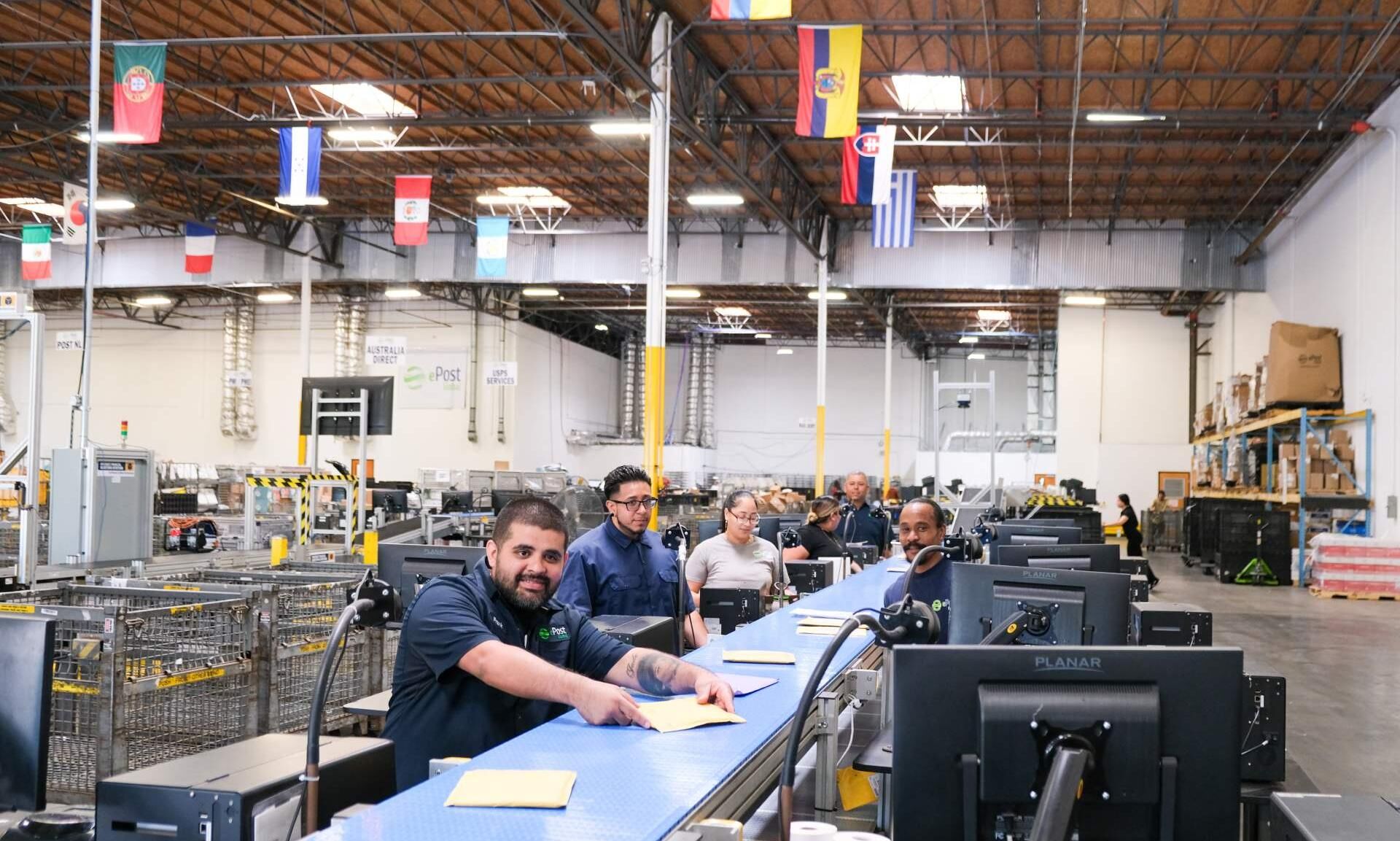
After the EU introduced a 3 euro customs duty on low-value e-commerce imports on July 1, 2026, there is little evidence of an immediate volume shock among US merchants served by ePost Global.
www.stattimes.comFollowing the EU's July 1 duty of 3 euros on low-value imports, logistics provider ePost Global reports on how its US merchants have responded. Notably, there is little evidence of an immediate collapse in volume.
What is happening instead is a shift toward duties paid at origin. Under the old delivered duty unpaid model, recipients are billed for duty and handling on delivery, which produces refusals and complaints. Switching to delivered duty paid lets sellers price the duty in and fix the total at the moment of purchase.
Three euros sounds small, but the lower the unit price, the larger the hit to margin. The same pressure driving Shein toward bulk shipping and a business-to-business-to-consumer model is now reaching much smaller cross-border sellers.
Wrapping Up
The thread running through today's news is that agentic commerce moved from abstraction to implementation detail. The dual ACP and UCP builds and the requirement to push product feeds in advance, as laid out by a Best Buy engineer, spell out what selling through AI agents actually demands. The CommerceIQ and Newell Brands case study points at a different section of the same plumbing.
On the payments side, the DBS and Stripe partnership hardens the money movement layer, and as Synchrony put it, no one has won the experience yet, which forces every player to decide where to place its bets. NIQ's 74% is evidence that the window for deferring that decision is short.
Worth watching next: whether AP2 implementations start to appear in the wild, and where a middle layer emerges to absorb the cost of building both ACP and UCP.