AI Commerce News Digest (October 8, 2026)
AI commerce news for October 8, 2026. Meta and Sierra formally announce the Personal Agent Protocol for personal AI agents, Amazon's About You page goes viral, and a PYMNTS and Visa study finds only 35% of shoppers would let agents use saved payment credentials.


Key Takeaways
- Meta and Sierra formally announce a personal agent standard
- Amazon's About You page goes viral on social media
- Shoppers want to decide what agents may do on their behalf
Here is the AI commerce news for October 8. Today's stories shared one theme: making it visible whose permission an AI agent is acting on when it shops, and how far that permission goes. Meta's standards effort, which yesterday's digest covered as a report, had in fact been officially announced with Sierra the same day, October 6, with Shopify among the named partners. At Amazon, "About You," a page showing the information its AI uses to personalize shopping, went viral as social media users compared it to a personal dossier. On the payments side, a new study found that shoppers will let agents compare products but want to keep the payment decision for themselves.
Today's Top Stories
Meta and Sierra formally announce the Personal Agent Protocol to connect personal AI agents with businesses (follow-up)

Meta is working with Bret Taylor's Sierra Technologies on a new standard for how personal AI agents interact with businesses.
siliconangle.comOn October 6, Meta and Sierra announced the Personal Agent Protocol (PAP), a common standard for how personal AI agents interact with businesses. Yesterday's digest covered the effort as a CNBC report; Meta had also explained it officially on its business blog and elsewhere the same day. Meta says it is designing the protocol with partners across retail, payments and customer experience, and that it will be open for anyone to implement. According to Sierra, the first version of the specification (v0.1) is due to be published in October.
According to Forkast, PAP builds on OAuth and lets users grant agents session-based permissions ranging from read-only to write access. Businesses can receive agents through their websites, through APIs such as MCP or OpenAPI, or through their own AI agents. Partners include Stripe, Shopify, Walmart and Genesys, while CNBC reports that OpenAI and Anthropic have not joined.
The backdrop is Amazon's decision to lock out Muse, Meta's shopping agent. When an agent operates a site without identifying itself, the merchant cannot tell whether it represents a legitimate shopper. If PAP spreads, merchants will be able to check an agent's identity and the scope of its permission before letting it in. How much of the specification is published, and whether the major AI companies join, remains to be seen.
Related article: Meta and Sierra Unveil Personal Agent Protocol: An OAuth-Based Standard for How Businesses Recognize and Welcome Personal AI Agents
Amazon's About You goes viral, letting shoppers see and edit what its shopping AI remembers about them

More easily update and edit the information that personalizes your Amazon shopping experience.
www.aboutamazon.comAmazon's About You, a single place that gathers the information it uses to personalize shopping, became a major talking point on social media on October 6 and 7. The feature itself launched on May 13, the same day as the AI assistant Alexa for Shopping. It lists preferences and attributes inferred from purchase history, conversations with Alexa for Shopping, product reviews, Lists and searches, and customers can add, correct or remove them. Shoppers can also ask Alexa for Shopping, "What do you know about me?"
It started with a post on Threads, and people quickly began sharing what Amazon had written about them. Some found details as specific as body type or one-off purchases, and outlets such as the New York Post compared the pages to personal dossiers. Convenience and privacy concerns surfaced at the same time.
The quality of an AI agent's recommendations depends heavily on what it remembers about the shopper, not just on product data. By showing that memory to customers and letting them fix it, Amazon is aiming for both better accuracy and more trust. For sellers, as Alexa for Shopping recommendations are narrowed by shopper attributes, it becomes more important to state on product pages which people and uses a product suits.
Related article: Amazon's About You Goes Viral: Shoppers Can Now See and Edit the Memory Behind Alexa for Shopping, and What It Means for Sellers
Agentic Commerce
Shopware launches the Agentic Commerce Maturity Index to measure store readiness

Shopware is pleased to announce the launch of Agentic Commerce Maturity Index (ACMI), a new tool designed to help merchants measure their AI...
www.prnewswire.co.ukOn October 7, German ecommerce platform Shopware announced the Agentic Commerce Maturity Index (ACMI), a tool that measures how ready a store is for agentic commerce. Merchants answer a 24-question self-assessment in about 25 minutes and receive a maturity score, a comparison with other participants and recommendations for what to tackle next.
The assessment covers four areas: discovery, transactions, fulfillment and operations. Shopware says it can surface gaps in product information, integrations, pricing logic, attribution and governance. The index is in early access, and merchant responses will shape the public version.
Stefan Hamann, Shopware's Chief Agentic Officer, said that as more merchants take part, the index will show how far the market has progressed and where it gets stuck. For mid-market retailers unsure where to start, it offers one way to gauge their current position.
AI Commerce Tools
Shippo reports 138% monthly growth in Claude and ChatGPT connections as it expands AI features for peak season

Shippo, the leading shipping platform for modern e-commerce, today announced continued momentum across its AI-powered shipping platform, along...
www.prnewswire.comShipping platform Shippo announced expanded AI capabilities on October 7 ahead of the holiday peak. The highlight is a connection through MCP (a standard that links AI to external tools) that lets businesses compare rates, buy labels and track packages from Claude or ChatGPT. Unique connections are growing 138% month over month.
In August, Shippo launched the Estimate API, which displays predicted delivery dates on product pages and at checkout. Drawing on 13 years of shipping data, it claims at least 90% accuracy. Shippo's data also showed that 85% of merchants shipping more than 100 labels a month had cheaper options available, with average potential savings of 22%.
Showing an accurate delivery date before purchase can also become a factor when AI agents compare products. On the operations side, handing shipping tasks to AI assistants is starting to catch on.
Dermaself runs 2,632 AI skin analyses in five days at an OVS beauty event in Milan

More than 2,600 skin analyses were completed in five days: Dermaself's activation during Milan Beauty Week shows how AI skin analysis can turn a beauty event into a scalable, personalised skin care experience
cosmeticsbusiness.comAI skin analysis company Dermaself provided skin analyses for visitors at an event run by the beauty arm of Italian apparel retailer OVS in Milan from September 16 to 20. The system analyzes blemishes, wrinkles, pores, hydration and more from a selfie, then suggests a skincare routine drawn from an assortment of 37 brands.
Over five days, 2,632 people completed an analysis, one every 55 seconds. Three out of four people who started the experience went on to receive a recommended routine. Visitors could get their results by email, with 20% off recommended products at selected OVS stores in Milan.
Instead of starting from a brand, the system matches skin needs with ingredient lists (INCI) to choose from products across several brands. For retailers with large assortments, it is a working example of placing AI diagnosis at the entry point of product search. The figures come from Dermaself's own communications.
Sellforte launches Incremental Pixel, attribution calibrated by experiments

Sellforte, the Measurement and Optimization OS for retail and ecommerce, today announced Sellforte Incremental Pixel, a new attribution...
www.prnewswire.comOn October 7, Sellforte, which measures marketing effectiveness for retail and ecommerce, announced Incremental Pixel. It counts each order on the site once, subtracts sales that would have happened without the ads, and shows each campaign's contribution daily.
The calibration uses conversion lift tests, regional tests (GeoLift) and marketing mix modeling (MMM). The aim is to curb two problems: several ad platforms claiming the same sale, and attribution that favors whichever channel was closest to the purchase.
As more purchases pass through AI interfaces, it becomes harder to see which campaigns actually drove sales. Interest in measurement that does not rely only on click paths is likely to keep growing.
Payments and Fintech
PYMNTS and Visa study: only 35% of consumers would let an agent use saved payment credentials

Agentic commerce is creating a new transaction type before the payments industry has fully created the rules for accepting it.
www.pymnts.comA joint study by PYMNTS Intelligence and Visa Acceptance Solutions found that 56% of consumers would let an AI agent search and compare products. Only 35%, however, would grant access to saved payment credentials. The study surveyed 5,241 consumers, 1,185 merchants and 150 acquirers in the United States, Brazil and the UAE.
For a proposed $300 purchase, 52% said they would want to choose the payment method themselves. Another 25% would accept an AI recommendation but keep final approval. Ninety-six percent of acquirers rank agent governance as important.
PYMNTS argues that beyond deciding whether to authorize a transaction, payments now need to confirm whether the machine was authorized to make that decision. The data shows that the identity and permission mechanisms behind efforts like PAP, in today's top story, are needed on the payments side as well.
Stablecoin issuer First Digital heads to Nasdaq via SPAC to expand agent payment services

Hong Kong-based stablecoin issuer First Digital says it is ready for its stock market debut.
www.pymnts.comHong Kong-based stablecoin issuer First Digital announced a definitive agreement to list on Nasdaq through a merger with CSLM Digital Asset Acquisition Corp III, a special purpose acquisition company (SPAC). It will use the funds to expand Finance District, which it describes as an ecosystem for the agentic economy.
Four Finance District products are already live: District Pass, a single identity credential used across the ecosystem; Agent Wallet, a multi-chain wallet that AI agents operate via MCP; Prism, which lets merchants accept digital asset payments from customers and AI agents; and an AI assistant that helps users transact.
Plans to use stablecoins rather than card networks as a payment method for AI agents are multiplying. How far retail merchants will actually adopt them is still unclear.
Consumer Trends
Adobe survey: 59% would leave a favorite brand if AI recommended another
An AI recommendation can put an unfamiliar brand ahead of a shopper's favorite. Adobe's findings reveal the stakes for winning customers and keeping them.
www.ecommercetimes.comIn an Adobe survey of 1,000 consumers, 59% said they would abandon a preferred brand for an unfamiliar competitor if AI recommended it. On the other hand, 83% said they kept buying from brands they first discovered through AI.
Experts interviewed by the E-Commerce Times said AI is moving loyalty "from the logo to the answer." Because AI judges products on what it can verify at the moment, from product pages, retailer listings and reviews, rather than on memories of advertising, brands with thin specs or pricing information become less likely to be chosen.
The results reflect respondents' reported experiences and intentions, not observed purchases. Even so, they suggest that for established brands, keeping AI-readable information in good shape is also a defensive move.
Advertising and Retail Media
Advertisers raise Amazon ad spend 15% to 40% ahead of Prime Big Deal Days, shifting toward video and DSP

Advertisers are wary of discounting away their profit margins, but find it hard to argue against increasing ad spend with e-commerce titan.
digiday.comFive media buyers told Digiday ahead of Prime Big Deal Days (October 6 and 7) that client spending on Amazon Ads was up 15% to 40% year over year. Despite rising fuel prices and weak consumer confidence, investment in Amazon keeps growing.
What is growing is changing. Budgets are moving from sponsored products in search results toward connected TV (CTV) and online video bought through Amazon DSP, helped by better measurement of effects beyond Amazon. Some buyers also noted that growth has slowed compared with the 40% to 50% increases of past years.
Retail media is starting to serve brand building, not just last-click conversion. For retailers' media businesses, measurement accuracy is becoming a condition for winning budget.
Global E-commerce Trends
63% of German online spending goes through Amazon, IFH KÖLN finds
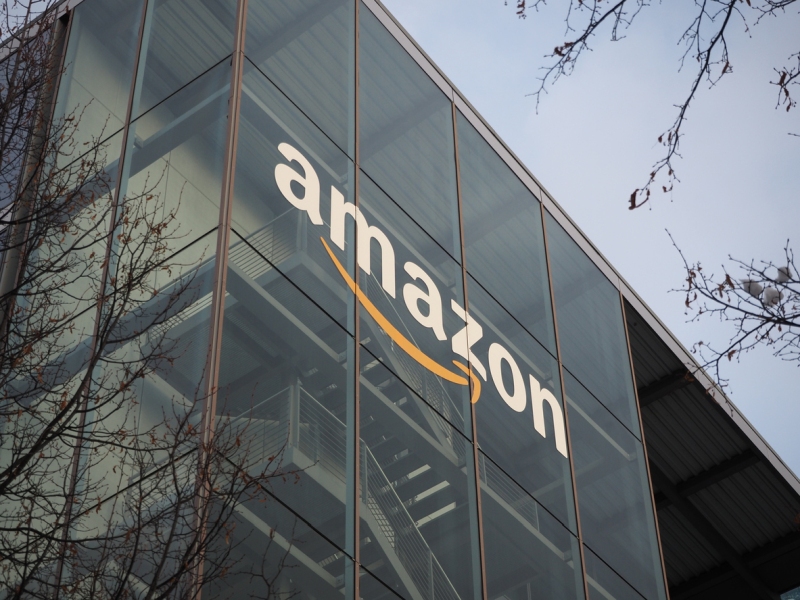
Including its marketplace, Amazon has a 63 percent share of Germany's online retail market. Almost all German online shoppers buy from Amazon.
ecommercenews.euAccording to a study by German retail research institute IFH KÖLN and General Evidence, sales generated through Amazon in Germany reached 69.1 billion euros last year, up 5% from the year before. Including its marketplace, Amazon accounts for 63% of online spending in the country, with selling partners at 46.1% and Amazon itself at 17.2%.
Ninety-seven percent of online shoppers buy on Amazon, and 59% have Prime. In the product categories studied, Amazon directly or indirectly influences 41% of spending, including physical stores.
Competitors are growing too. Otto and Zalando together added 1.4 billion euros in domestic sales, and Shein and Temu added about 1 billion euros. One in eight consumers says they are shifting some purchases to Chinese platforms, but Amazon still rates best on range and delivery speed.
Indonesia starts requiring marketplaces to withhold 0.5% of seller turnover

A seller conducts a livestream to offer Hajj souvenirs through an e-commerce application at a store in Thamrin City, Jakarta (Oct. 6).
observerid.comIn October 2026, Indonesia began requiring marketplaces to collect Article 22 income tax (PPh 22) from domestic sellers. Four platforms, Shopee, Blibli, Tokopedia and Lazada, have been designated to collect the tax from seller transactions, then deposit and report it.
The rate is 0.5% of a seller's gross turnover, based on the billed transaction value excluding VAT and luxury goods tax. Individuals with annual turnover of up to Rp500 million are exempt if they submit a turnover declaration, and that threshold counts both online and physical store sales.
In one of Southeast Asia's largest ecommerce markets, platforms now act as tax collection points. Businesses selling there need to revisit pricing and filing procedures.
Faire data shows country-specific tariffs pushing independent retailers toward domestic suppliers

Faire's new report reveals how independent retailers are strategically redirecting millions in spending toward domestic and nearby suppliers.
wwd.comWholesale marketplace Faire published a report on how independent retailers are adjusting their buying. Tariffs that apply different rates to different countries clearly shift where retailers buy, while uniform tariffs have barely changed behavior.
In the U.S., tiered tariffs of 10% to 50% in 2025 led retailers to move tens of millions of dollars to domestic brands, raising the domestic share of wholesale spending by two percentage points over six months. After the U.S. imposed 50% tariffs on certain Canadian goods in August, Canadian retailers cut spending on U.S. brands by 11.4 percentage points within 30 days and redirected nearly all of it to domestic suppliers.
Faire COO Jeff Kolovson said retailers are nimble in adjusting their buying when conditions change. Tariff design itself is now shaping the sales channels of brands that sell wholesale across borders.
Conclusion
Today's news came from very different positions but shared one question: who decides how much to hand over to AI agents, and how. Meta and Sierra formally launched a common standard for telling businesses an agent's identity and permissions. Amazon opened up what its AI remembers about each shopper to the shoppers themselves. The PYMNTS and Visa study put numbers on where consumers draw the line: agents may compare, but people want to decide on payment.
Sellers need to prepare both a gateway for receiving agents and product information that AI can read. Next, watch for when the PAP specification is published, whether major AI companies such as OpenAI join, and whether memory disclosures like About You spread to other AI shopping services.