
AI Commerce News Digest (September 24, 2026)
Shopify's Shop Pay and PayPal bring checkout to Meta's Muse AI agent while Amazon blocks it, and Google expands UCP in Merchant Center and turns on native AI checkout for eligible Shopify merchants by default. It also covers first agentic payments in Canada, Denmark and the UK. This edition rounds up AI commerce news mainly from September 21 to 24, curated for e-commerce operators.


Key Takeaways
- Shop Pay and PayPal join Meta's Muse checkout, while Amazon blocks the agent
- Google expands UCP and turns on native AI checkout for eligible Shopify merchants by default
- Canada, Denmark and the UK each record their first agentic payments
This edition covers developments since our last digest (September 15), mainly from September 21 to 24. The biggest story is how platforms split over Meta's AI agent Muse. Shopify and PayPal opened their checkouts to it, while Amazon shut it out as an unauthorized agent buying on customers' behalf. Google also broadened the UCP capabilities in Merchant Center and switched on native AI checkout for eligible Shopify merchants by default. In payments, Canada, Denmark and the UK each saw a "first" agentic transaction, and six major banks published principles for trust. On the broader e-commerce front, rule changes stood out, from an extra EU fee on cross-border parcels to new e-commerce rules in India.
Today's Top Stories
Shop Pay and PayPal Bring Checkout to Meta's Muse AI Agent, While Amazon Blocks It as Unauthorized Shopping on Customers' Behalf
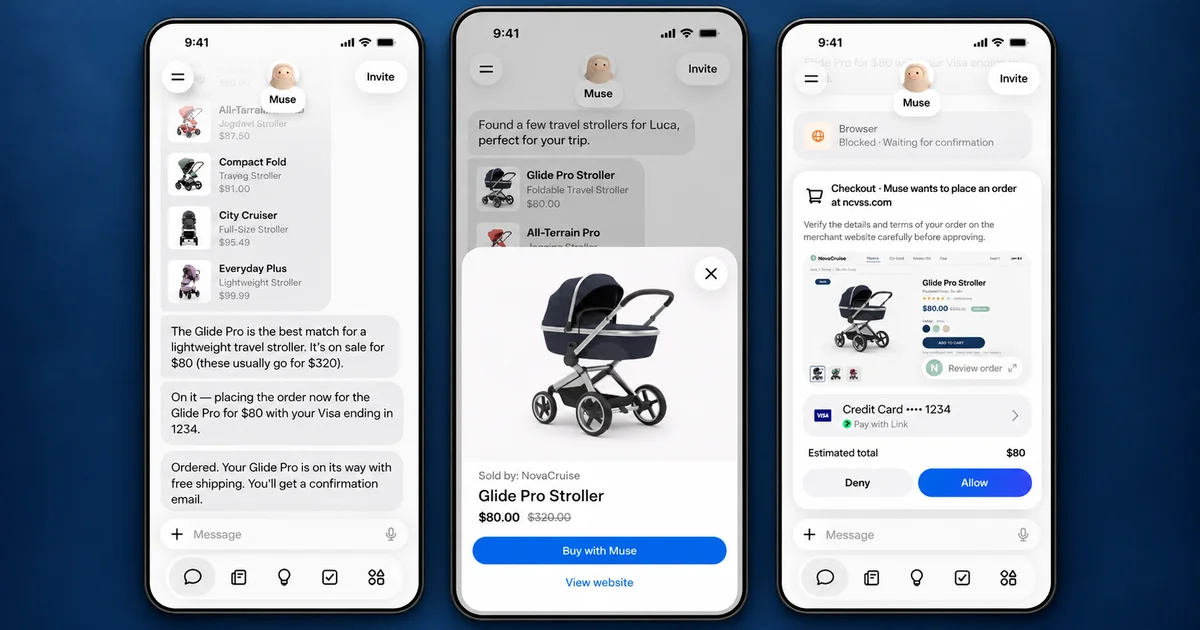
Meta has partnered with Shopify to integrate Shop Pay agentic checkout into its Muse AI assistant, expanding AI-driven commerce features.
thepaypers.comThe places where Muse, the personal AI agent Meta launched on September 8, can shop expanded rapidly. Shopify CEO Tobi Lütke said on X that the company had partnered with Muse to enable agentic checkout using Shop Pay across all Shopify stores. PayPal followed on September 22, saying PayPal customers would be able to shop and check out with Muse across PayPal merchants worldwide. Muse had integrated Stripe's Link since launch, allowing it to check out at more than one million businesses that accept Link.
Amazon took the opposite approach. According to GeekWire, from the night of September 20, people trying to use Muse to shop on Amazon began seeing a message saying continued access by an unauthorized AI agent violates Amazon's Conditions of Use. Amazon objects that it received no advance notice, that the agent does not identify itself when it browses, and that it appears to capture and store customer credentials. Meta had previously said that Muse has no visibility into people's passwords or payment methods.
In its lawsuit against Perplexity, Amazon saw its preliminary injunction overturned in August. This time it is relying on its terms of use rather than anti-hacking claims. According to Reuters, Muse reached 2.8 million downloads in roughly its first two weeks, based on Sensor Tower data. Should a platform offer its checkout to a fast-growing agent to gain distribution, or keep it out to protect the customer relationship? This was the week platforms clearly took different sides.
Related article: Shop Pay and PayPal Join Meta's Muse Checkout as Amazon Blocks the Agent: Agentic Payments Split Into Partnered Rails and Unannounced Browsing
Google Adds Cart Transfer and Checkout Testing to UCP in Merchant Center, as Native AI Checkout Turns On by Default for Eligible Shopify Merchants
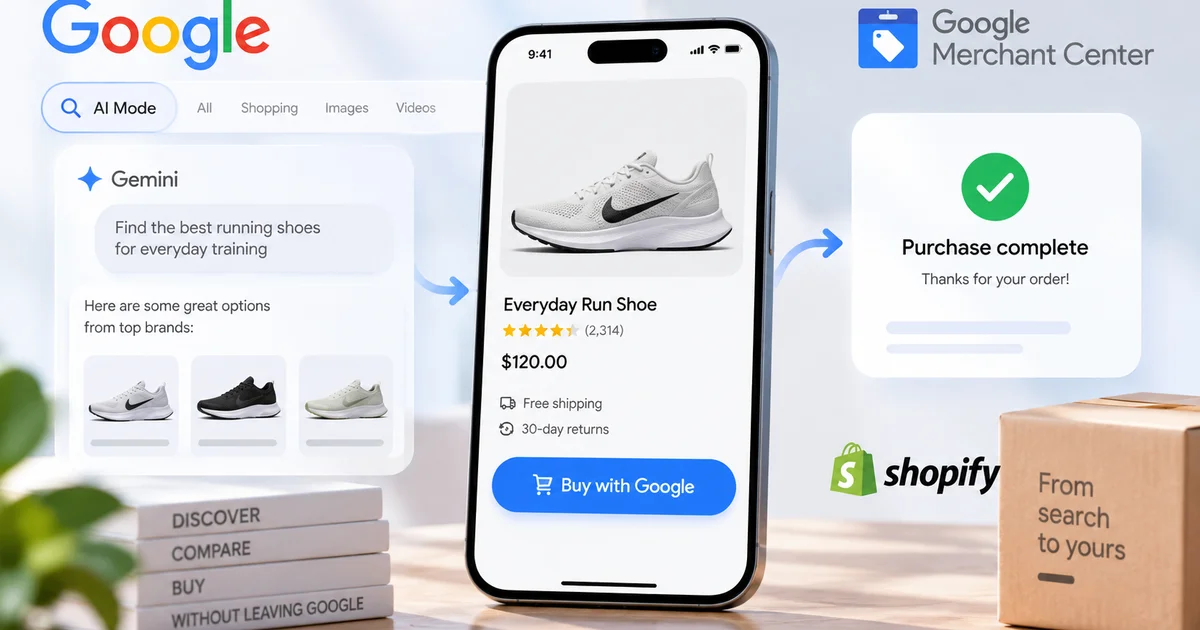
Google is expanding the functionality of its open-source agentic commerce standard and giving retailers new artificial intelligence capabilities.
chainstoreage.comGoogle has expanded the Universal Commerce Protocol (UCP) capabilities it offers in Merchant Center. Retailers using UCP-enabled checkout can now turn on cart transfer to the retailer's site and enhanced checkout flow testing, with analytics coming soon. The features are rolling out gradually in the U.S., with Australia and Canada to follow early in 2027. Tapestry, parent of Coach and Kate Spade, has made select products purchasable directly from AI Mode in Google Search and the Gemini app.
Merchant Center also gained AI performance insights, which let brands compare their share of voice with other brands. Google is testing Business Agent inside YouTube ads as well, and says that in tests with Lululemon, conversational attributes submitted by the brand were incorporated 50% of the time in relevant product recommendations in AI Mode.
For merchants, the Shopify piece deserves attention. According to Search Engine Land, Google is notifying eligible Shopify merchants that their products can now be bought directly in AI Mode and Gemini. For eligible stores based in the U.S., selling to U.S. customers and matched with Merchant Center, direct checkout is enabled by default. Merchants can turn it off under Sales channels > Agentic, in which case products still appear but shoppers are sent to the merchant's site to buy. Some features, including certain checkout blocks, product bundles, custom pixels and Google Analytics client-side tracking, are not supported in direct checkout. To avoid gaps in measurement, merchants should review these settings before the holiday season.
Agentic Commerce
JD Sports Picks Algolia as the Foundation of Its Agentic Commerce Strategy, After Search Revenue Rose 22%

Algolia announces that JD Sports has deployed Algolia as the governed intelligence layer to build JD Sports' agentic commerce strategy
www.businesswire.comSearch and discovery provider Algolia announced on September 22 that UK sports fashion retailer JD Sports has deployed it as the "governed intelligence layer" for its agentic commerce strategy. The aim is to answer conversational, intent-heavy queries in milliseconds using the same catalog and ranking logic that powers its websites.
The two companies also shared results since the 2024 rollout. Search revenue is up 22%, search click-through rates rose 7.65%, product listing page (PLP) click-through rates rose 73%, and PLP revenue grew 16%. Dynamic re-ranking, which adjusts product placement based on click and conversion signals, alone delivered a 4% lift in both add-to-cart and conversion rates. The key point is that the retrieval layer behind its websites now also serves JD Sports' AI agent.
When agents shop a catalog, what matters is less the speed of the search box than whether the retrieved data is structured, current and true. Rather than running separate systems for the site and for agents, JD Sports keeps relevance under control in one place, a concrete reference point for retailers working on their product data.
Amazon Adds Always-On "Workflows" to Seller Assistant and Connects It to Claude and Amazon Quick Through a Plugin
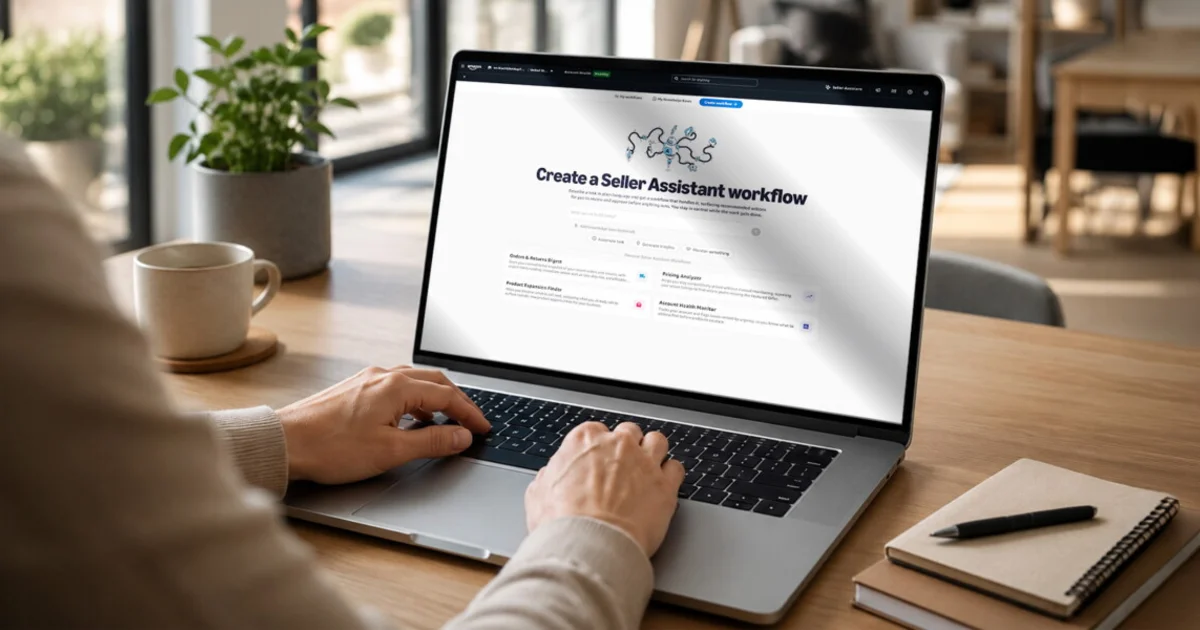
Sellers can now automate routine tasks 24/7 with Seller Assistant and bring their Amazon data and Seller Central insights into the AI tools they already use.
www.aboutamazon.comOn September 23, Amazon announced new capabilities for Seller Assistant, its AI assistant for sellers. The centerpiece is workflows: automations, set up in plain language, that keep monitoring inventory thresholds, competitive pricing and account health, and respond to changes even when the seller isn't logged in to Seller Central.
One example Amazon gave is "Alert me if any of my top 10 products drop below a 4-star rating and draft a response plan." Sellers choose whether a workflow only surfaces recommendations or takes action, and when it acts, they approve the actions first. Every action is logged with a complete audit trail. Prebuilt templates cover tasks such as analyzing pricing trends and monitoring account health. Seller Assistant now also remembers each seller's pricing patterns, inventory cycles and growth goals.
The other pillar is connecting to outside AI. Amazon is launching the Amazon Selling Partner plugin first in Amazon Quick and in beta with Anthropic's Claude. The plugin is currently in beta for sellers in Amazon's U.S. stores. According to Amazon, 90% of its selling partners already use third-party AI tools to run their businesses. The marketplace is turning seller operations into agent work itself, while opening a door to outside AI.
Related article: Amazon Adds Always-On Workflows to Seller Assistant, and a Claude and Quick Plugin That Hands Seller Operations to AI Agents
AI Commerce Tools
SPINS Launches Agentic Discovery, Linking How CPG Brands Appear in AI Recommendations to Sales Data

SPINS, the leading provider of CPG data, insights, and commerce solutions, today announced the launch of SPINS Agentic Discovery.
www.prnewswire.comSPINS, a provider of consumer packaged goods (CPG) data and analytics, announced SPINS Agentic Discovery on September 22. The service shows brands how AI assistants, conversational search engines and autonomous agents interpret, summarize and recommend their products and brands, and points them to the fixes that matter.
It is organized around three capabilities: commercial-grade auditing of AI answers, prioritization of content improvements by likely revenue impact, and supplying structured product intelligence from the SPINS Product Knowledge Graph to agentic ecosystems. SPINS says that, unlike general-purpose Generative Engine Optimization (GEO) tools that focus on visibility alone, it connects AI visibility with product attributes and retail point-of-sale data.
Tools that measure AI visibility are multiplying, and the next point of competition is whether they can tie that visibility to store sales and show which improvements actually drive revenue. It is an angle that comes naturally to a company that holds POS data.
True Fit and Glance Partner to Bring Size and Fit Recommendations Into AI Shopping Conversations (Follow-up)

The industry-first collaboration offers a fit-integrated virtual try-on experience across both platforms
www.cmswire.comFit and sizing specialist True Fit announced a collaboration with AI personal shopping platform Glance on September 21. True Fit's size and fit recommendations will be integrated into Glance's conversational product discovery and generative virtual try-on. Glance delivers its AI shopping experience on 60 million devices across mobile, TV and desktop.
According to True Fit's customer data, over 70% of fashion shoppers' questions to AI agents relate to fit and sizing. The companies argue that seeing how an item looks in a virtual try-on is different from judging whether it will fit, which True Fit bases on real purchase and return outcomes. Its intelligence layer draws on nearly two decades of data covering more than $500 billion in transactions and more than 91,000 apparel and footwear brands.
Glance will incorporate True Fit's intelligence layer for the 2026 holiday season, and fit-integrated virtual try-on is slated for broader availability to True Fit merchants in 2027. True Fit has already announced its own AI shopping agent, and this deal extends its fit data to an outside agent as well.
Revieve Unveils BeautyCatalyst, Connecting Beauty Diagnostics and Recommendation Data to Business Decisions

Revieve®, a global leader in AI-powered beauty and wellness technology, today unveiled BeautyCatalyst™, its Beauty Commerce Intelligence Platform.
www.prweb.comRevieve, which provides AI technology for beauty and wellness, unveiled a new platform called BeautyCatalyst on September 23. It connects the intelligence generated by capabilities the company has offered separately, such as skin analysis, product recommendations and virtual try-on, to build a continuously deepening understanding of consumers, products and markets.
The platform has four pillars: Beauty Intelligence, which structures products, ingredients, formulations, concerns and routines; Experience & Activation, which powers AI advisors and other experiences; Audience & Market Intelligence, which captures shifts in demand; and Business Decision Intelligence, which informs assortment and product innovation. Revieve describes them as a flywheel in which each strengthens the next. One goal is to structure beauty knowledge in a form that AI agents can interpret and use.
CEO Sampo Parkkinen said that as commerce becomes agentic, the differentiator will be not simply having AI but the depth of intelligence behind it. In categories like beauty, where choosing a product takes expertise, how brands structure their knowledge and deliver it to outside AI is becoming a real challenge.
ReFiBuy Makes Its Optimization for Amazon's Alexa for Shopping Generally Available, and Partners With Nexi in Europe
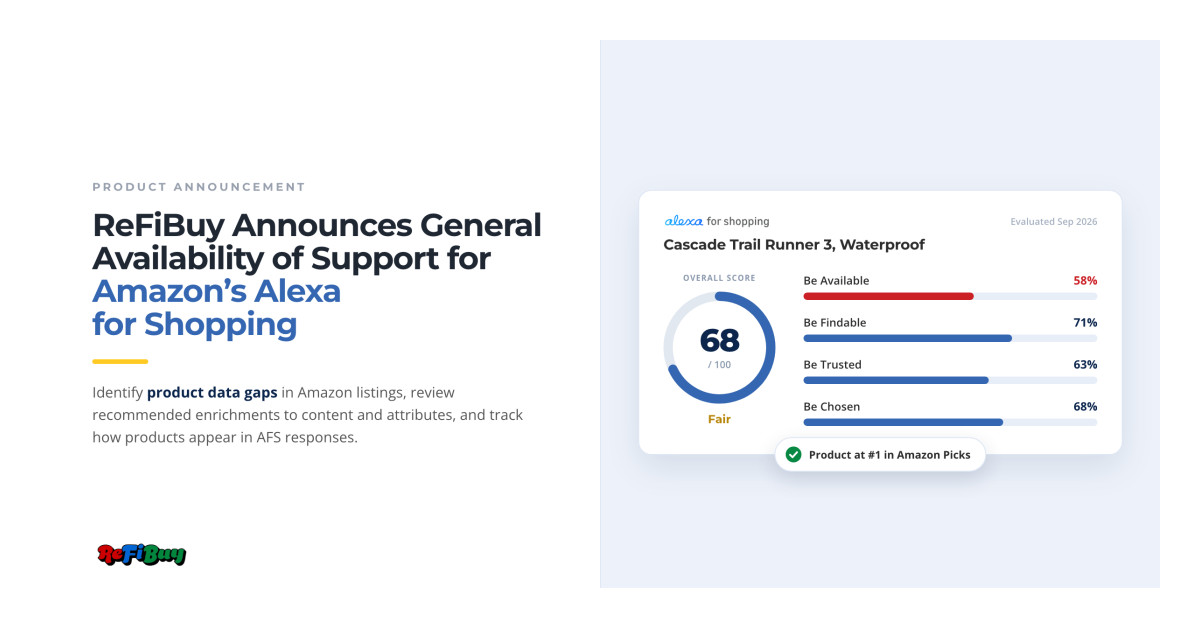
New offering extends ACO Everywhere to its first vertical shopping agent, combining lessons from ReFiBuy's work on answer engines with insights from a 100,000-prompt Amazon research library
www.newswire.comAgentic commerce optimization (ACO) provider ReFiBuy made its offering for Amazon's Alexa for Shopping (AFS) generally available on September 23. It identifies data gaps in brands' Amazon product pages, recommends improvements to titles, bullets and attributes, and tracks how products appear in AFS responses. In its Q2 2026 earnings commentary, Amazon said more than 350 million customers had used AFS in the preceding 12 months, and Q2 interactions grew more than fivefold year over year.
The offering draws on a 100,000-prompt study led by Andrew Bell, ReFiBuy's VP of Research. It found that AFS often organizes recommendations around distinct needs such as use case, product type and budget, and frequently uses details like fit, materials and features to explain why a product suits a request. Product pages are assessed across four areas: Be Available, Be Findable, Be Trusted and Be Chosen.
A day earlier, on September 22, the company also announced a partnership with Italian payments group Nexi. According to The Paypers, Nexi will bring ReFiBuy's ACO to its merchant network to help European merchants prepare their product catalogues for AI shopping agents. In a Nexi survey of about 28,000 consumers across 11 countries, more than half had used AI in the past month to research, find or buy products. It is notable that a payments provider is extending its support upstream of payment, to the stage of being found by agents.
Stitch Fix Sees a Significant Lift in 90-Day Spend From Clients Who Use Its "See It on Me" AI Try-On
Online personal styling service Stitch Fix is seeing a significant lift in spending from clients who engage with its tool that lets them see artificial intelligence-generated images of themselves wearing the outfits they're considering.
www.pymnts.comOn its September 23 earnings call, U.S. online styling service Stitch Fix said clients who engage with Stitch Fix Vision, its AI style visualization feature, show a significant lift in 90-day spend in Freestyle, its on-demand shop. With "See it on me," clients can generate an image of themselves in recommended outfits based on a selfie they uploaded earlier.
According to CEO Matt Baer, Stitch Fix has shared more than 22 million Vision images with clients since the feature launched in October 2025. In the quarter, net revenue rose 4.2% year over year, and while active clients fell 1.4%, net revenue per active client grew 7.8%. The total U.S. apparel, footwear and accessories market was flat over the same period, he said.
Stitch Fix uses AI beyond the client experience too, supporting stylists' item recommendations, labor planning in its fulfillment centers and routine customer service requests. The link between showing clients how they look in an outfit and higher spend per client offers a useful performance benchmark for generative AI in apparel e-commerce.
ChannelSight Launches a Conversational AI Shopping Assistant That Sends Shoppers From Brand Sites to the Retailer of Their Choice
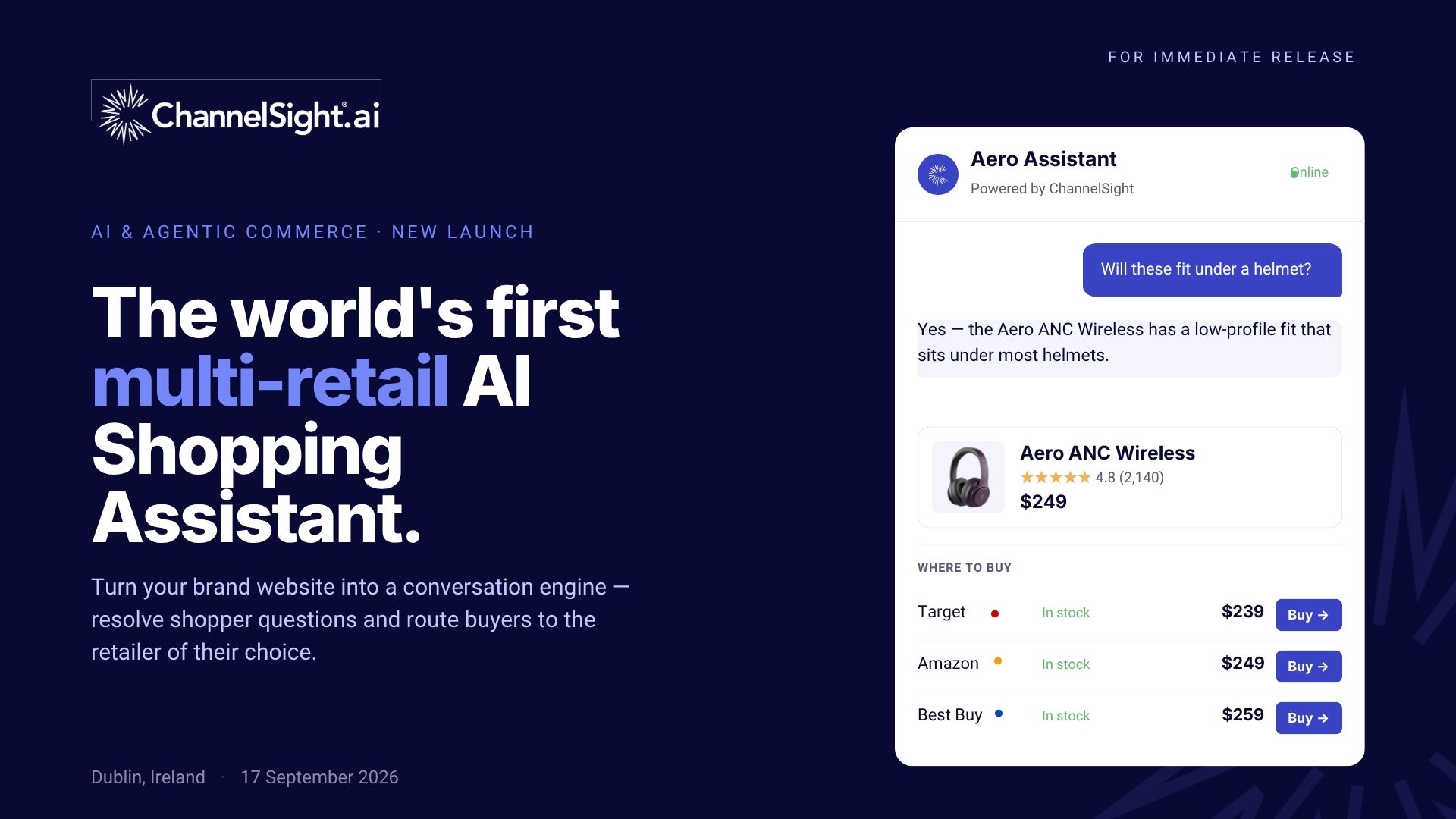
ChannelSight launches a multi-retailer AI Shopping Assistant, helping brands guide shoppers from product questions to purchase across their retail network.
www.channelsight.comIreland-based ChannelSight launched AI Shopping Assistant, a conversational tool for brands' own websites, on September 22. Shoppers can ask questions such as "Which of these is best for sensitive skin?", "What's the difference between these two models?" or "Where can I get this today?", get answers drawn from the brand's own product data, and then buy from their preferred retailer.
For more than a decade, ChannelSight has offered Where to Buy, which routes shoppers from brand channels to the retailers that carry their products. The new product combines product guidance, multi-retailer availability and sales measurement in one interface, and joins Agent Ready and ChannelSight's MCP Server in its AI & Agentic Commerce suite.
As general-purpose AI platforms begin introducing sponsored commercial experiences, brands face the questions of who owns the shopper relationship and how a recommendation translates into a measurable sale. For manufacturers that don't sell direct, keeping the conversation on their own site while leaving the sale to retailers is a realistic option.
Payments and Fintech
Mastercard, Flybits and Rogers Bank Complete Canada's First Agentic Transaction, as Danske Bank Records Denmark's First

Mastercard, Flybits and Rogers Bank announced Canada's first successful deployment of a landmark agentic commerce transaction involving an AI-powered commerce platform, card issuer and payments network.
www.newswire.caMastercard, AI platform Flybits and Rogers Bank announced on September 21 the first agentic commerce transaction in Canada. A Flybits-powered AI assistant acted on instructions set by a Rogers Red credit card cardholder, identified an eligible product within the specified budget and completed the purchase using Mastercard Agent Pay.
The companies stressed that the agent acted within validated consumer instructions and predefined spending limits. Flybits also provided an explainability layer showing why the AI recommended a product, and plans to add Mastercard Insight Tokens, a governed way for agents to use permissioned insights, in future phases. In Mastercard's Canadian research, 41% of respondents were open to using AI assistants to help them shop online.
On the same day, Mastercard announced that Denmark's Danske Bank had completed the country's first agentic payment using Agent Pay. An AI agent made both the purchase and the payment, booking a coffee tasting through Mastercard's Priceless.com experience platform. As country-by-country "firsts" pile up, the practical focus is shifting to how issuers identify and manage agent-initiated transactions.
GoCardless Processes the UK's First Agentic Account-to-Account Payment, a Charity Donation Built Under an FCA Testing Programme

GoCardless completes the UK's first agentic A2A payment, an AI-driven donation for charity Trussell under FCA oversight.
thepaypers.comBank payment provider GoCardless has processed the UK's first agentic account-to-account (A2A) payment. The transaction was a donation to the charity Trussell, taken on GoCardless's website through a conversation with an AI agent.
The whole process happens inside the AI chat. Donors first learn about Trussell's work and then choose from three monthly donation amounts, each accompanied by an explanation of how the money would be used. After a donor picks an amount, the agent asks for bank details, which are used to set up a Direct Debit mandate. GoCardless says the design keeps the payer in control of the transaction throughout, rather than handing full authority to the AI.
The payment flow was developed within the Financial Conduct Authority's (FCA) AI Live Testing programme. The UK government has named agentic payments a priority use case for AI adoption in financial services, and the National Payments Vision calls for A2A payments to become a viable alternative to cards. The case suggests bank-based methods could play a prominent role when recurring payments are delegated to agents.
Six Global Banks Publish Principles for Trusted Agentic Commerce, Addressing Fraud and Liability

ING Group, NatWest Group, ASB Bank, Bank of America, Capital One, and Commonwealth Bank have published joint agentic commerce principles.
thepaypers.comING Group, NatWest Group, ASB Bank, Bank of America, Capital One and Commonwealth Bank of Australia have jointly published a set of principles to support the development of trusted agentic commerce. Looking ahead to a future in which AI agents play a bigger role in how people choose and pay for products and services, the paper aims to ensure customers and merchants keep choice and control over how they pay and get paid.
The principles cover five areas: transparency, safety, privacy and data, choice, and interoperability. They are framed as a foundation for discussion rather than a finished standard, and the six banks are inviting other banks and payments players to take part. Their next step is to publish a paper on how to apply the principles in practice. Mark Monaco of Bank of America said building confidence will require thoughtful approaches to identity, authorization, fraud prevention, liability management and customer protection.
Who bears responsibility when an agent transaction goes wrong is a direct concern for merchants too. With major banks at the center of payments aligning on the issues, the direction of future rulemaking becomes easier to read.
Baselayer Raises $35 Million for Its "Know Your Agent" Identity Infrastructure for AI Agents
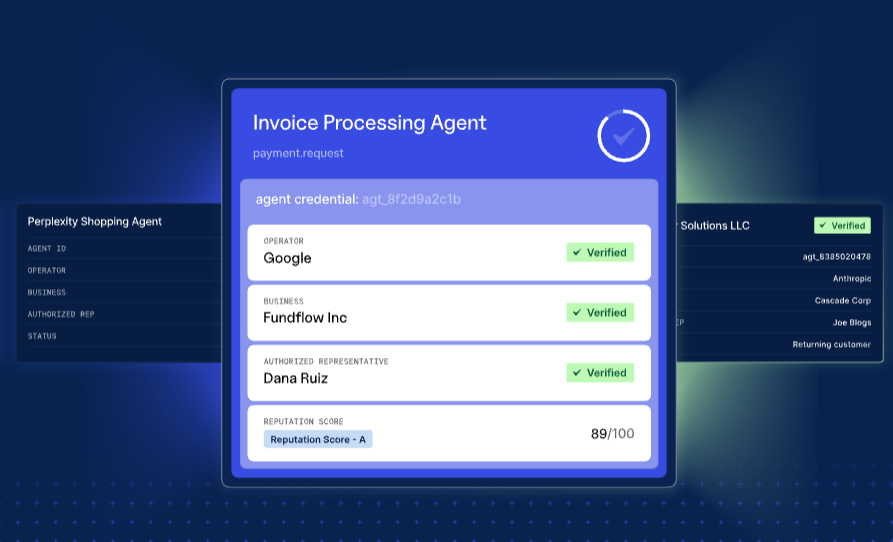
Baselayer raised $35 million in Series A funding led by M13 to build identity infrastructure that lets businesses verify and trust AI agents.
siliconangle.comBaselayer (officially Osiris Ratings Inc.), a U.S. startup building business identity and risk infrastructure, announced on September 22 that it had raised $35 million in a Series A round. The round was led by M13, with participation from Torch Capital, Picus Ventures, Afore Capital and others. Alongside the funding, the company launched Agentic Identity Suite, a fraud prevention platform for the agentic economy.
The product is built around the idea of "Know Your Agent." It lets financial institutions cryptographically trace an AI agent's actions back to the platform that deployed it and the business that authorized it, creating an auditable chain of liability without relying on passwords. Baselayer also offers counterparty verification so agents can confirm the businesses they transact with are legitimate, and an MCP server that grounds answers in authoritative business data.
Its business verification tools are used by more than 2,300 financial institutions, including one in five U.S. banks, and have reviewed more than 10 million applications. The company also participates in the FIDO Alliance Authentication Working Group and the x402 Identity Working Group. Infrastructure that answers who an agent represents and what it is allowed to do is starting to attract investment as a new layer of payments.
Ant Group Merges Three Alipay-Related Units Into a New Group, Concentrating Resources on Agentic Commerce (Follow-up)
Agentic commerce is entering a phase of 'explosive, large-scale growth', Ant CEO Cyril Han Xinyi said in an internal letter on Monday.
www.scmp.comChina's Ant Group has merged its Digital Payment Business Group, Alipay Business Group and Zhima Credit Business Group into a new Alipay Business Group. The South China Morning Post reported the move, which was disclosed in an internal letter from CEO Cyril Han Xinyi dated September 21. The new group is led by Wu Minzhi, who continues to serve as Ant's chief people officer.
In the letter, Han said agentic commerce is entering a phase of "explosive, large-scale growth", and set out plans to consolidate technology, product and ecosystem capabilities and strengthen merchant services. Ant intends to give users personal AI wallets and life assistants, and to help merchants grow on Alipay's AI platform. The company launched AI payment tools including AI Wallet in May and the AI assistant Ah Bao in June.
At the same time, according to Forkast, Han acknowledged that adoption has been slower than expected and that last year's industry forecasts were overly optimistic, noting that supply and demand have yet to form a positive feedback loop. Folding the Alipay organization it split in two in late 2024 back into one, together with its credit business, signals that one of China's largest payment platforms intends to move agent readiness into execution.
Consumer Trends
Global Payments Research: Consumers Expect AI to Make 15% of Their Purchases Within Five Years, Up From 9% a Year Ago

Annual Agentic Commerce Report shows consumers are rapidly warming to agent executed purchasing, with comfort levels more than doubling across everyday spending categories.
investors.globalpayments.comPayments company Global Payments released the findings of its annual Agentic Commerce Report on September 23. Consumers now expect AI agents to make 15% of their purchases within five years, up sharply from 9% a year ago. Some 45% have used or would consider using an AI shopping agent.
In retail, a majority are comfortable letting agents buy within clear spending limits. 69% would let an AI agent spend up to $100 on groceries and everyday essentials, the same share for clothing and footwear, and 58% for electronics. At the same time, 50% worry about the security of their payment details, 46% about privacy, and 42% that AI could make the wrong purchase. One-third want to approve every transaction before payment.
Although the release frames the findings as trends among Americans, the survey was conducted in May 2026 among 8,027 consumers across the U.S., UK, France, Brazil, China, Singapore and Australia. Growing willingness to delegate, alongside strong demand for approvals and human support, shows how important it is to decide where people confirm purchases when designing checkout.
Global E-commerce Trends
EU Proposes a €2 Handling Fee on Small Parcels From Outside the Bloc, as China-to-EU E-commerce Shipments Fall 65% in August
The European Commission wants to set the additional handling fee for small packages from outside the EU at 2 euros. The measure primarily affects packages from Chinese online retailers such as Shein, Temu, and Alibaba.
www.retaildetail.euThe European Commission has proposed setting the handling fee on small parcels arriving from outside the EU at €2 per package. The European Parliament and member states had already agreed on the customs union reform, leaving the Commission to set the amount. After one more month in which Parliament and member states can weigh in, the fee is expected to take effect in November.
The fee comes on top of the €3 duty on packages worth less than €150 that has applied since July. Its purpose is to support customs services that cannot inspect the entire inflow of parcels. According to RetailDetail, 5.8 billion small packages entered the EU last year.
The impact is already showing in the data. According to Global Sources, Trade and Transport Group data show that low-value e-commerce shipments from China to the EU fell 65% year over year in August, deepening from a 54% drop in July. Platforms such as Temu, Shein and AliExpress may be pushed from direct shipping toward stock held inside the EU, changing how delivery times and prices look to shoppers.
India's New E-commerce Rules Take Effect in January 2027, Requiring Discounts to Be Shown Against the Lowest Price of the Previous 30 Days

From January 2027, shoppers will get clearer benchmarks for advertised discounts and greater visibility into why products appear where they do in online searches. The changes are aimed at making e-commerce promotions and product discovery more transparent, without regulating the prices platforms or sellers can charge.
www.businesstoday.inIndia's government has amended the Consumer Protection (E-Commerce) Rules, 2020, with the changes taking effect on January 1, 2027. The amendments address consumer concerns around pricing, sponsored listings, search manipulation and dark patterns.
Whenever a price reduction is advertised, the discounted price must now be shown alongside a "prior price." The prior price is defined as the lowest price at which the product was offered in the 30 days before the discount was announced, making it harder to inflate a price just before a sale to fake a steep discount. In search, platforms are barred from manipulating results in ways that mislead users or reduce relevance, and must explain in plain language the main parameters that determine the ranking of products or sellers and their relative importance.
Experts note that the rules are a disclosure obligation rather than price control. Platforms do not have to abandon their ranking systems, but they become responsible for explaining the basis of their display order, which for sellers and marketplaces in India will mean system changes.
European B2C E-commerce Reached €911 Billion in 2025, Up 7%

Total B2C European e-commerce turnover increased by 7 per cent in 2025, rising from €842 billion to €911 billion.
www.eubusiness.comIndustry associations Ecommerce Europe and EuroCommerce published their 2026 European E-commerce Report, showing that B2C e-commerce turnover in Europe reached €911 billion in 2025. That is up 7% from €842 billion the previous year, or 4% in real terms after inflation.
The report says the market grew despite economic and geopolitical uncertainty and regulatory complexity. It notes that AI adoption is spreading, including among SMEs, and that new payment solutions are making checkout faster. The two associations also call for a level playing field between EU and non-EU based sellers, with stronger enforcement of customs, product safety and environmental rules.
EuroCommerce Director General Christel Delberghe said growth will translate into investment only if the Single Market works in practice. Together with the tougher charges on small parcels above, Europe continues to move toward equalizing competitive conditions with low-cost e-commerce from outside the bloc.
Coupang Pilots "Try Before You Buy" for Fashion, Letting Members Receive Up to Six Items Free and Pay After Seven Days

Coupang Inc. is testing a new fashion-shopping service that allows customers to receive clothing before paying for it, as South Korea's largest e-commerce platform seeks to differentiate itself in an increasingly competitive online retail market.
www.kedglobal.comSouth Korea's Coupang has begun piloting a "try before you buy" service for fashion with some members of its paid WOW membership. According to the Korea Economic Daily, shoppers can order up to six items at a time for zero won, and are charged automatically if they don't return them within seven days.
The service covers most fashion categories, from baby clothes to men's and women's apparel, including brands such as Nike, FILA and Tommy Hilfiger. Rocket Growth items, which sellers stock in Coupang's logistics network, are excluded. Coupang's existing free returns waive return costs after payment, while the new service goes a step further by deferring payment altogether.
Amazon launched a similar program for Prime members in 2017 and ended it in January 2025 because of the cost of returns. The move appears to reflect intensifying competition, as Naver and Kurly strengthen free shipping, and low prices and fast delivery alone no longer set Coupang apart. In fashion, where sizing uncertainty is high, the pilot will test whether higher purchase rates outweigh return costs.
Logistics and Fulfillment
Costco Offers Nationwide U.S. Delivery on Uber Eats and DoorDash
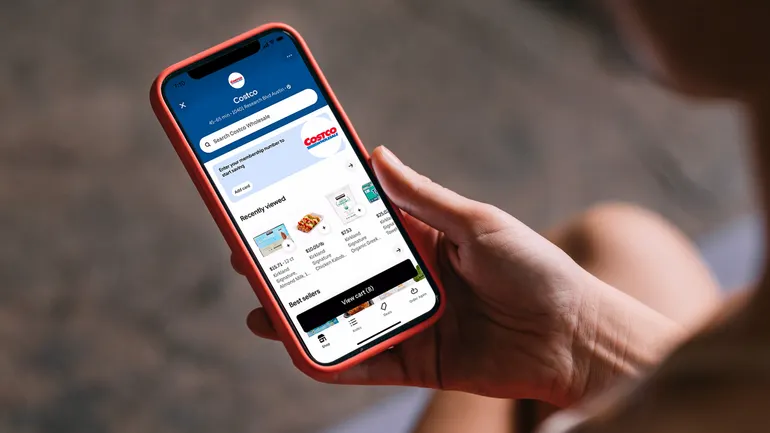
The retailer expanded its partnerships with both e-commerce providers at a time when same-day delivery is resonating with its shoppers.
www.retaildive.comWarehouse club Costco has expanded delivery through Uber and DoorDash across the U.S. It announced an expanded partnership with Uber on September 16, making nearly 600 Costco locations available on Uber Eats. The next day, September 17, it announced it was joining DoorDash's U.S. marketplace with nearly 630 locations across 47 states and Washington, D.C.
As part of the expansion, Uber is offering Uber One membership savings and waiving Uber fees on eligible grocery and retail orders over $60, along with a limited-time offer to purchase a Costco membership directly through Uber Eats. Costco already had a global relationship with DoorDash, and this extends it across the U.S. Instacart has been Costco's main U.S. e-commerce partner since 2017.
CEO Ron Vachris told investors in May that Costco's U.S. same-day delivery business is growing faster than its digital business overall and is commonly used by its highest-spending members. Running several delivery platforms in parallel rather than relying on one is becoming an established last-mile strategy for large retailers.
Kuehne+Nagel Enters a Long-Term Strategic Collaboration With Amazon That Also Covers AWS Infrastructure Logistics

Kuehne+Nagel has entered a long-term strategic collaboration with Amazon covering logistics services and the AWS infrastructure lifecycle.
container-news.comSwiss logistics group Kuehne+Nagel announced a long-term strategic collaboration with Amazon. Building on their existing relationship, the companies will focus on scale, innovation and the development of services for Amazon and its affiliates.
The collaboration also covers the Amazon Web Services (AWS) infrastructure lifecycle, including construction, equipment deployment, maintenance, upgrades and expansion projects. The agreement is supported by a call option on existing Kuehne+Nagel shares, which can be settled in cash or, at Amazon's election, in shares. Vesting depends on commercial milestones and services delivered over a period of up to seven years.
CEO Stefan Paul said Kuehne+Nagel's global network and digital capabilities are well positioned to support Amazon's evolving business needs. With logistics demand from both e-commerce and cloud, Amazon is locking in a long-term relationship with a major forwarder through a share option, a notable move to secure global logistics capacity.
Advertising and Retail Media
Pinterest Unveils a New Suite of Ad Tools, Including Visual Search Ads That Place Products in Search Results

For brands, Pinterest executives said, the opportunity is huge. Pinterest's user base is growing and, importantly for many companies, young
digiday.comAt its advertiser event Pinterest Presents, Pinterest unveiled a range of new ad tools and features. The headline product, Visual Search Ads, lets brands prominently advertise their products in search results and Pin close-ups. It is rolling out in beta in markets around the world, and users can click through and buy from the merchant's site. Pinterest says brands can drive lower-funnel results with the campaign assets they already have, with no new creative required.
Pinterest Performance+, its AI-powered performance advertising suite, is adding manual A/B testing and the ability to prioritize specific products, such as seasonal launches. Pinterest now has 640 million monthly users, more than half of them Gen Z. Users conduct more than 80 billion searches a month, more than half related to buying a product or finding a specific item, and 96% are unbranded.
For users, Pinterest will soon launch Restyle in beta in the U.S. and Canada, a camera feature that reimagines a photographed room in a different aesthetic and lets people buy the related products. The strategy is to capture search intent with ads before people have decided what to buy, with a clearer push toward sending shoppers to the point of purchase.
Best Buy Will Open on TikTok Shop in Late October With About 10,000 Products, Tied to Creators and Best Buy Ads
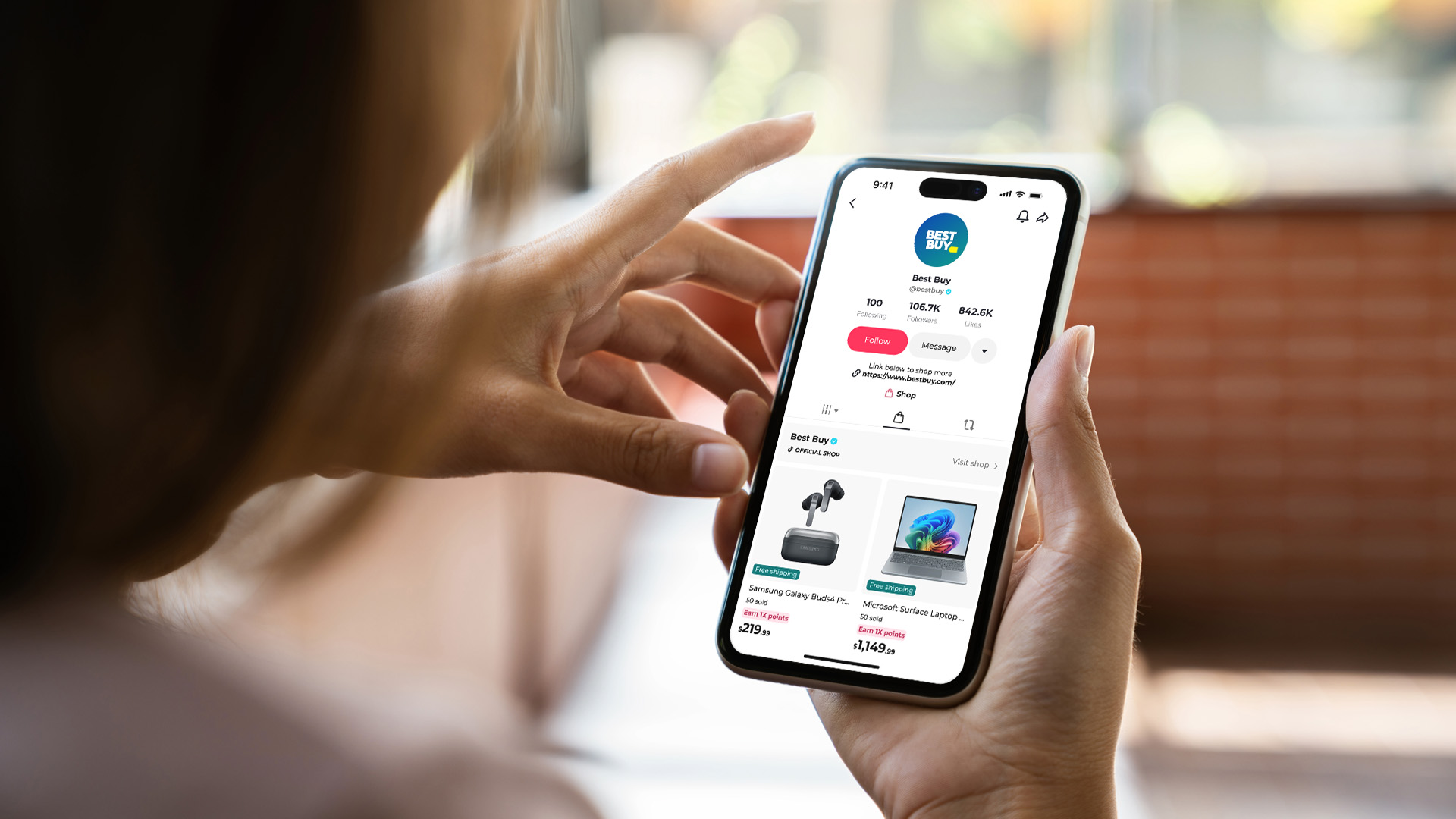
One of the first big-box retailers on the platform, Best Buy will bring nearly 10,000 products to TikTok Shop beginning in late October.
corporate.bestbuy.comU.S. electronics retailer Best Buy announced on September 22 that it will launch on TikTok Shop in late October. It will offer nearly 10,000 products from brands including Oura, Bose, Dyson and Microsoft, focusing on items well suited to social discovery such as headphones, cameras, small appliances and laptops.
Shoppers can find products through shoppable creator videos, the Best Buy shop page, the TikTok Shop tab and in-app product pages, and buy without leaving TikTok. Orders are fulfilled by Best Buy, and eligible purchases can be returned in store or by mail. Best Buy Ads partners can run campaigns using creator content and affiliate links that connect back to Best Buy's first-party data and measurement.
Jonathan Greer, Best Buy's vice president of e-commerce, said social media is no longer just influencing what people buy but shaping how they discover products. According to Chain Store Age, Sephora also began piloting a storefront on TikTok Shop in the U.S. on September 19. Large retailers are starting to position social commerce as a channel combined with their own retail media.
Summary
This period showed a clear split among the platforms that decide whether to let AI agents buy. Shopify and PayPal opened checkout to Muse, and Google enabled AI checkout for Shopify merchants by default. Amazon, by contrast, shut out an agent that does not identify itself as a violation of its terms of use, while turning seller operations into agent work through its own Seller Assistant. Which agents to open one's checkout and product data to, and on what terms, has become a real setting for e-commerce operators.
On the payments side, "first agentic transactions" continued in Canada, Denmark and the UK, and the six banks' principles and Baselayer's funding round added to the layer that supports trust and liability. The Global Payments survey likewise showed growing willingness to delegate alongside demand for approvals and human support.
In broader e-commerce, the EU's proposed €2 handling fee moves into final review ahead of its November start, and India enters a preparation period before its new rules take effect in January 2027. Going forward, watch how Shopify merchants actually use AI checkout, and whether the standoff between Amazon and outside agents turns into a legal fight.