
AI Commerce News Digest (October 26, 2026)
AI commerce news from October 20 to 25. Walmart opened an Agent Gateway for third-party AI agents, Commerce.com turned on WebMCP for almost 100,000 eligible BigCommerce domains, and Cafe24 did the same for all of its stores. We also cover new agent identity and payment tools from Evervault, Skyfire and Forter, World, and more.


Key Takeaways
- Walmart has opened a shopping entry point to outside AI agents
- BigCommerce and Cafe24 made their stores agent-ready all at once with WebMCP
- Identity checks and payment safeguards for agents are arriving all together
This edition brings you six days of news, from October 20 through 25. The biggest story is that while Amazon shuts out outside AI agents, Walmart went the other way, welcoming agent shopping through its Agent Gateway and even providing Agent Profiles that let users set spending limits and approvals. On the store side, BigCommerce's parent company Commerce.com teamed up with Cloudflare to make almost 100,000 domains ready for agents to operate through WebMCP, and South Korea's Cafe24 did the same for all of its stores. Following Google's Universal Cart and the Glance and PayPal integration covered in the previous digest, the tools that stand out this time are those for deciding which agents to trust and let through. Evervault's browser tokens, Skyfire and Forter's identity verification, World's proof of human, and Proof and Circle's x401/x402 demonstration all appeared in the same week.
Top Stories
Walmart Launches Agent Gateway for AI Agents, With Spending Limits and Approval Settings

As Amazon blocks AI agents from shopping on its site, Walmart is taking the opposite approach, introducing new technology that lets AI agents make purchases on customers' behalf, with controls over spending and transaction approvals.
techcrunch.comOn October 21, Walmart announced a set of tools that let AI agents shop on customers' behalf: Walmart Agent Gateway, a dedicated connection point for agents; Agent Profiles, which create a separate space for each agent; and terms of use written for agents. They cover Walmart and its membership warehouse chain Sam's Club.
Agent Gateway uses MCP (Model Context Protocol), a connection standard developed by Anthropic, and supports product discovery, adding to cart, purchasing and order tracking. In Agent Profiles, users choose whether to approve each purchase one by one or let the agent buy within a spending limit such as $50, $100 or $200. Card details are never passed to the agent, and agent orders are shown separately from the user's own orders. The prices agents see are the same as those people see on Walmart.com, and the normal return process applies to mistaken purchases.
By contrast, Amazon blocked shopping by Meta's Muse just a month ago. The gateway starts as a beta for businesses and developers, and Walmart has not disclosed when it will launch or which agents it will support. Even so, the design, in which the retailer settles identification, permissions and returns up front and brings agent orders in as a legitimate sales channel, gives other retailers a concrete model to follow.
Commerce.com and Cloudflare Make Almost 100,000 Stores Agent-Ready With WebMCP
Almost 100,000 Commerce.com domains now give AI agents real shopping tools through WebMCP on Cloudflare. Here's how we turned it on across every store at once, while keeping each merchant in control.
blog.cloudflare.comOn October 21, Commerce.com, BigCommerce's parent company, and Cloudflare announced that WebMCP, which lets AI agents call a web page's functions directly, is now on by default for eligible BigCommerce merchants. Across almost 100,000 domains, agents in the browser can search for products, build carts and issue links for paying on the merchant's site.
Cloudflare sits at the center of how it works. It inserts a one-line script into each page as the page is delivered, and relays the tools on Commerce.com's MCP server to the browser without changing them. Commerce.com keeps control of the tool definitions, while the processing happens inside the shopper's browser, on the store's domain. Shoppers make the payment themselves, and merchants can turn the feature off in their settings.
WebMCP, however, is not yet a W3C standard, it is still in trial in Chrome, and only a limited number of agents can call it. Even so, a platform handing out tools to roughly 100,000 stores at once is significant, and in the same week South Korea's Cafe24 also enabled it for all its stores. Stores are starting to become usable by agents before merchants build anything themselves.
Agentic Commerce
Cafe24 Becomes the First Korean E-commerce Platform to Bring WebMCP to All Its Stores
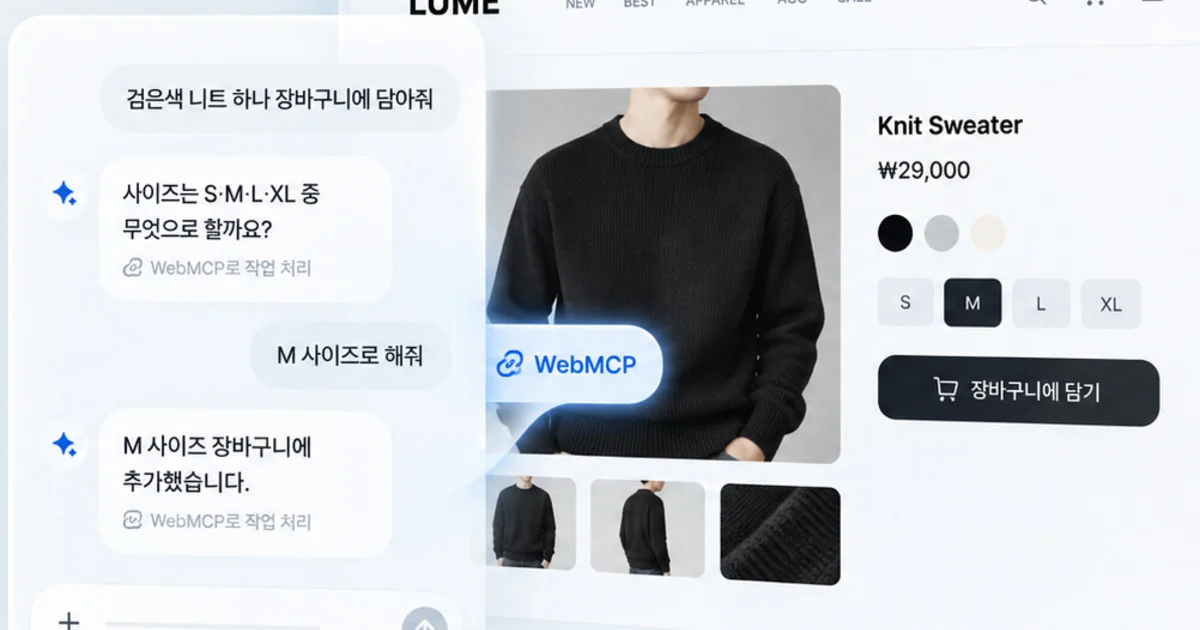
Cafe24 said on Wednesday it has applied WebMCP to its shopping mall solution, the first such move by a domestic commerce platform. The integration allows D2C online store operators to support agentic commerce, in which AI agents carry out shopping tasks, without separate development or linking work.
www.digitaltoday.co.krOn October 21, South Korean online store builder Cafe24 announced that it has applied WebMCP, which lets AI agents call a web page's functions directly, to every store built on its service. It is the first such move by a Korean commerce platform, and shop owners do not need to do any development of their own.
The 11 functions provided include product search, viewing details, choosing options and quantities, adding, changing and removing cart items, instant purchase of a single item, and checking order history. Ask it to "find sneakers under 50,000 won," and the agent finds matching products and works through checking sizes and adding to the cart step by step, with the results showing on screen as well. For now, it works with tools such as the browser built into the ChatGPT desktop app, and users log in and make the final payment themselves.
WebMCP, which calls predefined functions, is faster and more accurate than the conventional approach of reading buttons and input fields off the screen. In the same week, Commerce.com turned it on by default for eligible BigCommerce merchants, making clear that platforms are enabling it all at once.
Meta Says Shopping Is Muse's Top Use, With an Average Purchase of About $200 (Follow-up)

About a quarter of the personal agent’s earliest adopters look to shop, with an average purchase size around $200, Meta’s CEO said.
www.paymentsdive.comOn its October 21 earnings call, Meta CEO Mark Zuckerberg said shopping is the most common use of Muse, the personal AI agent the company released in September. About 25% of users have Muse shop for them, and the average purchase is about $200. Sign-ups have reached about 10 million in the US and Canada.
Payments go through Stripe's Link wallet. According to Zuckerberg, transaction volume in the first week after launch exceeded expectations, and Meta had to work with Stripe to raise credit limits. Stripe President John Collison has also said that agent-driven transactions surged starting in September.
With the figures coming from the CEO himself, it is now confirmed that personal agents are becoming a real entry point for purchases. Details such as the number of agent transactions and payment volume, however, have not been disclosed.
AI Commerce Tools
eMAG's AI Shopping Assistant iZi Reaches 900,000 Users in Six Months

eMAG has announced the six-month results for iZi, the first AI shopping assistant developed entirely using local technology. In just half a year since its launch, sales facilitated by iZi have exceeded RON 100 million, and 900,000 people have used the assistant whilst shopping on the platform.
business-review.euOn October 22, eMAG, which runs e-commerce in Eastern Europe centered on Romania, announced results for the first six months of iZi, the AI shopping assistant it developed in-house. More than 900,000 people have used it, and one in six visitors over the six months interacted with iZi. About 400,000 started their shopping with iZi, and sales that iZi was involved in exceeded RON 100 million (about 18.7 million euros).
Unlike general AI assistants, iZi answers based on actual stock, prices and delivery dates, and guides shoppers all the way to adding items to the cart. Three quarters of questions are about specific products, such as compatibility or how hard they are to assemble, and a quarter are requests for advice on what to buy. When asked for recommendations it shows five to seven products, and usage peaked between 8 p.m. and 11 p.m.
All the figures come from the company itself, however, and it has not disclosed how "sales iZi was involved in" are counted. Even so, it is one of the few real examples showing the scale involved when a retailer with its own stock and delivery data hands the front door of customer service to AI.
Full article: eMAG Reports Six-Month Results for iZi AI Shopping Assistant: 900,000 Users and Over RON 100 Million in Assisted Sales
Bazaarvoice and DaVinci Commerce Deliver Shopper Reviews to AI Shopping Agents (Follow-up)
The integration feeds authentic Bazaarvoice consumer review data into DaVinci’s newly launched Brand Agent™ and Product Context Memory™ to validate AI recommendations.
www.globenewswire.comOn October 22, review platform Bazaarvoice announced a partnership with DaVinci Commerce, which provides an experience platform for agentic commerce. Bazaarvoice's ratings and reviews data will flow directly into DaVinci's Brand Agent and its patent-pending Product Context Memory.
The targets are the shopping apps that brands run inside OpenAI and the conversational agents that DaVinci powers. When recommending products to fit a user's intent, they show verified reviews and cite them as the basis for the recommendation. DaVinci CEO Diaz Nesamoney said the path from discovery to purchase will become much shorter.
Whether AI recommendations can come with the voices of people who actually bought the product shapes how trustworthy an agent's answers are. For brands that have reviews, it means that asset can now also be put to work inside AI answers.
Bloomreach Makes MCP-Ready Loomi Connect Generally Available, With More Than 200 Agents Running

Bloomreach, the AI company for personalized customer engagement, today announced that brands, technology partners, and agencies around the world have already built more than 200 agents on Loomi Connect.
www.businesswire.comOn October 21, Bloomreach, which provides search and marketing platforms for e-commerce, announced that Loomi Connect, which lets outside agents use its Loomi AI, is now generally available. It is offered as connectors, webhooks, APIs and MCP (Model Context Protocol).
During early access, users grew 83% month over month, more than 200 agents have already been built, and tool calls exceed 50,000 a week. Through more than 180 tools, MCP-compatible agents such as Claude, ChatGPT and Gemini can call analytics, site search and marketing functions. Groupon and SharkNinja have adopted it.
It is a move to hand the work of marketing and running e-commerce itself to outside agents. CEO Raj De Datta stressed not being locked into closed systems, and the choice of platform is entering a stage where it depends on how well each one works with agents.
Vercel Shop Releases an Open-Source Next.js Template for Shopify

Shopify (NasdaqGS:SHOP) is now supported by Vercel Shop's open-source Next.js integration for AI-focused storefronts. The integration delivers a production-grade template that lets merchants deploy custom front-ends on Vercel's infrastructure.
finance.yahoo.comVercel Shop, the e-commerce toolkit from Vercel, has released an open-source Next.js template that uses Shopify as the backend. Merchants can build their own front end on Vercel's infrastructure while using Shopify's products, inventory and payments as they are.
The template also includes an AI shopping agent setup that helps shoppers while they look for products and check out. Because it takes less development work than building from scratch, even small brands can more easily try an AI-powered storefront.
The hurdle to building AI customer service into a brand's own site has dropped to the level of a template. How many transactions come through such AI storefronts, however, has not yet been shown in numbers.
Experiment Has 18 AIs Run Online Stores for a Year, and GPT-5.6 SOL Grows Its Assets 14-Fold

Some AI models increased initial assets more than 14-fold in a test that put them in charge of running a virtual online shopping mall for 365 days, while others went bankrupt after failing to manage cash flow, a study found. Researchers provided 18 models with 100,000 yuan each and had them handle tasks from pricing to returns and funding.
www.digitaltoday.co.krAlibaba's Qwen research team and the Hong Kong University of Science and Technology published results from E-Commerce Bench, which measures how well AI handles running a business over the long term. In the experiment, 18 AI models were each given 100,000 yuan and had to run a virtual online store for 365 days. It is a simulation using e-commerce data, not a real business.
The AIs ran up to four stores each and handled market research, supplier negotiations, pricing, shipping, returns and cash management. Of 576 suppliers, 152 cheated on prices or sent defective goods, and sales revenue arrived nine days late. OpenAI's GPT-5.6 SOL, which came first, grew its assets about 14.3 times on average, but ranked 16th of the 18 models for how much it spent on bad suppliers. Anthropic's Fable5 came second.
In 10 of the 90 runs, the store went bankrupt partway through. The experiment made clear that the ability to grow sales and the defensive ability to manage cash flow and judge suppliers are different things, which is a challenge for anyone handing store operations to AI.
Payments and Fintech
Evervault Launches Browser Tokens That Let AI Agents Pay Without Seeing Card Numbers

Evervault's Browser Tokens let AI agents pay and log in on merchant sites without seeing real card data or passwords.
thepaypers.comOn October 20, data security company Evervault announced Browser Tokens, which let AI agents running in a browser pay and log in on merchant sites without seeing real card numbers or passwords. Merchants do not need to rebuild their checkouts.
What the agent receives is a token in the same format as the real card, down to the number of digits and the leading digits that identify the card network. When the agent enters it into the payment form, Evervault's proxy, which sits in the path of the traffic, swaps in the real number only when the traffic is headed to an approved site. Production pricing starts at $0.25 per card session, and the sandbox is free.
The design, however, keeps merchants from seeing that Evervault is involved, which points in the opposite direction from approaches such as Visa's Trusted Agent Protocol that have agents identify themselves. Controls such as spending limits are still in development, and adopting it does not automatically make a merchant PCI DSS compliant. The convenience of letting agents pay safely on existing sites comes with the problem that merchants find it harder to tell agents apart.
Full article: Evervault Launches Browser Tokens: How AI Agents Pay on Existing Checkouts Without Seeing Card Numbers
Skyfire and Forter Bring Agent Identity Into Fraud Detection, Improving Checkout Success Rates (Follow-up)

Skyfire and Forter expanded their partnership so Forter accepts Skyfire's Know Your Agent (KYA) tokens in fraud decisions on agentic purchases.
thepaypers.comFraud prevention company Forter announced that it has expanded its partnership with Skyfire, which provides payments for agents, and will accept Skyfire's KYA (Know Your Agent) tokens. Agent identity information will be added to fraud decisions on purchases made through agents.
To conventional bot defenses, agents shopping on behalf of real customers look no different from bots, so even legitimate purchases have been blocked. In a test at Jomashop, a US retailer of watches and accessories, the checkout success rate for agent purchases rose to nearly 100% with no increase in chargebacks. On Forter's network, orders placed through agents have grown more than fourfold since August 2026.
The shift from blocking all agents to identifying them and letting them through is starting to feed directly into merchant sales. The checkout screen stays the same, and the new signal is passed along with existing risk information.
Visa, BILL and Billtrust Pilot Invoice Payments by AI Agents in Live Operation

BILL’s payment agent uses Visa’s Trusted Agent Protocol to pay invoices on Billtrust supplier portals, replacing manual data entry.
thepaypers.comVisa, BILL and Billtrust have started a live pilot in which AI agents pay approved invoices from start to finish on supplier portals. Transactions are already being processed between buyers that use BILL and suppliers that use Billtrust.
BILL's payment agent is registered with Visa Intelligent Commerce's Trusted Agent Protocol and Agentic Directory, and pays with tokenized card credentials. Billtrust authenticates the agent with the same protocol, so no separate login is needed to get past bot defenses such as CAPTCHA.
This concerns business-to-business payments, but the mechanism is the same as in retail checkout. It shows that the approach of sites recognizing registered agents and letting them through has started working as a payment network standard.
World Announces Tools That Link Proof of Being Human to AI Agents

E-commerce may get comfortable with agent transactions before other industries.
www.semafor.comWorld, co-founded by Sam Altman, announced new tools that link a proof of human, verified by an iris scan, to that person's AI agents. They let sites confirm that a real person stands behind an agent.
Tiago Sada, World's head of product, said that once sellers know an agent was sent by a human, they can offer perks such as discounts and free trials. Meanwhile, some major US banks are restricting interactions with outside agents because they cannot tell whether a customer actually authorized the agent.
Tools for letting only legitimate agents through, rather than shutting out all bots, are now coming from the identity side as well. Which approach merchants will widely accept has not yet been settled.
Proof and Circle Demonstrate x401/x402, Connecting Identity Verification and USDC Payments

At Money20/20 in Las Vegas, Proof and Circle showcased an AI agent completing an identity-gated purchase in USDC, proving that open protocols can bridge the trust gap where legacy banks have stalled.
forkast.newsOn October 19 at Money20/20 in Las Vegas, identity verification company Proof and Circle, which issues the USDC stablecoin, demonstrated an AI agent completing an identity-gated purchase from start to finish. Identity uses x401, an extension of HTTP 401, and payment uses x402, an extension of 402.
The merchant uses x401 to specify the identity attributes the transaction requires, and the agent presents verified credentials that disclose only the necessary facts, along with a signed approval for each purchase. The merchant verifies the signature with Proof's public key, so it does not need to store full personal information. Payment is completed by sending USDC via x402 from Circle's agent wallet.
Visa and Okta are also named among x401's partners. With identity and payment handled in a single exchange, a path separate from card payments is taking shape as a protocol.
Advertising and Retail Media
ChatGPT Ads Expands to 26 More Countries, With More Than 100,000 Advertisers

From local businesses to global brands, more advertisers can now reach people as they explore, compare and decide what to buy in ChatGPT.
openai.comOn October 20, OpenAI announced that it has expanded ChatGPT ads to 26 new countries, bringing the total to 89. About eight months after ads launched, more than 100,000 advertisers have run campaigns.
The new markets include 14 countries in Latin America, such as Argentina, Chile and Colombia, as well as Nigeria, South Africa, Ukraine and Pakistan. Ads appear only on the Free and Go plans, not on Plus, Pro or Enterprise. Advertisers can buy through technology partners or through a self-serve ads manager.
Inside ChatGPT, used by 1.2 billion people a week, the reach of ads at the moment people compare and decide on products has widened sharply. Ads that show products in line with the context of a conversation are on course to become a budget line separate from search ads.
Kevel Raises $52 Million to Expand Its Commerce Media Platform for Retailers
Kevel announces $52 million in new capital, marking the largest capital raise in the company’s history as of October 21st 2026.
www.globenewswire.comOn October 21, Kevel, which provides the infrastructure retailers and marketplaces use to build their own advertising businesses, announced that it has raised $52 million. It is the largest round in the company's history, with Fulcrum Equity Partners, dunnhumby Ventures and Iberis Capital increasing their investment and ORIX USA providing growth capital.
Kevel is an API-first ad serving platform that lets retailers decide ad delivery using their own data and models. The funds will go toward AI whose delivery decisions can be seen and explained, omnichannel delivery that includes in-store and offsite media, and international expansion.
Retail media is moving from the launch stage to the scaling stage. The round reflects demand from retailers that want to keep their ad inventory and data in house rather than hand them over to giant outside platforms.
Corporate Moves and Partnerships
Azoma Raises $11.2 Million in Series A to Expand Product Optimization for AI Agents (Follow-up)
Azoma (Techstars 2023) has raised an $11.2M Series A to help consumer brands get their products discovered and recommended by AI shopping agents like ChatGPT, Alexa for Shopping, and Walmart Sparky.
www.techstars.comOn October 21, UK-based Azoma, which offers agentic commerce optimization (ACO) to help brands' products get found by AI agents, raised $11.2 million in a Series A round. Puma Growth Partners led the round, with participation from dunnhumby and others.
The company's revenue grew about tenfold over the past year, and its headcount rose from 12 to 40. Customers include L'Oréal, Unilever, Mars and Beiersdorf. In the company's analysis of 38 million citations, 51.9% of the sources Gemini cited were news articles, compared with just 7.6% for Google's AI Overviews, while affiliate content made up 39.6% of citations in Alexa for Shopping.
The numbers show that each agent draws on completely different sources. The funds will go toward supporting Meta Muse and ChatGPT's new personal assistant, and toward building features that measure results.
eBay Cuts About 9% of Its Workforce in Its Second Restructuring This Year

eBay Inc. (NASDAQ: EBAY) plans to eliminate approximately 9% of its workforce as the e-commerce company moves to simplify operations.
www.citybiz.coeBay told employees that it plans to cut about 9% of its workforce, and a spokesperson confirmed the cuts to Reuters. It is the company's second major restructuring this year, following a reduction of about 6% (about 800 people) in February.
In an internal memo, CEO Jamie Iannone said the strategy is delivering results, but that the company needs to be selective about how it uses capital and people for long-term growth. eBay is focusing on authenticated luxury goods, collectibles and refurbished items, and its share price is up about 40% this year.
It is a decision to trim staff while results are strong and shift resources to growth areas. Together with its acquisition of the secondhand fashion app Depop to draw in younger shoppers, the company is narrowing its focus further onto its strengths.
Consumer Trends
Kearney Studies 106 Global Companies and Finds Live Agentic Commerce Concentrated in Retail

Previously, we described how AI is inserting itself between consumer intent and commercial outcome.
www.kearney.comConsulting firm Kearney reviewed what 106 leading global companies in retail, consumer goods, luxury and other sectors communicated over the past 12 months, and published the results of rating their agentic commerce efforts on a five-level scale.
Five of six digital-native retailers already have services for agents up and running. Among national and specialty retailers, 8 of 16 were live. Among consumer goods makers, by contrast, 20 of 53 have reached the strategy stage, and only 2 actually have something live. The report also notes that AI-referred traffic to US retail sites rose 393% year on year in the first quarter of 2026, and that it converts to purchases at a rate 42% higher than other traffic.
Most manufacturers remain at visibility optimization, the work of getting found by AI. Mondelēz reported that by putting its information into machine-readable form, it raised Oreo's share of citations in AI answers about cookies from about 10% to about 70%.
Gartner Survey Finds 34% of US Consumers Plan to Use AI to Find Holiday Gifts

Consumers say they are open to using the tools at the beginning of their shopping journey to help them narrow their selection process.
www.retailbrew.comIn a survey of 1,004 US consumers that research firm Gartner conducted in August, 34% said they were "very" or "extremely" likely to use AI tools or chatbots to find holiday gifts.
Gartner analyst Emily Weiss explained that the difference shows up in comparing prices and finding initial ideas, not in automating the purchase itself. People who use AI consult an average of 4.48 sources when looking for gifts, more than the 3.24 for those who do not. Of those surveyed, 77% plan to buy in stores and 75% plan to buy on Amazon.
AI is not replacing traditional stores or search but adding one more way to look. In the holiday season, making it into the candidates in AI answers is the contest that comes before a purchase in store or on Amazon.
Global E-commerce Trends
China Issues 18 Measures on AI in Commerce, Including Support for Shopping Assistant AI Agents

China has issued 18 measures to expand the use of artificial intelligence (AI) and other advanced technologies in commerce, targeting consumer goods, services, retail and logistics.
asianbusinessreview.comNine government departments in China, including the Ministry of Commerce, jointly announced 18 measures to expand the use of AI and other advanced technologies in commerce. Covering consumer goods, services, retail and logistics, they aim to boost consumption and make distribution more efficient.
In distribution, the measures promote smart warehouses, more intelligent logistics equipment, unmanned delivery and the digitalization of wholesale and retail. Commercial AI agents that handle shopping assistance, store operations and logistics, as well as virtual shopping experiences, are also among the areas to be supported. In June, 17 measures to advance "AI + consumption" were also issued.
With the state writing shopping assistant AI agents into policy, companies' AI rollouts ahead of Singles' Day (November 11) get a tailwind. In the same week, however, authorities summoned e-commerce platforms and told them to tighten quality standards, so tougher regulation is moving forward at the same time.
Shein to Pay $100 Million to Settle US FTC Probe

Chinese fast-fashion giant Shein has agreed to pay $100 million to settle an investigation by the US Federal Trade Commission over delivery delays and other customer complaints, a source with direct knowledge told Reuters on Friday.
www.manilatimes.netShein has agreed to pay $100 million to settle a US Federal Trade Commission (FTC) investigation into delivery delays and other customer complaints. A person with knowledge of the matter told Reuters. The settlement equals 44% of the company's second-quarter profit.
According to FTC records, more than 12,000 complaints were filed between January 2020 and June 2026 over purchases totaling more than $11 million. They include claims that packages marked as delivered never arrived and that customer service did not resolve the problem.
Since its Hong Kong listing in September, Shein's shares have fallen 22% from the offering price. In the EU, a 2 euro fee will be added to small parcels from November 1, bringing the total to 5 euros, so headwinds continue on both sides of the Atlantic.
TikTok Shop Runs Its Holiday Sale for Three Weeks Starting November 11
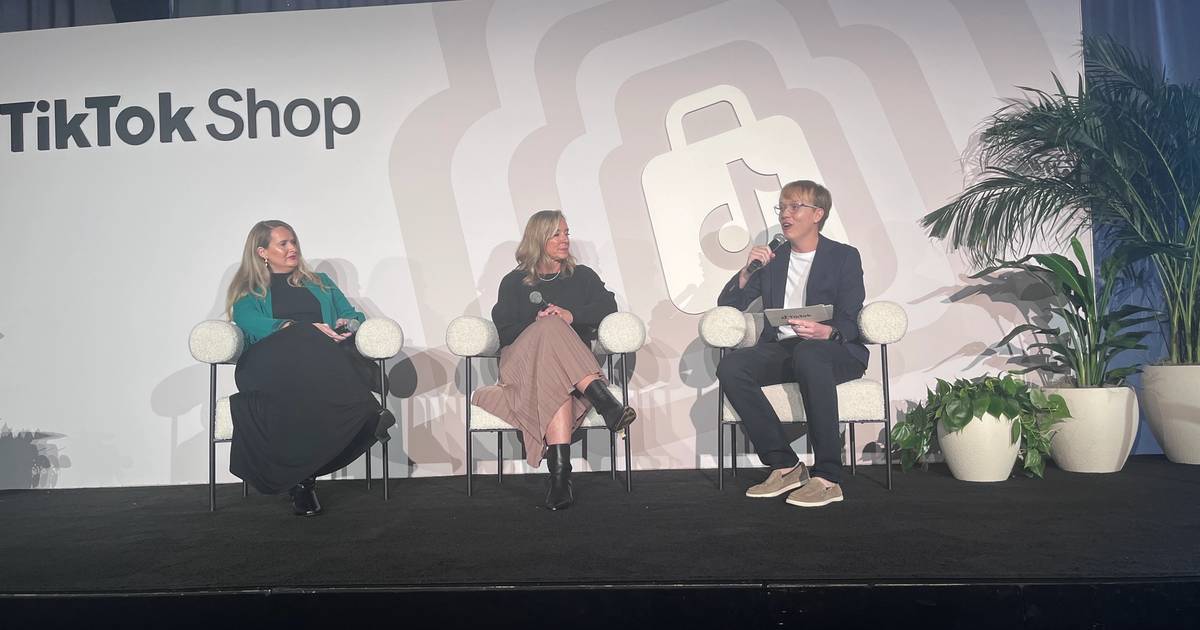
The platform is counting on livestreams from bigger brands and more established creators to drive holiday sales.
www.retailbrew.comTikTok Shop announced that its Black Friday and Cyber Monday holiday campaign will run from November 11 to 30. With major brands such as Sephora and Best Buy now on the platform, it expects this year's season to be its biggest yet.
According to Patrick Nommensen, who leads strategic business, hashtags such as #holidayshopping rose 263% in September. Livestream sales in the US more than doubled year on year in the first half of 2026. The company aims to go from being a place to find gift ideas to a place where people actually buy.
eMarketer, meanwhile, estimates that Meta's Facebook Marketplace and Instagram hold about 75% of the US social shopping market. TikTok Shop wants to be seen as a rival to Amazon rather than to low-price players Temu and Shein.
Logistics and Fulfillment
Stord Acquires AMS Fulfillment in Its Largest Deal Yet, Expanding East and West Coast Sites

The acquisition bolsters Stord's presence in key East Coast and West Coast hubs while building upon other recent deals.
www.supplychaindive.comOn October 21, e-commerce fulfillment company Stord announced that it has acquired logistics company AMS Fulfillment. It is Stord's largest acquisition to date, though the price was not disclosed.
AMS handles more than 10 million orders a year for leading beauty, wellness and D2C brands. The deal adds about 1 million square feet to Stord's network in key East Coast and West Coast regions. Stord also acquired Utah-based Vox Fulfillment in September, and it now handles more than $15 billion in gross merchandise value a year for more than 1,000 brands.
The fulfillment industry is consolidating around large players with site networks and technology. Stord plans to extend tools such as AI-driven selection of shipping methods to the customers of the companies it acquires.
Amazon to Hire More Than 300,000 for the Holidays, 20% More Than in the Past Three Years
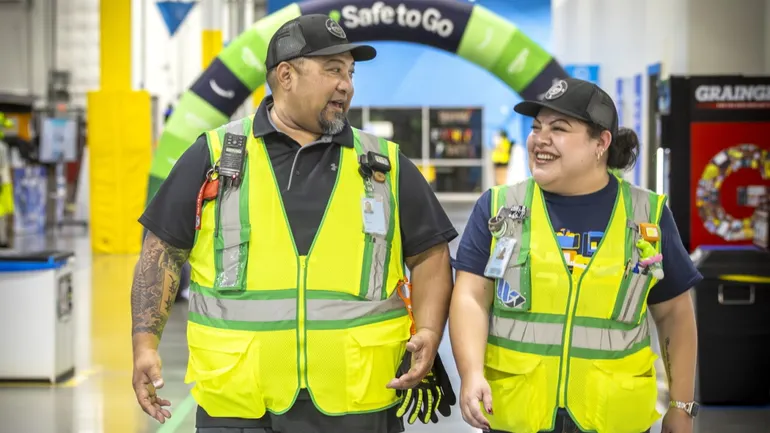
The e-commerce giant is increasing U.S. holiday staffing by 20% compared to the past three seasons.
www.retaildive.comOn October 20, Amazon announced that it will hire more than 300,000 seasonal, part-time and full-time workers in the US for the holiday season. That is 20% more than the 250,000 it has hired each year since 2023.
From January 1, it will also offer health insurance from day one to seasonal employees who work 30 or more hours a week. Seasonal workers earn an average of $20 an hour, and starting pay for full-time logistics employees has risen to at least $20, with an average of about $24.
While other retailers are holding back on hiring or not disclosing their plans, Amazon's increase stands out. It is clearly aiming to capture holiday demand through fast delivery.
Summary
Over these six days, several concrete answers emerged to the question of whether to let agents through or stop them. Walmart chose to accept outside agents while letting users set limits and approvals. On the store side, Commerce.com and Cafe24 turned on WebMCP across their merchants' stores at once, and an environment where agents can find products and add them to carts without reading the screen is starting to take shape without any extra work from merchants.
On the payments and identity side, ways to recognize legitimate agents arrived all at once: Evervault's tokens, Skyfire and Forter's KYA, World's proof of human, Proof and Circle's x401/x402, and Visa's Trusted Agent Protocol. As the jump to a nearly 100% success rate at Jomashop shows, stores without a way to tell agents apart end up blocking orders that should have become sales.
The holiday season gets into full swing next month. With figures now out showing that a quarter of Meta Muse users use it for shopping, whether a store's products and payments are usable by agents will show up as a difference in sales for the first time this season.