Fanatics Builds 'Shop the Look' with OpenAI Codex, Recommending In-Stock Outfits from 1.5 Million SKUs and Lifting Views 10%
How Fanatics used OpenAI Codex to build in-stock outfit recommendations, how to read its 10% result, and what it means for e-commerce operators preparing for AI product discovery.

Key Takeaways
- Sports merchandise retailer Fanatics used OpenAI's Codex to build "Shop the Look," a product-page feature that assembles outfits only from in-stock items, and views of recommended items rose 10%.
- The case tackles a product discovery problem specific to huge catalogs: more than 1.5 million SKUs and over a thousand new products a week are too much for photo shoots and manual styling to keep up with.
- Structured product attributes such as team, player, style, and stock status form a shared foundation that powers both on-site recommendations and product discovery in external AI such as ChatGPT.
Shoppers Lost in 1.5 Million SKUs, and Sessions Over 30 Minutes
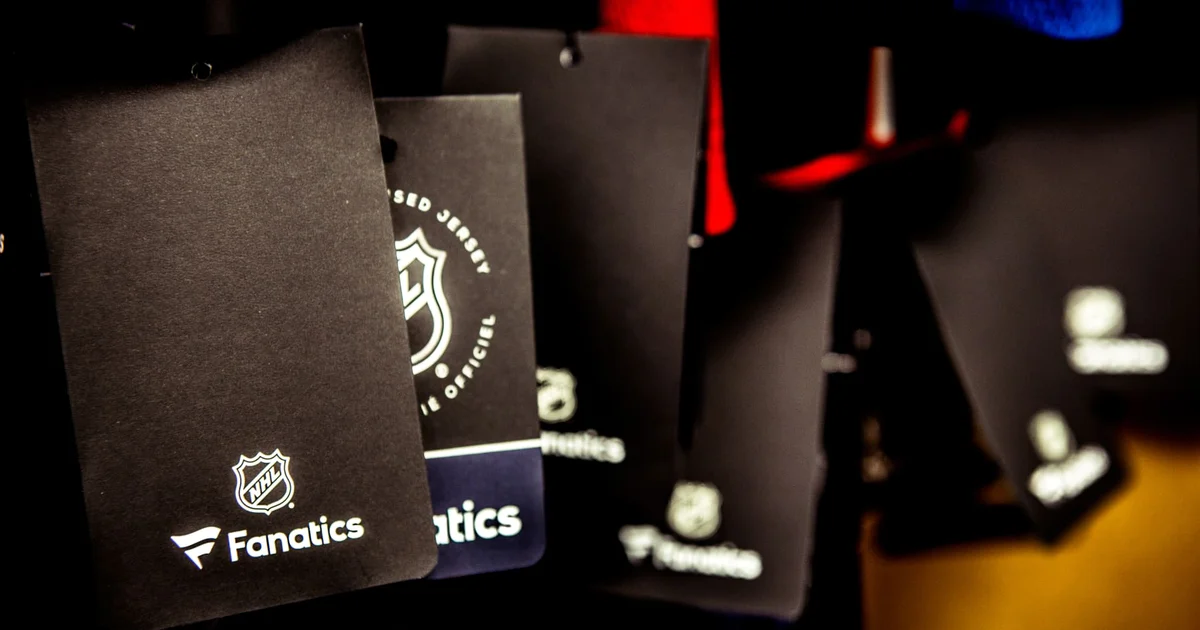
Fanatics is using AI to help shoppers navigate more than 1.5 million items of sports merchandise, with a Shop the Look feature powered by OpenAI Codex.
www.cnbc.comJerseys, hats, team-branded streetwear, socks. At any given moment, Fanatics offers more than 1.5 million unique SKUs (stock keeping units). According to CNBC, the company has deals with nearly every major sports league and team worldwide, and Fanatics Commerce alone manufactures more than 45 million items a year and sells them to customers in more than 180 countries.
That scale has made shopping harder. Justin Tsai, chief product officer for Fanatics Commerce, said the company kept seeing customers across the hundreds of sites it operates struggling to work through a very large catalog to figure out what they could buy. Shopping sessions routinely ran over 30 minutes on average, and the burden compounded as upwards of a thousand new products arrived each week.
The traditional answer is photo shoots and stylized outfits. Those have lead times, though, and cannot keep pace with quickly released items like championship shirts and hats. Random suggestions do not work either. As Tsai put it, nobody who is a Los Angeles Dodgers fan wants to be matched with a San Francisco Giants item. Team and player alignment is a hard requirement in sports merchandise.
The stakes are high. Founder and CEO Michael Rubin told CNBC that the commerce business will exceed $7 billion in revenue this year, compared with roughly $5.5 billion for the collectibles business, which includes Topps trading cards. Team merchandise remains Fanatics' biggest revenue source.
What Shop the Look Actually Does
The feature suggests coordinated outfits on each product page. When a fan is considering an authentic team jersey, for example, it shows a hat, socks, and accessories from the same team that fit the intended style and are in stock.
CNBC describes it this way: Fanatics used OpenAI's Codex to create a tool that parses product and catalog data to find compatible items and reevaluate recommendations. Codex is, at its core, an AI agent that writes code. What stands out here is a developer-focused agent being applied to building merchandising systems, meaning the design of how assortment is presented. The runtime architecture, such as whether Codex runs each time a recommendation is shown or whether a system built with Codex runs separately, is not described in the article and remains undisclosed.
The system has to satisfy three conditions at once.
| Condition | What it means | What goes wrong if missed |
|---|---|---|
| Team and player match | Pick items from the same team and player as the product being considered | Recommending a rival team's merchandise |
| Style fit | Combine hats, socks, and accessories that suit the intended look | Mismatched outfits that erode trust |
| Stock availability | Suggest only items that can be bought now | Shoppers leave when the item they want is unavailable |
Rosemary DeAragon, head of industry GTM at OpenAI, called personalization in retail "an age-old problem." E-commerce gave retailers new ways to figure out "the fingerprint of the customer," from past purchases to viewing location to logged-in accounts, yet those efforts still often missed the mark.
In the past we were trying to stitch together something that would be good to show a customer. With AI, you can do more deterministic matching to do personalization in this next-level way.
The word "deterministic" is the key. Rather than probabilistically lining up similar items, the system builds combinations while honoring non-negotiable conditions such as matching teams and available stock. What matters most here is less the model's intelligence than how well the catalog attributes are organized. If team, player, category, style, and stock status are not structured, even a highly capable AI cannot assemble the right outfit.
After launch, views of recommended items rose 10%. Tsai also said the suggestions help shoppers have "more conviction" about the items they are considering.
From Checkout to Discovery: OpenAI's Shift in Focus
The announcement makes more sense in the context of OpenAI's commerce strategy.
In September 2025, OpenAI announced Instant Checkout, which let users buy products inside ChatGPT. It started with Etsy sellers and planned to expand to more than one million Shopify merchants. In March 2026, however, CNBC reported that OpenAI was ending Instant Checkout in favor of retailers building dedicated apps inside ChatGPT, with purchases completed on retailers' own sites. The same month, OpenAI announced it was expanding the Agentic Commerce Protocol (ACP, OpenAI's specification connecting AI and merchants) to product discovery, with richer comparison and visual browsing.
In reporting by Modern Retail, Etsy said it had not seen a large volume of sales from Instant Checkout but found ChatGPT valuable as a discovery tool. In other words, the shared lesson for OpenAI and retailers over the past year is that AI delivers value first at the "deciding what to buy" stage, not at payment. We cover the background in Lessons from ChatGPT Instant Checkout's failure and OpenAI's shopping strategy pivot.
Fanatics applies that "deciding what to buy" support outside ChatGPT, on product pages of its own sites. For OpenAI, it is one more way to extend its technology into retail discovery beyond the chat window.
How to Read the 10% Figure
The 10% result is an increase in views of recommended items. Conversion rate, order value, and revenue impact have not been disclosed. More views do not necessarily mean more add-on purchases.
A useful reference is McKinsey's 2021 analysis, which found that personalization most often drives a 10 to 15 percent revenue lift, with company-specific results spanning 5 to 25 percent depending on sector and ability to execute. That is a revenue metric, however, and cannot be compared directly with Fanatics' view metric. How much of the 10% translates into sales will depend on future disclosures.
Expectations for AI commerce overall also deserve caution. Commenting on the end of Instant Checkout, Gartner analyst Bob Hetu told CNBC that OpenAI underestimated how difficult enabling transactions would be. "Showing" products in a recommendation and "confirming" a purchase through inventory allocation and payment demand very different levels of accuracy. DeAragon herself acknowledged there will always be room for curated looks and trying items on in person.
What E-commerce Operators Should Take Away
Two lessons from this case apply broadly.
First, recommendation quality depends on how well product attributes are organized. Every category has its equivalent of Fanatics' "team," an attribute that must not be wrong. In apparel it is size range and color, in electronics it is compatible standards, in cosmetics it is skin type and ingredients. If those attributes are buried in product names and descriptions rather than stored as data, they need to be cleaned up before any AI recommendation work.
Second, the same data works in external AI. ChatGPT and Google's AI are moving toward ingesting up-to-date product information, including price and stock, through mechanisms such as ACP and UCP. Product data structured for on-site recommendations also prepares a merchant for discovery through AI. The more new products outpace photo shoots and styling, the more valuable it becomes to describe them in data.
Scale matters, too. With 1.5 million SKUs and hundreds of sites, Fanatics had a clear reason to invest in AI because manual work could not keep up. For a catalog of a few hundred items, a realistic first step is recording existing manual styling choices as attribute data.
Conclusion
Fanatics' Shop the Look delivered results not through a flashy conversational feature but in the unglamorous "goes well with" slot on the product page. Behind it is catalog data good enough to honor team, style, and stock conditions.
The next things to watch are whether the lift in views is disclosed as a sales figure, and how the same approach extends to discovery outside the retailer's own site, including ChatGPT. As AI increasingly chooses products for shoppers, the competitive gap is starting to come from the quality of product data rather than model performance.