Omnichat Raises US$10M: Inside the AI Agents That Sell Through LINE and WhatsApp Chats, and What It Means for Merchants
Hong Kong's Omnichat raised a US$10M Series A. What its chat-based AI agents for marketing, sales, service and analytics do today, how the funds will be used, and what conversational commerce merchants should decide first.

Key Takeaways
- Hong Kong's Omnichat raised a US$10 million Series A led by Openspace Capital. The money will go into R&D for Omni AI Agents, the agent suite it launched in 2026, and into expansion beyond Asia Pacific
- Its agents work inside chat apps such as LINE and WhatsApp, handling campaign planning, product recommendations and orders, customer enquiries and revenue analysis. The company's core differentiator is a single customer profile that ties conversations to revenue, including purchases made in physical stores
- Every adoption and results figure comes from Omnichat itself, with no third-party verification, and Meta has started offering its own agent for free. Merchants should decide upfront which chat jobs to delegate, where humans approve, and how revenue will be measured
Omnichat Raises US$10M for AI Agents That Sell Inside the Chat
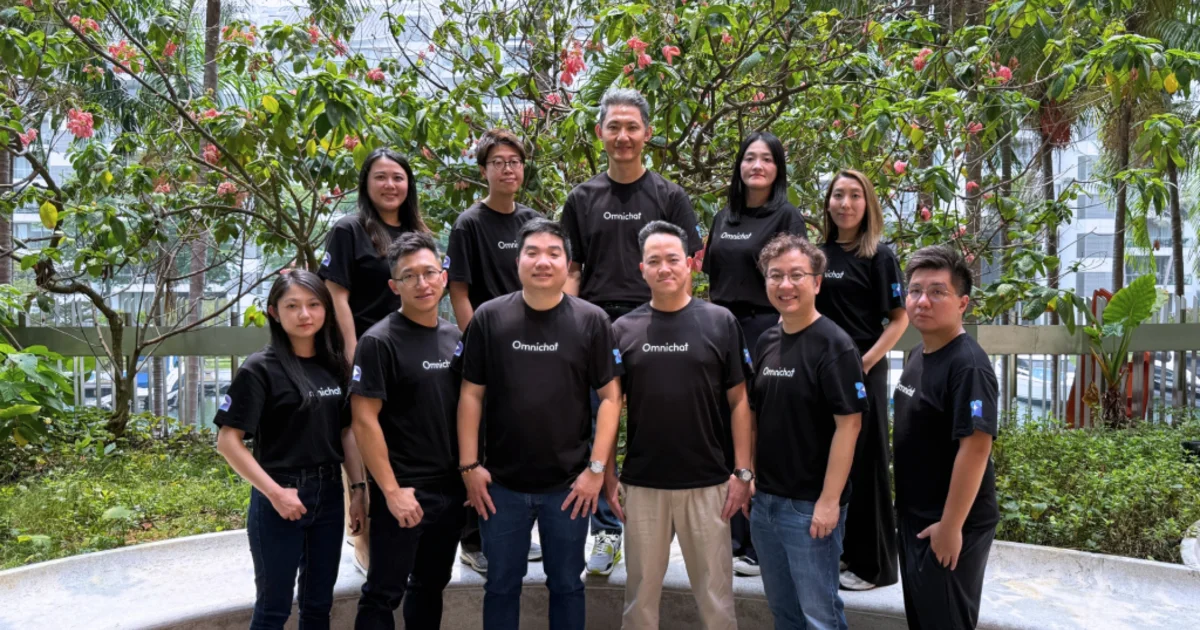
Omnichat, an AI-native marketing and customer experience platform, announced a US$10 million Series A led by Openspace Capital to scale its Agentic AI platform, deepen R&D on Omni AI Agents, and accelerate global expansion.
blog.omnichat.aiOn October 26, 2026, Hong Kong-based Omnichat announced a US$10 million Series A. The round was led by Singapore-based Openspace Capital, with Darwin Ventures and Acorn Pacific Ventures participating. According to the PR Newswire release, Openspace Capital is an asset manager specializing in Southeast Asia whose portfolio includes GoJek (GoTo) and Kredivo.
Omnichat sells SaaS for customer engagement and sales on messaging apps such as LINE and WhatsApp. A customer asks a question in chat, a store associate answers in chat, and the purchase happens from that same chat. As infrastructure for this kind of "conversational commerce," Omnichat says it serves 5,000 clients and has helped them generate more than US$100 million in revenue. Clients include Dyson, FILA, Watsons, L'OCCITANE and VF Corporation.
One thing to watch in this announcement is how easily products that already exist get blurred with what the new money is meant to build. The stated uses of funds are three: scaling the Agentic AI platform, deepening R&D on Omni AI Agents, and accelerating global expansion. All three are plans. No launch dates for new countries or new features were given, and the valuation was not disclosed. OpenTools makes the same point.
Four Agents Are Already Running
So what do the products being scaled actually do today? The announcement lists four Omni AI Agents.
| Agent | Role described in the announcement | Launch and adoption (company-reported) |
|---|---|---|
| AI Marketing Agent | Builds customer segments and generates complete messaging campaigns from a single prompt | Number of brands using it tripled in the two months from June 2026 |
| AI Sales Agent | Recommends products and closes orders inside the chat | Adoption not disclosed |
| AI Customer Service Agent | Resolves customer enquiries 24/7 | Adoption not disclosed |
| OmniClaw | Tracks customer behavior, chat trends and store-level revenue attribution in real time | Launched June 2026; around 300 brands within two months |
This lineup did not arrive all at once. In May 2026, Omnichat announced it was rebuilding itself as an "AI-native agentic customer experience platform." At the center was Omni AI Message Flow. Enter a brand's website URL and it ingests the brand's tone and knowledge; describe a campaign goal in plain language and it generates the message journey, branching logic, copy and images in one go. Work that marketers used to assemble by dragging blocks around a builder is now drafted by an agent.
The same announcement introduced two safeguards. One is human-in-the-loop oversight, where staff act as "AI Supervisors" who approve critical actions. The other is a sandbox for testing conversation paths before going live. The design assumes human approval rather than agents acting on their own, which matters for anyone evaluating the product.
In June, Omnichat added OmniClaw, an AI business analyst. According to its product page, it analyzes campaign performance, chat volume and response times, and customer behavior inside Omnichat without exporting data. Ask why this month's broadcasts performed better and it explains the drivers, then drafts the next broadcast. Omnichat says around 300 brands adopted OmniClaw within two months of launch, and the number of brands using the Marketing Agent tripled over the same period.
The Sales Agent "closes orders inside the chat"
The question merchants care about most is how far the Sales Agent goes into the transaction. The announcement says it "recommends products and closes orders inside the chat." The Omni AI product page, meanwhile, describes its Smart Shopping Agent as learning customer preferences, recommending products and sending direct purchase links in chat.
What can be confirmed today, then, is the path from recommendation to a cart or purchase page. Public materials do not say whether payment completes inside the chat or on the linked e-commerce site, or how often the agent checks inventory and pricing. Feature availability by channel and pricing are also undisclosed.
In a March 2026 interview with a Taiwanese marketing magazine, CEO Alan Chan explained that by connecting agents to CRM, inventory and POS systems, a brand can tell a customer directly in LINE or WhatsApp: "Your package has arrived at the store. Here is your pickup code." The idea is to move from chatbots that say "please check our website" to agents that operate internal systems to give the answer.
The Pitch: One Customer Profile, Including In-Store Revenue
Many chat tools are "shared inboxes" that pull messages from several apps into one place. Omnichat draws a sharp line against them. Its central claim is that it runs marketing, sales and service on a single customer profile and attributes revenue back to the conversation.
The most notable part is that in-store purchases count as conversation outcomes. In the same interview, Chan described agents confirming a customer's needs online, sending them to a store to try the product, and attributing the final sale to the associate at that store. By designing AI to hand customers to store staff rather than take sales away from them, the company aims to win cooperation from the store side.
Omnichat's site offers some examples. On the product page, a Timberland marketing manager says connecting website visitors with in-store salespeople reached a 7x conversion rate. A QV Skincare case study published in May 2026 describes a skincare brand that sells through third-party retailers and could not see who bought its products. Using WhatsApp as a starting point for collecting customer data, it grew new users by 74%.
For brands selling through wholesalers and retailers, this "invisible customer at the shelf" problem is real. Make chat the direct line to the customer, then consolidate what you learn there into a single profile. Omnichat positions its agents as the way to run that line without adding headcount.
This Series A marks an important step as we transition from conversational commerce to AI-driven commerce. Traditional customer messaging tools still need heavy human intervention to drive sales.
The Numbers Deserve a Discount
Nearly every number so far comes from Omnichat itself. Around 300 brands, tripled, 5,000 clients, over US$100 million, 7x, 74%: none of these has been independently verified. The claim from the March interview that AI resolves more than 70% of repetitive enquiries is likewise based on the company's own experience with international brands.
Dealroom notes that the significance of this raise depends on whether Omnichat can show reliable sales and service outcomes across markets, not simply add AI features. The same piece places the round within continued investment in enterprise AI agents across Asia Pacific, citing raises by Singapore's Level3AI and OneByZero.
There is broader caution about agents too. In June 2025, Gartner predicted that over 40% of agentic AI projects will be canceled by the end of 2027, citing escalating costs, unclear business value and inadequate risk controls. It also warned of "agent washing," the rebranding of existing chatbots and RPA as agents.
The competitive landscape is shifting as well. In June 2026, Meta announced it was expanding Meta Business Agent to businesses of all sizes worldwide. More than one million businesses already use it on WhatsApp and Messenger, and it can recommend products from a catalog, book appointments and close sales. Getting started is free, with paid subscriptions planned. As covered in our article on its India rollout, once channel owners offer agents themselves, companies like Omnichat must keep proving their value through cross-app customer data and revenue measurement that reaches into stores.
What Merchants Should Pin Down
In Japan, chat-based customer engagement centers on LINE Official Accounts. In its May 2026 announcement, Omnichat described itself as the only company in Asia Pacific to hold Meta Business Partner, LINE Biz-Solutions Gold Tech Partner and AWS Partner status at the same time. Still, the funding announcement does not say which countries it will enter, and nothing in it indicates availability or operations in Japan.
The lessons are concrete all the same. Like the "autonomous CRM" pitched by Milan's TextYess, chat agents are expanding from "the one who replies" to "the one who plans campaigns, sells and analyzes." Before evaluating tools, decide at least these three things:
- Scope of delegated work: enquiries only, product recommendations and purchase links, or campaign planning as well
- Where humans approve: which actions, such as discounts, returns and sending broadcasts, the agent must never take alone
- How revenue is measured: how chat-driven purchases are identified across the e-commerce site and stores, and which conversation gets credit
The third point matters most for merchants with physical stores. If conversation outcomes cannot be traced into store sales, the return on agents cannot be explained. Omnichat sells "attributing in-store purchases to the conversation" precisely because this is where so many companies get stuck.
Conclusion
Omnichat's US$10 million signals that conversational commerce tools are trying to move from "a screen where humans reply" to "a foundation where agents do the selling." What this money will deliver, and when, has not yet been stated.
The next things to watch are whether the Sales Agent completes payment inside the chat, and how much value cross-channel, in-store measurement retains as channel owners such as Meta and LINE expand their own agents.