
AI Commerce News Digest (October 13, 2026)
AI commerce news from October 9 to 12, 2026. THG Commerce shows Criteo Sponsored Products inside AI shopping assistant conversations, and Shopify launches a connector that lets merchants run their stores from Meta's Muse. Also covered: Ulta Beauty's content for AI answers, Loops' seed round and Meesho's festive sale results.

Key Takeaways
- THG puts Criteo ads inside AI shopping conversations
- Shopify lets merchants run their stores from Meta's Muse
- Agent chats are becoming ad space and an operations console
Here is the AI commerce news for October 13. This edition brings you four days of news, from October 9 through 12. The thread running through these four days is that conversations with AI are expanding beyond product search into places where ads are served and stores are run. THG Commerce launched a way to show Criteo Sponsored Products inside the answers of its AI Shopping Assistant. Shopify gave Meta's Muse agent a connector that lets merchants manage inventory and prices by chatting. Ulta Beauty's approach to content for AI answers and Meesho's festive sale figures, where recommendations drove most first-day orders, fit the same pattern.
Top Stories
THG Commerce shows Criteo Sponsored Products inside AI shopping conversations, with click-through more than five times the average
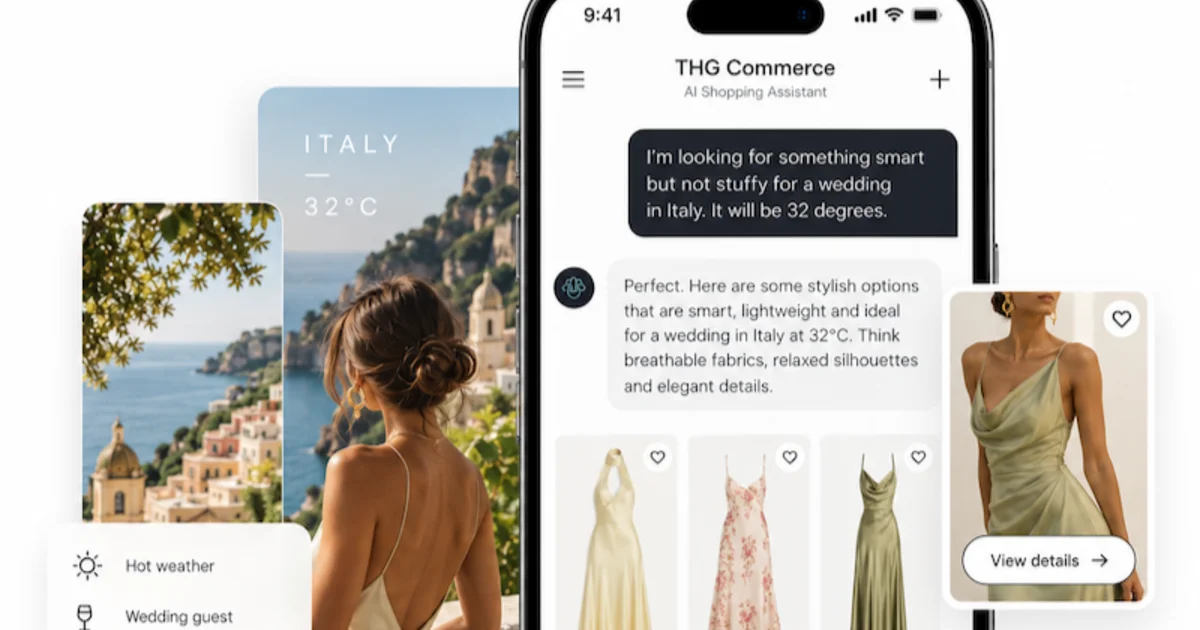
THG Commerce, part of THG Ingenuity, has integrated Criteo Sponsored Products into its AI Shopping Assistant, built using Google Cloud's Gemini Enterprise. THG Commerce says it is the first commerce technology provider in Europe to bring Criteo Sponsored Products into AI-powered conversational search.
retailtechinnovationhub.comTHG Commerce, part of the UK's THG Ingenuity, has integrated Criteo Sponsored Products into its AI Shopping Assistant. The assistant pulls keywords and filters from what the shopper says and turns them into product recommendations. When an eligible and relevant sponsored product exists, it appears in the same answer as the organic picks, with a clear label marking it as sponsored. The assistant runs on Google Cloud's Gemini Enterprise, and THG Commerce says it is the first commerce technology provider in Europe to do this.
According to early results, sponsored products surfaced through the assistant reached a click-through rate more than five times the average and a conversion rate more than double the average. The same relevance models behind Criteo's search ads, including keyword matching, semantic understanding and strict relevance thresholds, decide what appears, and no ad is shown when nothing fits the request.
Because an AI answer narrows the choice to a handful of products, each slot carries more weight than a position on a search results page. How to price that conversational inventory, and how to run it without eroding shopper trust, is becoming the next monetization question for retailers that deploy AI assistants. The measurement conditions behind the figures have not been disclosed, so comparisons will have to wait for more detail.
Full article: THG Commerce Brings Criteo Sponsored Products into Its AI Shopping Assistant: What 5x CTR Conversational Retail Media Changes
Shopify launches Shopify Connector for Muse, letting Meta's agent manage products, inventory and orders (Follow-up)

Shopify pousse un peu plus loin son ouverture aux agents IA en permettant aux e-commerçants de connecter directement leur boutique à l'agent de Meta.
www.ecommerce-nation.frShopify has launched the Shopify Connector for Muse, which lets merchants connect their own store to Meta's AI agent Muse. In September, Shopify announced a way for shoppers to buy inside Muse with Shop Pay; this is the entry point for sellers. Shopify President Harley Finkelstein posted: "You could already shop in Muse. Now you can run your entire business from it."
According to E-Commerce Nation, once a merchant grants access, Muse can work with products, collections, inventory, orders, customers, discounts and analytics. It can create products, change prices and adjust stock at a given location, and before changing a quantity it re-checks the current level and stops if the number has moved. Sales and average order value can be queried in plain language, but analytics are read-only. Payment, tax and domain settings, publishing a theme to production, refunds, payment cancellations and returns are all blocked.
In contrast to Amazon blocking Muse in September, Shopify has now opened the door on the merchant side as well. Shopify says its admin remains the main place to run a store and that the connector does not replace its own assistant, Sidekick. It is a useful example of a platform deciding up front which actions an agent may take and which it may not.
Agentic Commerce
Ulta Beauty studies the questions shoppers ask ChatGPT and Gemini, publishes answers and tracks its rank in AI responses

Ulta Beauty's CMO explains how the retailer is preparing its marketing for AI agents, and why AI-using younger shoppers are more likely to visit stores.
www.thedrum.comKelly Mahoney, chief marketing officer of US beauty retailer Ulta Beauty, told The Drum how the company is preparing for agentic commerce. Ulta studies the full-sentence prompts shoppers type into ChatGPT and Gemini and publishes content that answers them in the places those models draw on. It then tracks where its information ranks in AI answers and adjusts from there.
The content comes from creators and influencers as well as store associates in the Ulta Beauties program. A study with NielsenIQ found that 57% of Gen Alpha consumers who use AI tools visit stores to browse and try products, compared with 36% of non-users. Mahoney argues that the more AI spreads, the more the store experience matters.
Rezolve Ai showcases RezolvePay for taking orders and payments from any AI agent, with a Muse demo
Proprietary payment rails and merchant-side agents connect AI-driven shopping to completed orders and payments, online and in-store.
www.globenewswire.comNasdaq-listed Rezolve Ai on October 9 unveiled how RezolvePay connects consumers' AI agents with merchant-side agents to complete purchases, from order through payment. It also released a demo video in which Meta's Muse interacts with a coffee shop's RezolvePay agent to place an order for in-store collection.
The demo receipt names Muse as the agent that placed the order, and Rezolve highlights this ability to show merchants which AI channel an order came from. RezolvePay's payment infrastructure includes digital-asset and stablecoin rails. Proposals for merchant-side infrastructure that can accept agents from anywhere keep multiplying.
Shoppers puzzle over Amazon's AI-built "About You" profiles, and the feature cannot be fully switched off (Follow-up)
Amazon has a new AI-powered tool that takes customer preferences into account and generates predictions around what it thinks it knows about their individual interests.
www.thestar.com.myPosts about Amazon's "About You" feature in its AI shopping assistant are spreading across social media. About You builds a profile of each customer from five sources: conversations with the assistant, product reviews, purchase history, Amazon Lists and searches. It was released in May. According to Inc., users on Threads, Reddit and X are sharing assumptions about their bodies and belongings that the tool drew from just a few purchases.
There is no way to opt out of the feature entirely, though customers can delete inaccurate or overly personal assumptions and add details they want Amazon to know. Better AI recommendations depend on customer information, but this episode shows the challenge of how people react when those inferences are put in front of them.
AI Commerce Tools
Loops raises a $3.5 million seed round for an AI platform connecting search, shopping assistance and product data, with NTT Docomo among investors

Loops, which builds an AI platform for brands and retailers, raised a $3.5 million seed round from a16z speedrun, NTT Docomo and others.
markets.businessinsider.comSan Francisco-based Loops announced on October 12 that it has raised a $3.5 million seed round from a16z speedrun, NTT Docomo, Connecticut Innovations, Alumni Ventures and Monday Capital. The funding will go to product development, customer deployment capacity and international expansion.
The company targets the burden retailers face when they adopt AI one workflow at a time, with separate products for site search, shopping assistance, product descriptions and virtual try-on, then stitch them together. Loops builds these on the same product knowledge and business context, so that better catalog data improves search and customer conversations reveal where product information is weak. As AI features multiply, the design question becomes how to maintain the underlying product data in one place.
Fujitsu trials four AI agents for retail decision-making with seven Japanese retailers

Fujitsu has launched a trial environment for four AI agents designed to support retail operations and management decision-making.
ecommercenews.com.auFujitsu has set up a trial environment for four AI agents that support retail operations and management decisions, and is testing them with seven retailers in Japan. The agents cover sales structure analysis, customer loyalty analysis, merchandise planning and store manager support, offered through Uvance for Retail, Fujitsu's retail and distribution business.
The merchandise planning agent helps prepare product-level and store-level sales plans, recommends inventory allocation by store and suggests transfers to avoid stockouts. The store manager agent combines sales data with local conditions, weather and social media activity to recommend changes to assortments and shelf layouts. All four agents share a common execution platform and the same data. Commercial availability in Australia and New Zealand is planned for June 2027, with the Japan trial coming first.
Kroger says shoppers share more with its AI shopping assistant than expected
Yael Cosset shares the role AI has played in Kroger's efforts to become a digital enterprise.
www.retailbrew.comYael Cosset, chief digital officer of US grocer Kroger, told Retail Brew how the AI shopping assistant it launched in July is performing. Because shoppers type what they are looking for and their constraints, Kroger gains context such as health and flavor preferences that in-store purchases do not reveal. Customers' willingness to share that information has "exceeded expectations," he said.
He expected narrow baskets from such a focused tool, but customers are adding items beyond their original use occasion. Internally, Kroger runs an "AI drivers license" training program for associates and emphasizes keeping a human in the loop and using auditable data so decisions can be undone. Last month the company named Jet.com co-founder Nate Faust as its first chief e-commerce officer.
Global E-commerce Trends
India's festive sales reach about Rs 24,000 crore in the first two days, with mobiles at 40%

E-commerce companies in India sold about Rs 24,000 crore in the first two days of festive sales. Mobile phones accounted for the largest share of sales.
m.economictimes.comIndian e-commerce companies sold goods worth about Rs 24,000 crore (more than $2.5 billion) in the first two days of the festive season sales, according to estimates from Redseer Strategy Consultants. Shoppers placed 80 to 90 million orders, 60 to 65 million people took part, and GMV ran at about six times the business-as-usual daily rate.
Mobile phones were the largest category by value at 38% to 40%, followed by consumer electronics at 25% to 27%. Shoppers in Tier 2 and smaller towns bought festive wear at accessible prices, and Amazon and Flipkart brought their quick commerce arms into the sales, which saw GMV four to five times the usual daily average. India's festive sales continue to draw buyers from further beyond the big cities.
Meesho's first-day sale orders rise 75%, with recommendations driving about 85%
Meesho reported around 75% year-on-year growth in orders on Day 1 of its Mega Blockbuster Sale 2026, driven by festive demand, AI-powered discovery, rising branded shopping and creator-led commerce.
www.storyboard18.comIndian e-commerce platform Meesho said on October 10 that orders on the first day of its Mega Blockbuster Sale 2026 rose about 75% year on year. Orders peaked at more than 75,000 a minute within 15 minutes of the sale going live, and transacting customers grew about 60%.
The standout figure is that personalized recommendations powered about 85% of first-day orders. Orders on Meesho Mall, its branded storefront, grew more than 200%, and orders through creator content rose about 3.7 times. For a buyer base concentrated outside the big cities, a design that leads shoppers to products through recommendations and content rather than search is underpinning the scale of the sale.
Morgan Stanley names eBay its top internet pick, with live commerce driving over 40% of GMV growth
Morgan Stanley just handed eBay a rare top-pick crown, crediting a format that has quietly turned the old auction site into something Wall Street is only beginning to price in.
247wallst.comMorgan Stanley named eBay its top internet pick and raised its price target to $132 from $127. Analyst Nathan Feather estimated that eBay Live, its live-streamed auction format, now drives more than 40% of eBay's growth in gross merchandise volume. eBay shares rose 5% in midday trading.
On its August earnings call, eBay said GMV from eBay Live grew roughly eight times year over year. Feather described Western live shopping as a digital auction house for secondhand and collectible goods, distinct from the influencer-led model common in Asia.
Corporate Moves and Partnerships
Ingka, IKEA's largest retailer, opens an official flagship store with more than 6,500 products on China's Douyin

Ingka Group is expanding the ways it meets customers in China with the launch of the IKEA Douyin Official Flagship Store on 11 October 2026.
www.ingka.comIngka Group, the largest IKEA retailer, opened an IKEA official flagship store on October 11 on Douyin, one of China's leading short-video and content-commerce platforms. The store offers more than 6,500 products across 179 categories, with delivery to 301 cities in China, and complements IKEA's existing stores, website, app, WeChat and other channels.
Parag Parekh, chief digital officer of IKEA Retail (Ingka Group), described it as a chance to learn how inspiration, interaction and commerce are coming closer together on new platforms. The aim is to engage people earlier, while they are still looking for ideas, and to bring the lessons from Douyin into IKEA's broader omnichannel approach.
Ahold Delhaize takes systems offline after a cybersecurity issue, leaving five US grocery websites down
The company said it took some systems offline as part of precautionary measures. Websites for all five of the grocer's U.S. banners were down Monday morning.
www.grocerydive.comDutch-Belgian grocery group Ahold Delhaize announced on Monday, October 12, that it was experiencing a security issue within its network and had taken some systems offline as a precaution. According to Grocery Dive, the websites of its five US banners, Hannaford, Stop & Shop, Giant Food, Food Lion and The Giant Company, were down that morning.
In the Netherlands, the sites of Albert Heijn, Etos and Gall & Gall were also down, though the company said all stores remained open. It has given no timeline for restoring systems. Ahold Delhaize also dealt with a cybersecurity incident in its US business in late 2024. For grocers with a large online business, a site outage translates directly into lost sales.
Payments and Fintech
FedEx and Stripe form a long-term partnership on SMB financing using shipping data, and FedEx adopts Stripe payments

FedEx Dataworks and Stripe have announced a long-term collaboration to expand SMB financing access and payment options.
thepaypers.comFedEx Dataworks and Stripe have announced a long-term collaboration on financing and payments for small and medium-sized businesses. Operational signals from the FedEx network, such as shipment activity, inventory movement and fulfillment performance, will feed into financing decisions made through Stripe Capital. The first joint solution is scheduled for early 2027 and targets tens of thousands of SMBs that ship with FedEx.
On the payments side, FedEx will start using Stripe as one of its payment processors and add more than 50 payment methods worldwide. The initiative uses logistics data to fill in the real trading activity of online sellers that bank statements and credit scores can miss.
Greece moves to require electronic payment for cash-on-delivery parcels

Electronic payment for parcels upon delivery, such as through bank cards and e-banking, will become mandatory.
www.ekathimerini.comThe Greek government has put out for consultation a bill that would make electronic payment, such as bank cards and e-banking, mandatory when consumers pay for parcels on delivery. If passed, it would effectively end cash payment in e-commerce.
Food deliveries, non-prescription medicines, people over 70, sparsely populated settlements and island areas are excluded. According to eKathimerini, some 30% to 40% of delivered goods are still paid for in cash. In markets where cash on delivery is common, sellers will need to switch to payment terminals or payment links at the door.
Logistics and Fulfillment
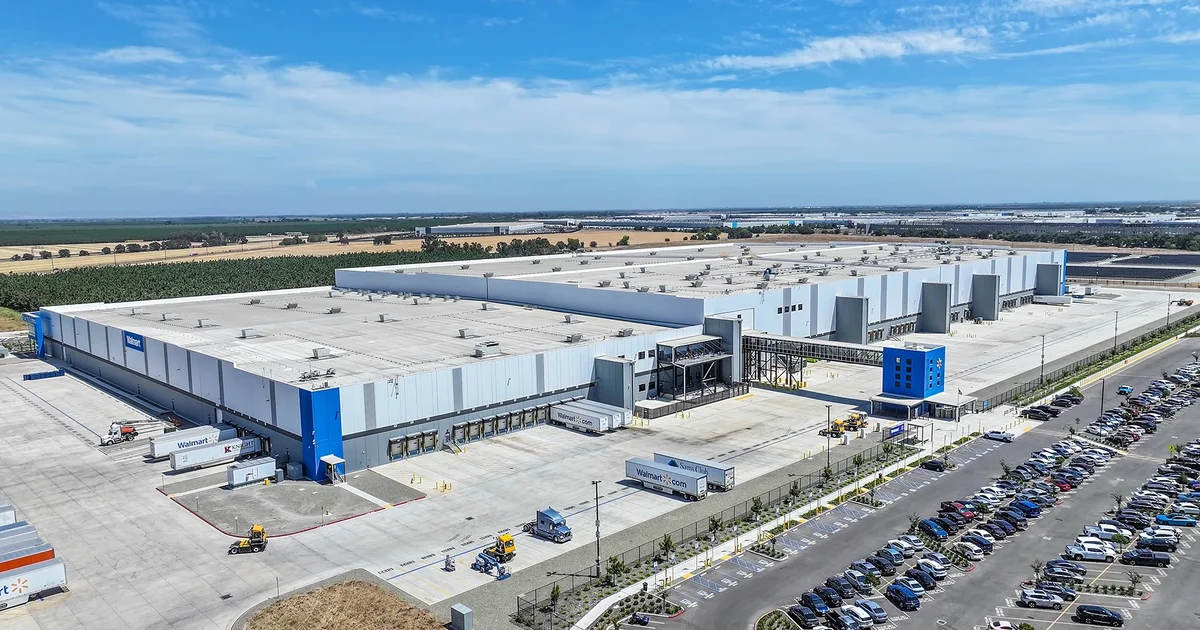
Walmart opens its fifth next-generation e-commerce fulfillment center in Stockton, California

Walmart has officially opened its fifth high-tech fulfillment center, a 900,000-square-foot facility in Stockton, California.
www.freightwaves.comWalmart has opened a 900,000-square-foot next-generation e-commerce fulfillment center in Stockton, California, its fifth such facility. A high-density storage and retrieval system cuts the traditional 12-step fulfillment process to five steps.
Walmart Fulfillment Services, its end-to-end fulfillment service for Marketplace sellers, will also use the site. Together with the four existing centers, Walmart can offer next-day or two-day shipping to 95% of the US population, and it plans a sixth hub of 1.5 million square feet in Carnesville, Georgia.
Zalando automates returns sorting with AI robots, now live in Germany and Poland

After deploying AI-powered robots to handle millions of fulfillment picks, the e-commerce fashion retailer giant is using robotics technology to navigate the more unpredictable world of returns.
wwd.comEuropean fashion e-commerce giant Zalando has begun using AI-powered robots from Germany's Sereact to handle returned merchandise. The systems are in live production at Ceva Logistics facilities in Greven, Germany, and Świebodzin, Poland.
The dual-arm robots use Sereact's Cortex physical AI platform to identify, grasp and sort returned fashion items without per-product training or a predefined SKU list. Returns arrive in unpredictable condition, which has long made them hard for conventional warehouse robots. The three companies call this the first phase of a broader effort to automate returns across Europe, deployed on a robotics-as-a-service model.
Summary
Taken together, the news from these four days shows conversations with AI agents growing beyond a shopper help desk. THG Commerce and Criteo created ad space inside the conversation, and Shopify made it possible for merchants to adjust inventory and prices by talking to Muse. Rezolve Ai is emphasizing that merchants can see which agent an order came from. If conversations become both an ad channel and an operations console, drawing the line between what to delegate and what people decide becomes essential. Shopify's choice to keep refunds and payment settings out of Muse's reach is one example.
On the shopper side, the reaction to Amazon's "About You" showed that collecting information for recommendations can backfire depending on how it is presented. Kroger's experience of shoppers willingly sharing their needs points the other way, suggesting the difference lies in the convenience offered and how it is explained. Together with Ulta Beauty's work on content for AI answers, the question of who prepares the information agents read, and how, is becoming shared homework for retailers this fall.